
The new adaptation of the classic The Leopard for Netflix required double courage. The 1958 book by Giuseppe Tomasi di Lampedusa is considered a masterpiece of Italian literature, and the 1963 film by Luchino Visconti is considered a masterpiece of world cinema. The expectation of something grand – at least visually – does not disappoint, but the “modernization” of the story (I’ll explain what that means later) may bother purists. On the other hand, it is a great way to reach generations that would probably forget the two original works.
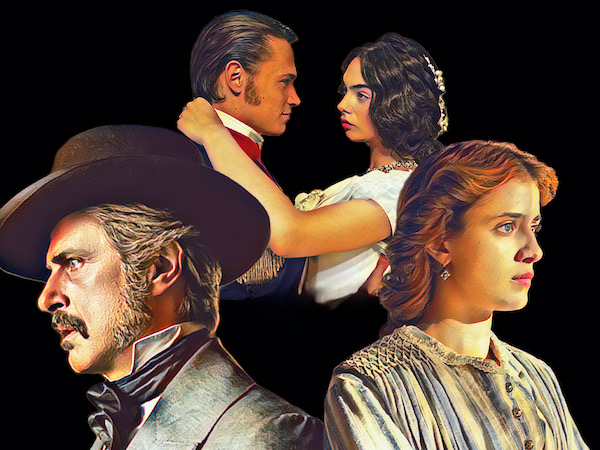
I confess that when I read The Leopard for the first time as a teenager, I struggled to follow the historical drama and had a hard time empathizing with the characters. This had an impact when I went to see the film that won the Palme d’Or at Cannes years later. A reflective and dubbed Burt Lancaster, a beautiful but unsympathetic Alain Delon and a wonderful Claudia Cardinale, but in a dubious role. Nothing that would compel me to watch it all again, but I was happy to do so (and to rewatch the 1963 film as well).

The story is complex and originally aimed at a male audience: it is the story that narrates the decline of the Sicilian aristocracy during the Risorgimento (movement for the unification of Italy), seen through the eyes of the reflective prince Fabrizio Corbera, who observes the changes in the social scenario while helping his family adapt to the rise of the middle class.
Di Lampedusa, himself a Sicilian aristocrat, was inspired by the trajectory of his great-grandfather, and seen today, the book is dangerously nostalgic for the monarchical period when social oppression was undeniable. In 1963, Visconti’s grandiose and detailed film was acclaimed because he was a descendant of the ruling class that history praises.
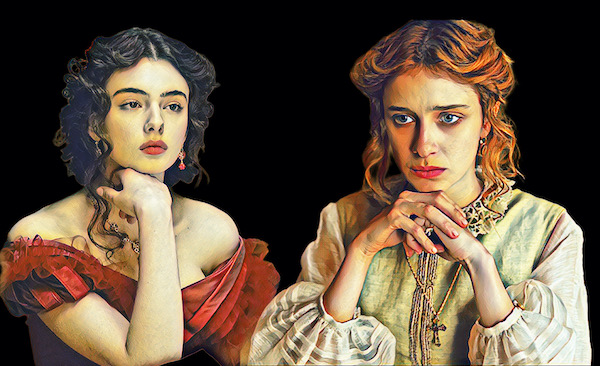
In 2025, things are very different. The production, which cost over forty million euros, is extremely luxurious, but it gives prominence to the insignificant daughter, Concetta (Benedetta Porcaroli), who is in love with her cousin, Tancredi (Saul Nanni), and is torn between loyalty to her family, her Christian faith, and her “rebellious” and carnal love. The drama is that the Corberas need to “reinvent” themselves during the unification crisis that threatens the aristocracy. Her father needs to make new alliances, even with pain, and the hardest one is when he plans the marriage between the rich and beautiful Angelica (Deva Cassel) and Tancredi. The union guarantees the family legacy but breaks Concetta’s heart.
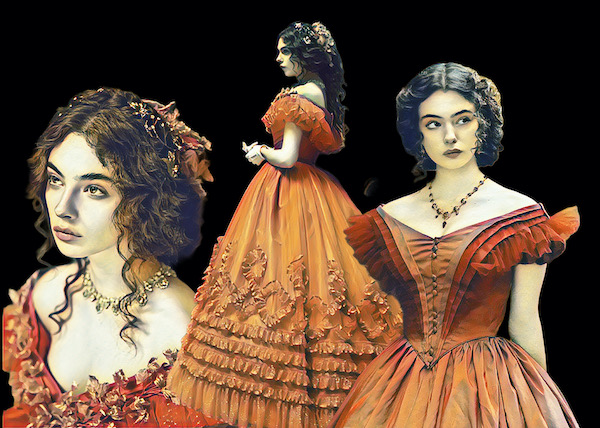
I see this alternative of highlighting Concetta as one of the series’ “problems” and “successes.” It effectively modernizes the narrative and highlights the novelistic element, but by making The Leopard something so distinct, it also invites more comparisons. Visconti is unmatched in its slow pace, opulence, and contrasts between old and young, to the sound of maestro Nino Rota.
Visconti’s film (which ends well before the series) took three hours and focused on the iconic ball. Here, there is a complete journey, dare I say, even moving.
What doesn’t help, not even in eight episodes, is effectively understanding the historical facts of Italian unification. The alternative is to follow the love story itself. Or, as others have seen, it is a metaphor for how the elite still sees the world today.
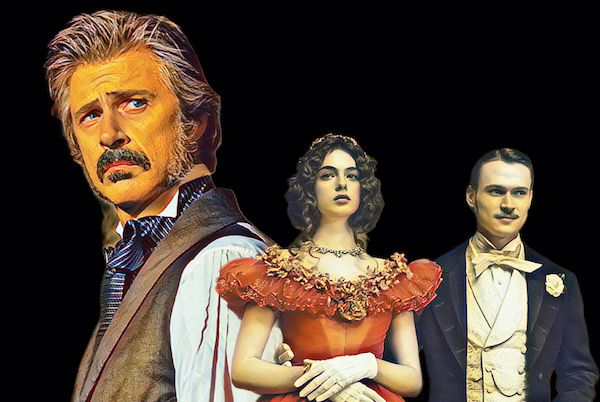
Kim Rossi Stuart, who is directly compared to Burt Lancaster in what is considered his best performance, holds up with flying colors a role that demands depth and experience for a man divided between his love for his nephew Tancredi — who is on the side against the family in the revolution — and the need to resist what he knows is the inevitable march of history, sacrificing his favorite daughter.

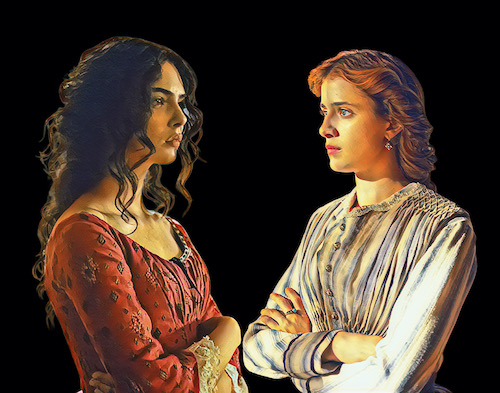
The Netflix series takes on an immense challenge and delivers a visually stunning work, with a renewed look at the internal dramas of the Corbera family, with the female perspective that modernizes the conflict, even if it distorts the original approach of Di Lampedusa and Visconti. For some, this change enriches the plot and brings it closer to a new audience; for others, it reduces the reflective grandeur of the story to a novelistic romance. The final result is a “Leopard” that maintains its grandeur, but now treads on different ground — for better or for controversy.
Descubra mais sobre
Assine para receber nossas notícias mais recentes por e-mail.
 miscelana.com