
Considering that fables are born from real stories, it is natural that today, everyone wants to discover the true story that has been retold as a fairy tale for centuries. Like Snow White, of course, which began to have an official version in 1812 with the vision of the Brothers Grimm. But where did they hear the “true” story to write theirs?
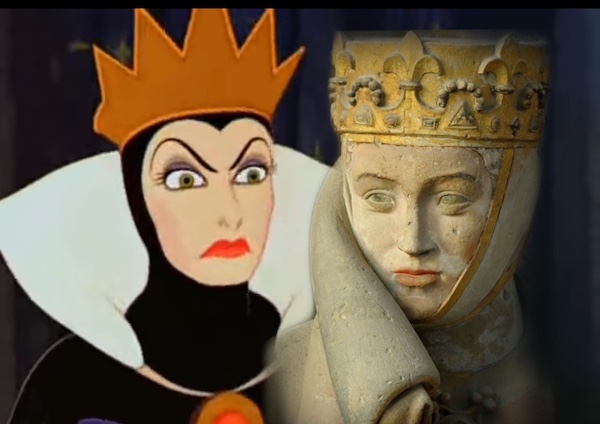
Of the various ‘original sources’, there is an undeniable convention that the tale of the princess poisoned with an apple comes from the lands that are now Germany. The most popular theory for the Evil Queen is that she was inspired by a German noblewoman, Countess Uta von Ballenstedt, who lived and died over a thousand years ago in Naumburg Castle and was known as the most beautiful woman of the Middle Ages. Of course, we are talking about her appearance because Uta’s story doesn’t come close to the wickedness of Queen Grimhilde.

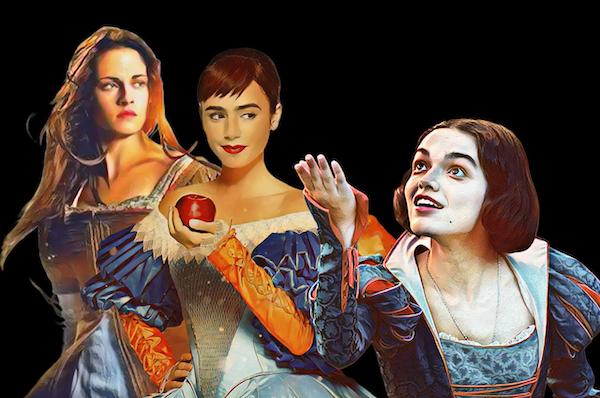
And Snow White? The name most often mentioned is that of Margarete von Waldeck (or Margaretha von Waldeck), a young German noblewoman from the 16th century, whose life and mysterious death resembles the one the Brothers Grimm used in their tale.
Born around 1533, probably in Waldeck, a small town in the current state of North Rhine-Westphalia, Germany, Margarete’s story is surrounded by mystery and tragedy, thanks to her premature death on March 15, 1554 (exactly 471 years ago today), which may have been caused by poisoning. The reason? It is speculated that she was killed by order of her own father or other members of the nobility to prevent a marriage that was not well regarded by the court. According to some sources, she was a prominent figure at court and possibly involved in a romantic relationship with Philip II, the future King of Spain, which caused jealousy and intrigue among the aristocracy.
Margaretha was the daughter of Count Philip IV of Waldeck, a nobleman, and was described as a young woman of great beauty. The theory that suggests that she is the inspiration for the story of Snow White is because she is the figure of a beautiful and innocent young woman who finds herself threatened by intrigues that cost her life. Her mother, Margaret Cirksena, died three years later, and Philip IV soon married Katharina von Hatzfeldt, who raised her as his daughter.

The situation at court was complicated, as several high-ranking personalities were fighting to marry Margaretha, but a visit from the Spanish prince, Philip, son of Charles V, changed everything. Philip, a Catholic, fell in love with the young Protestant, and although there is no record of an engagement, there are documents that prove the relationship. However, at the age of just 21, Margaretha’s health suddenly declined while she was in Belgium, and she died. There were immediate suspicions that she had been poisoned.
One of the problems that skeptics raise is that Katharina, the stepmother, was never among the suspects, even though she died only two years later. As far as we know, the relationship between the two was healthy. Nevertheless, the writer Eckhard Sander defends the theory that Margaretha was “Snow White”.
In his book Schneewittchen: Märchen oder Wahrheit? (Snow White: Is it a fairy tale?) He mentions that Philip IV owned several copper mines in the village of Bergfreiheitonde, where most of the workers were children (hence the theory that the Grimms eliminated child labor by replacing them with dwarves). Bergfreiheit, today a district of Bad Wildungen, calls itself Schneewittchendorf (Snow White’s village).


But who killed Margaretha? Let us return to Prince Philip. At the time he met the young woman, the Protestants had been defeated in the Battle of Mühlberg, and the Duke of Hesse was imprisoned. Margaretha’s father, as a vassal of the Duke of Hesse, had sent her to the court of Mary of Hungary, the sister of Charles V, who ruled Belgium at the time, precisely to ‘win over’ the Spanish prince. Would Mary have been worried about this romance? This is Sander’s guess, which cannot be confirmed.
Margaretha’s association with the story of Snow White is strengthened by common elements, such as her youth and beauty, her connection with important figures of the time, and the suspicion of poisoning, something that resonates with the attempted murder of Snow White by her evil stepmother. The theory that the Brothers Grimm may have based the tale on oral versions of this tragic story also makes sense since the fairy tale has several elements that reflect the medieval reality of power struggles and family intrigues. In their compilation, the brothers adapted stories from oral tales that circulated in Germany, and their work aimed to preserve these popular narratives, many of which had roots in real events, local legends, or ancient myths. In other words, it leaves open the possibility.
Despite speculation, there is no conclusive evidence to confirm that Margarete von Waldeck was the true inspiration for Snow White, but the mystery surrounding her death continues to fuel the imagination. The intersection of history and myth is a key feature of fables, and like many folktales, the line between reality and fantasy is often fluid and open to interpretation. Regardless, the tale of Snow White remains a fascinating narrative that has, over the centuries, combined elements of tragedy, mystery, and magic to capture the imagination of generations.
Descubra mais sobre
Assine para receber nossas notícias mais recentes por e-mail.
 miscelana.com