
First published in 1813, Pride and Prejudice is one of Jane Austen’s most celebrated novels and, for many, her masterpiece. Exploring themes of love, class, and social expectations, the work has resonated with readers for over two centuries and is a cornerstone of English literature, re-adapted and “copied” in different formats.

Of the many filmed versions of the story, three stand out: the 1940 film starring Greer Garson and Laurence Olivier; the 1995 BBC miniseries starring Colin Firth and Jennifer Ehle, and the 2005 film starring Keira Knightley and Matthew McFadyen. The latter, even though it is the most recent, has been the most popular of all and will be re-released in cinemas to celebrate its 20th anniversary.
Why has this very local story become timeless?
There is an enduring nature to Elizabeth Bennet and Mr Darcy’s tortuous relationship that contributes significantly to the book’s appeal. Elizabeth’s intelligence, wit, and strong sense of self resonate with many readers, while Darcy’s complex character arc – from proud and aloof to understanding and loving – offers a rich exploration of personal growth and transformation.
But it is the exploration of universal themes – love and marriage, or the social pressures to conform to expectations and the struggle for individuality amid the constraints of social class – that contribute to Pride and Prejudice’s popularity to this day. Above all, it is the precision and intelligence of Jane Austen’s sharp observations that make the difference.
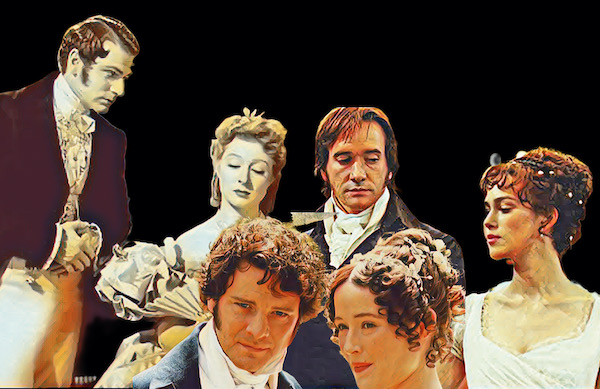
For scholars, through Jane’s perspective, we clearly see how complex class distinctions, gender roles, and the institution of marriage were at the time, and some of these norms still provoke discussion today. But for screenwriters, it is the situations of disagreements, misunderstandings, and personal development of each character throughout the story that still cement the formula of the “romantic comedy”. Not even the most cynical can resist Jane Austen.
The 1940 version
The first film adaptation of Pride and Prejudice was in 1940, directed by Robert Z. Leonard, and stars Greer Garson as Elizabeth Bennet and Laurence Olivier as Mr. Darcy. It is a somewhat loose but engaging retelling of Austen’s classic story.
Although the novel is set in the early 1800s, around the time of its writing (Austen completed the book in 1796, and it was published in 1813), the costumes and overall aesthetic reflect Hollywood’s glamorous interpretations of the period, whereas other adaptations were more faithful to everyday life in early 19th-century England.
In keeping with its time, the 1940 Pride and Prejudice differs in pace from the novel, condensing the plot and character development due to time constraints. There are “creative liberties” and perhaps this is why it was not universally acclaimed even at the time.
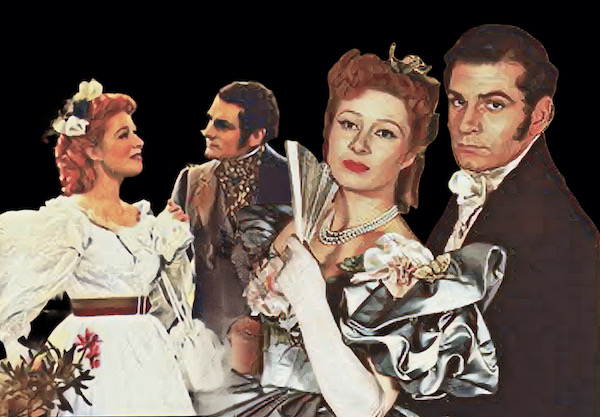
Greer Garson’s performance was generally praised for capturing the spirit of Elizabeth, but Olivier’s portrayal of Darcy was considered too taciturn and emphasized her emotional distress more than the complexity of the character. I disagree: Garson is perfect, without a doubt one of the best Lizzies, but Olivier’s Darcy combines Firth’s pedantry and McFadyen’s shyness. The only downside is how affectedly he played him, but Olivier in those years was not yet dominating the cinema as he did on stage, he always seemed more exaggerated. But there is undeniable chemistry between them and they are great Darcy and Lizzie, even if they are almost forgotten today.
The 1995 BBC series: Darcy becomes a pop icon
Forty years ago, the BBC adaptation directed by Simon Langton was one of the most acclaimed of Pride and Prejudice. Not only is it the most faithful to the source material, but it also significantly influenced the public perception of Jane Austen’s works.
Because it’s a series, this version didn’t have to summarize the story to fit within 2 hours: it tells everything in almost 300 minutes spread across six episodes and was so successful that Helen Fielding created the hit Bridget Jones from it.
The cast of this version is nothing short of sensational thanks to Ehle and Firth. Jennifer Ehle‘s Elizabeth Bennet is shrewd, strong and intelligent. Perfect, for me, the best of all. And what about Colin Firth as Mr. Darcy? His performance in the role is iconic and, for many, the definitive representation of the character, balancing pride and vulnerability. Unfortunately, because of McFadyen, I disagree now, but until the 2005 film, I certainly shared this opinion.

With dialogue largely faithful to the original text, with only a few elements modernized for clarity and emotional depth, 1995’s Pride and Prejudice was acclaimed worldwide as perfect and inspired a resurgence of interest in the s in the works of Jane Austen, being crucial to her current status as a timeless literary figure. It was so important that many (I am among them) were surprised when the film was announced. How can you top something so good? What a surprise: it was possible.
The 2005 version: the definitive of the definitives?
When director Joe Wright chose Jane Austen‘s classic for his film, the world reacted passionately… against it. Today respected and a reference, at the time it was still unknown, but his aesthetic approach and ability to deal with characters and emotions helped create an adaptation that stood out from the others. Since then, Wright has become known for his distinctive visual aesthetic and ability to tell complex stories, cementing his position as one of the preeminent filmmakers of his generation.
The cast today is breathtaking, but at the time only Keira Knightley was known and many did not see her as Elizabeth Bennet, because she was more beautiful than the character is described and had a strong personality, but in the end, she was nominated for an Oscar for the role. Rosamund Pike played Jane, but it was Matthew Macfadyen who had the hardest task of surpassing Colin Firth as Mr. Darcy. Today, no one can decide who is the best, but Macfadyen has led the polls because he brought a unique and emotional interpretation of the character, unlike some previous versions.
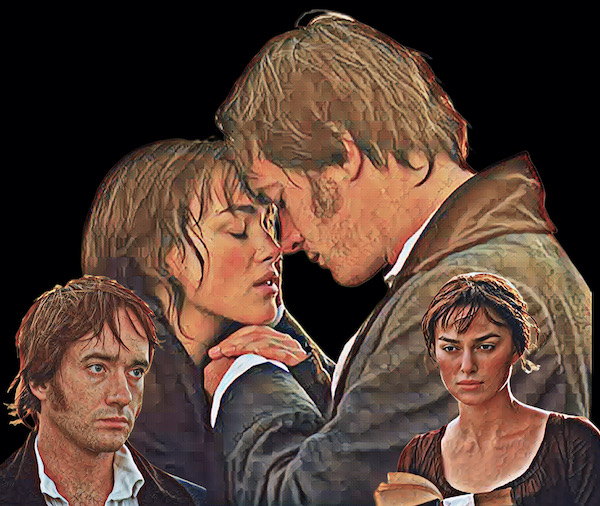
The 2005 Pride and Prejudice is undoubtedly the most acclaimed and awarded version of all, as well as a huge commercial success: grossing more than 120 million dollars worldwide, which is considerable for a film based on a historical novel. It is so beloved that it will be re-released in theaters now in April 2025 precisely to celebrate its 20th anniversary. There are some concessions regarding the details of the book’s plot, but it managed to capture the spirit and essence of the story. After it, as well as the BBC series, there was a new wave of re-recordings of Austen’s books, rejuvenating interest in her stories.
Over the years, Pride and Prejudice has continued to captivate new generations. Whether in the 1940 version, with its Hollywood glamour, in the 1995 miniseries, which became a reference for Austen fans, or in the 2005 version, which brought a visually striking approach and deeply emotional characters, the story of Elizabeth Bennet and Mr. Darcy remains irresistible. With Pride and Prejudice returning to theaters to celebrate its 20th anniversary, we can only conclude that the fascination with this story is eternal, and there may never be a definitive answer as to which version is the best. Each one, in its own way, immortalizes Austen’s masterpiece, bringing the classic to different audiences and keeping the flame of her legacy alive.
Descubra mais sobre
Assine para receber nossas notícias mais recentes por e-mail.
 miscelana.com
1 comentário Adicione o seu