
There is no other or better “time machine” than music. The connection with good times and the soundtrack of each one contribute to shows always being occasions of magical connection. And in 2025, the band Garbage guaranteed me this invigorating trip in a show, practically exclusive to die-hard fans, in Rio de Janeiro, before they embarked on Lollapalooza, in São Paulo.
Of course, the night was perfect. Shirley Manson is one of the most iconic frontwomen in rock, something rare that makes me appreciate her even more. It is not rare because she has options, it is just the opposite: in a sexist and misogynistic niche, she imposed herself and left her mark. I always appreciate all women in rock and roll, and she’s up there with Pat Benatar, Ann Wilson, Patti Smith, and Siouxsie Sioux, to name a few.

Garbage was formed in 1993 by lead singer Shirley Manson and multi-instrumentalists and producers Butch Vig, Duke Erikson, and Steve Marker. The band came together when alternative rock was on the rise, blending multiple genres including rock, electronic, and pop to create a distinct sound characterized by atmospheric instrumentation and sharp lyrics.
The trio of Vig, Erikson, and Marker had already been making music together on many projects, with Butch Vig most notably being recognized as the producer of Nirvana’s legendary Nevermind album. The three wanted to create a sound that was polished and gritty, blending lush production with raw lyrical content, and in their search for a lead singer, they came across Scottish singer Shirley Manson, formerly of the band Angelfish. Manson’s voice and charisma were a perfect fit for the band’s ambitious style, and she quickly became the group’s focal point.
The release of their self-titled debut album, Garbage, in 1995 was met with critical and commercial success, with singles Only Happy When It Rains, Stupid Girl, and Vow helping to establish the group as a mainstay in the 1990s music scene. The album’s innovative sound, combining rock with electronic beats and samples, resonated with audiences and generated a loyal fan base. The band’s aesthetic, characterized by a mix of glamour and angst, was further solidified by their striking music videos and Manson’s commanding presence.
Garbage’s next album, Version 2.0, released in 1998, solidified the band’s place in music history with hits such as Push It, I Think I’m Paranoid and Special and was notable for its production quality, being hailed as one of the best albums of the decade, helping to further define the alternative rock genre.
At the turn of the millennium, Garbage remained active, but with less impact, and their songs began to include themes of love, identity, and existential angst, reflecting the vocalist’s personal moment. There were significant challenges during this period as Shirley struggled to cope with fame and the public persona, leading to a brief hiatus from 2005 to 2011.
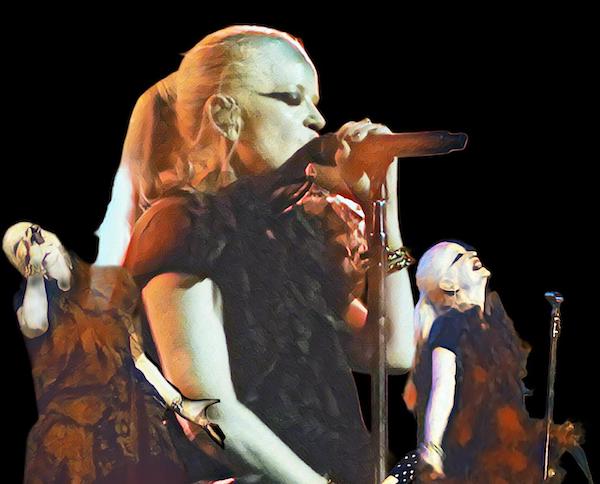
When they reunited in 2011, they returned to their roots, to critical acclaim (although no longer the same acclaim as in the early years). They continued to tour and perform, bringing their energetic live shows to audiences around the world and recording albums with songs that explore contemporary themes, addressing issues such as gender inequality, mental health, and social struggles.
As lead singer, Shirley Manson played a crucial role in the band’s identity. Her unique voice, striking stage presence, and bold personality defined Garbage’s public image. In addition to her musical contributions, Manson is an outspoken advocate for many social issues, including feminism and mental health awareness. She uses her platform to encourage discussion on these topics, becoming an influential figure both within and outside the music industry. Manson’s authenticity and openness about her experiences resonate with fans, further solidifying her connection with her audience.
As such, with a 32-year career under their belt, Garbage continues to be a vital part of the music scene with a passionate fan base. Their performances feature hits that have defined generations. I’ve seen them live more than once: I can’t recommend them more!!
Descubra mais sobre
Assine para receber nossas notícias mais recentes por e-mail.
 miscelana.com