
One of the big hits of 2025, and it’s a year of big titles, is the medical drama The Pitt. Since its debut, the series has become one of the most intense and innovative medical dramas on contemporary television. Created to capture the raw reality of an underfunded and overwhelmed hospital, The Pitt quickly gained a legion of fans and became a cultural phenomenon. With a distinctive cinematic approach, complex characters, and a narrative that unfolds in real-time, it truly stands out among other series in the genre.
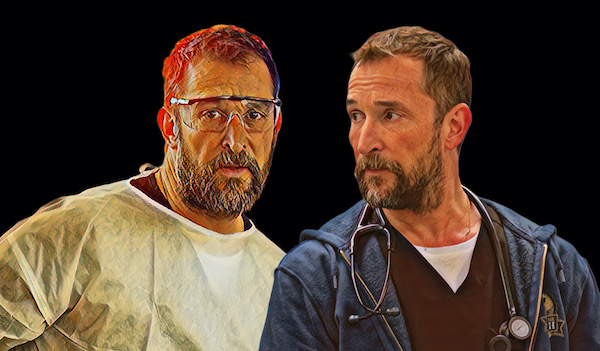
The Tradition of Medical Dramas and the Comparison to “ER”
To understand the impact of The Pitt, it is essential to look at the long tradition of medical dramas on television. From Dr. Kildare in the 1960s (starring the recently deceased Richard Chamberlain) to modern hits like Grey’s Anatomy, medical series have always attracted audiences with a mix of emotion, realism, and ethical dilemmas.
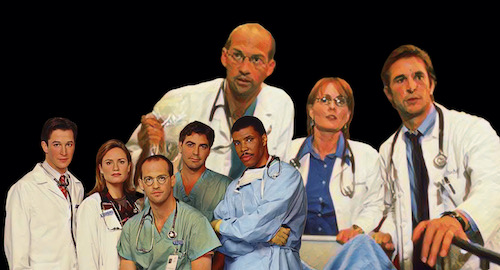
The great landmark of this genre was ER, which aired from 1994 to 2009, created by Michael Crichton. The series revolutionized TV by presenting a realistic hospital environment, with overworked doctors dealing with high-risk emergencies. ER stood out for its fast-paced dialogue, chaotic scenes in the emergency room, and the deep development of its characters. The Pitt follows this legacy, but takes the proposal even further: while ER often made time jumps and explored different plots over several days, The Pitt condenses all the action into a single 15-hour shift, creating an even greater sense of urgency.
In addition, The Pitt adopts a rawer visual aesthetic, with shaky cameras and long sequence shots, intensifying the viewer’s immersion. The series also explores more openly the bureaucratic and financial challenges of the healthcare system, an element that ER addressed, but without the same centrality that The Pitt brings to its stories.
The Formula for Success
One of the most striking aspects of The Pitt is its narrative format. Each season covers a single 15-hour shift in the emergency room of the fictional Allegheny General Hospital, with each episode representing approximately one real hour of that shift. This approach heightens the sense of urgency and puts viewers directly on the front lines of the action. The choice of over-the-shoulder cameras and long tracking shots further reinforces this immersion, creating a realism rarely seen on television.
In addition, the series sets itself apart by its darker, more realistic tone, reminiscent of classic medical dramas such as ER and Chicago Hope, but with a heightened level of intensity. The doctors and nurses in the series face daily challenges that go far beyond medicine: lack of resources, hospital bureaucracy, and moral dilemmas are explored in depth. This resonates with audiences seeking a more authentic and less romanticized view of the medical profession.
Characters and Representation
Another great asset of The Pitt is its diverse and well-constructed cast. The characters are not only health professionals, but also human beings with flaws, turbulent pasts, and personal struggles. The series gives special attention to nurses and first responders, something that other medical productions often neglect. The inclusion of stories that address social inequality, the opioid crisis, and mental health also strengthens the connection with the audience.

Controversies
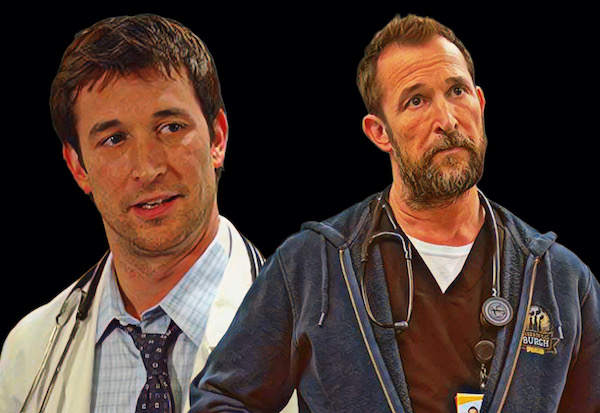
Like any great success, The Pitt has not escaped controversy. One of the most notable involved a lawsuit filed by the estate of Michael Crichton, creator of ER. According to the accusation, Warner Bros. Television had used concepts originally intended for a sequel to ER without authorization. The production company denied the accusations, claiming that The Pitt is an independent and distinct work, but the controversy generated great repercussions in the media. It doesn’t help the originality argument that the big star of The Pitt (and he is wonderful) is actor Noah Wyle, whose worldwide stardom was achieved precisely in ER.
Another controversy arose when an episode of the series featured a mispronunciation of “Wholey’s,” an iconic Pittsburgh establishment. This cultural oversight drew criticism from local residents, who accused the production of not paying enough attention to regional details. Small mistakes like this may seem insignificant, but for a series that values realism, every detail matters.
Finally, one of the most controversial moments of the series occurred in episode 14, when the character Dr. Cassie McKay, played by Fiona Dourif, was arrested for violating the terms of her probation. The scene generated intense debates about medical ethics and the impact of criminal pasts on the careers of health professionals. The actress herself revealed in interviews that she was inspired by personal experiences to bring the character to life, further increasing audience engagement.
The Future of “The Pitt”
Despite the controversies, The Pitt remains one of the most successful medical series of recent years. Its ability to blend intense drama, realism, and engaging characters has made it a landmark in modern television. With new seasons already confirmed and a passionate fan base, the series promises to continue surprising and redefining the standards of the medical genre.
The Pitt‘s successful formula shows that audiences continue to be fascinated by medical stories that go beyond clichés. While many series in the genre rely on romance and exaggerated twists, The Pitt establishes itself as a raw, emotional, and deeply engaging production.
Descubra mais sobre
Assine para receber nossas notícias mais recentes por e-mail.
 miscelana.com