
A few hours after the end of the season of The White Lotus, it is worth reflecting on the extremely deep and great product that Mike White has once again delivered to us, with a unique precision about human behavior and its consequences. Without an exactly happy ending, but always realistic and uncomfortable, the showrunner once again addresses the problems of modern society, making us laugh, cry, fear, reject, hate, and, finally, admit that it is incredible. Bravo.
I know that, for years, I said that I wanted to understand the plot of Greg/Gary Hunt, who entered Tanya McQuoid’s life in the first season, managed to get her killed in the second and, now, apparently escaped danger in the third. But the “who died”, more than the “who killed”, is another criticism that White makes of our unbridled consumption of true crimes and investigations. The clues are clear — Chelsea spent the season begging Rick not to do anything stupid and that “bad luck comes in threes,” but, like the fatal character of the moment, we refuse to do anything about the obvious. As Ben Stiller says, “Mike White is a genre unto himself and a genius.”


Each season, there is a theme: in Hawaii, he addressed the issue of social privilege and inequality, as well as the gap between generations. In Sicily, the focus was on sexual relations and the dark side of luxury. And now, in Thailand, the theme is religion, spirituality, and death. I would even add another: the emotional and psychological imprisonment of traumatized people. Chelsea, with her emotional maturity, trying to understand and not judge, was deaf to Rick’s pleas for her to leave him and move on. She had a savior complex and paid with her life for not having read the signs or been practical, as he recommended. A tragic character who conquered the world.
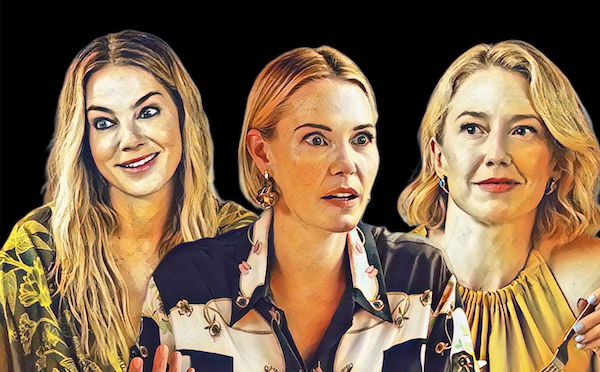
In fact, the gallery of female characters this season left us with incredible references. Are we all a little Chelsea, persisting in harmful relationships? Or are we more Laurie, whose emptiness of bad choices has turned her into a bitter and confused person? Are we Kate, in her falseness and “good manners”? Are we Jaclyn, chasing youth? Are we Chloe, living each day without consequences? Are we Piper, seeking religion to fill the material void? Or are we Victoria, taking drugs and drinking to numb the problems that surround her? Even more, are we Belinda, who discovered her price — 5 million dollars — and threw ethics or love out the window? They are all incredible.

But of course, the most tragic protagonist was precisely Chelsea, the “crazy hippie” played masterfully by Aimee Lou Wood, now discovered by a wider audience (but already adored by those who watched Sex Education). The connected young woman and avid self-help reader is the epitome of the “romantic heroine” who is tragic only because she does exactly what we women should avoid: thinking she will save someone, especially the man we love. If Chelsea had listened to her own advice or that of Rick (Walton Goggins), she would be alive and with a new boyfriend. But, in her unconscious arrogance of seeing herself as superior and spiritual, she ended up dead.
Chelsea was 25 years younger than Rick, a “troubled” man tormented by ghosts from the past (in the belief that he had “stolen his life” by a man who killed his father), which reflects an Oedipus complex (he was obsessed with his mother). In Chelsea’s case, an Electra complex, for wanting this older male figure, even with young people and other options by her side.
To make matters worse, Chelsea had what is known as a “savior complex,” when someone feels that their mission or role in life is to rescue another person, often from emotional, psychological, or even physical problems. As is the case in these cases, she expressed a deep belief that only she could change Rick’s life, insisting on this even when all the signs were clear (the main one being the venomous snake bite that Rick himself had removed from the cage) and, even more so, when her boyfriend asked her several times to leave him and, on a fateful day, not to follow him when he was being chased by armed men.
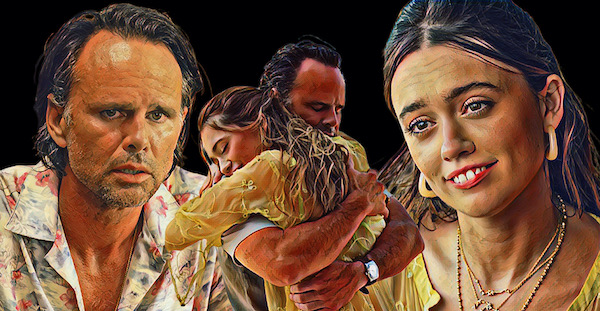
Our hearts go out to Chelsea because this sense of importance was “false.” In fact, in her low self-esteem, she was codependent on Rick and his pain, and her personal validation came from outside, in his person. We don’t know enough about Chelsea or how she and Rick met, but for her, his pain was more addictive than any other drug. She felt she had a mission to make a difference in her boyfriend’s life, neglecting her own needs to focus exclusively on Rick’s.
Why did Chelsea, in an unconscious desire to die, embrace Rick’s violent fate? I, particularly blame the patriarchal culture, immortalized in literature and cinema with works where women sacrifice themselves for love.
Mike White is brilliant in showing this female trap bluntly. As I said, in more than one episode Rick tells her to leave him, to find someone else who is ready to love her as she deserves. He says this rudely and affectionately but repeats the request on more than one occasion, even leaving her at the resort while he goes to Bangkok alone.
And Chelsea had options to “save” another: Saxon, the arrogant and equally emotionally wounded young American in desperate need of “help”. He consistently tries to relate to Chelsea, who rejects him out of loyalty to Rick. There is a spark that could have been a saving grace, but she insists on the tragic fate. In this way, her death symbolizes the extreme consequence of her incessant search to save someone who did not want to be saved or who, in his emotional reality, was not ready to be saved. This type of dysfunctional dynamic, where she loses herself trying to change or heal another person, can be dangerous for both her and the relationship. Chelsea’s death, in the context of the narrative, seems to be a kind of tragic outcome for her attempt to change the impossible.
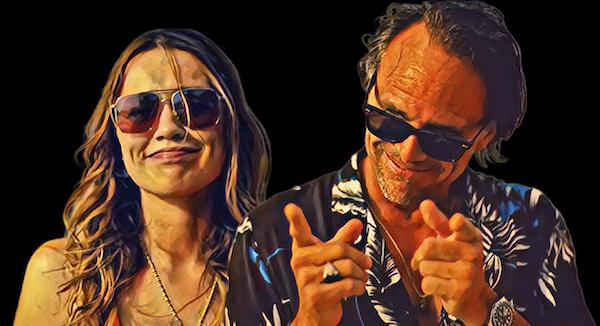
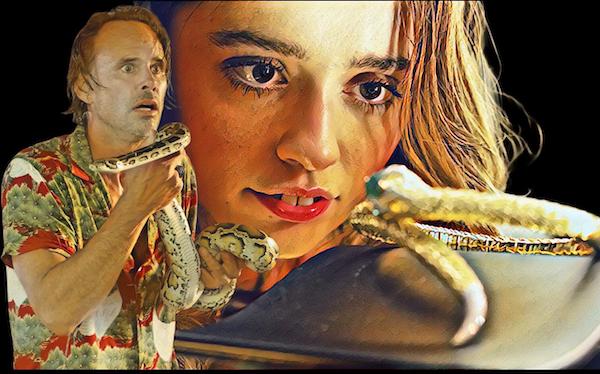
What was beautiful, in fiction, is that Chelsea and Rick die at the moment when they are trying to create an emotional space to open up and transform themselves, but “too late”, as the movies love to show. The tragedy can also be seen as a reflection of Chelsea’s disconnection from her partner’s emotional reality, in addition to the extreme idealization she had of him. She believed so much in her ability to save him that she became blind to the reality of his emotional limits and the lack of reciprocity. Her death symbolizes the distortion of the perception of the relationship, where she was unable to see that her partner would never share the same desire for change or evolution. Deep down, she was losing herself in the process, which is reflected in the final tragedy of her character.
The message we can take from this story is related to the lack of emotional limits. Chelsea was deeply emotionally invested, not only in the man but also in the idea that she could heal him. When we fail to set healthy boundaries, we can lose ourselves in others, which can ultimately lead to emotional burnout or even personal tragedy, as we saw with her. Her death serves as a reminder of the importance of maintaining a sense of emotional autonomy and not losing ourselves in trying to “save” someone else.

The importance of this dramatic metaphor about the risks of codependency and the relentless pursuit of control over another is extremely timely, because the idea that love alone can heal deep-rooted trauma is dangerous. Chelsea’s loss is a powerful reflection on the importance of self-care, respecting the limitations of others, and recognizing that we cannot heal others without first taking care of ourselves.
Complain all you want about season three, but it brought a profound and tragic dimension to the series. I’ll get to the others later, but today I wanted to talk about Chelsea and Rick, who die within a cycle that reflects their own vulnerabilities and illusions. A sacrifice to help question the emotional implications of seeking salvation from someone emotionally unavailable. And that the signs should never be ignored.
Descubra mais sobre
Assine para receber nossas notícias mais recentes por e-mail.
 miscelana.com