
Ironically, one of the most popular phrases of the last century is attributed to the father of psychoanalysis, Sigmund Freud, who considered understanding the female soul an insoluble mystery. And he taught us how to navigate the human unconscious! “The great question that has never been answered, and that I have not yet been able to answer, despite my thirty years of research into the female soul, is: ‘What does a woman want?’”, he wrote in 1933.
As women, I am sure many of us have the answer that we are much simpler than expected. The problem lies in patriarchal expectations that have spanned millennia and, with the advancement of the feminist movement, are becoming more pronounced. Women only began to fight for their rights at the end of the 19th century, and in the 21st century, we still have a long way to go.

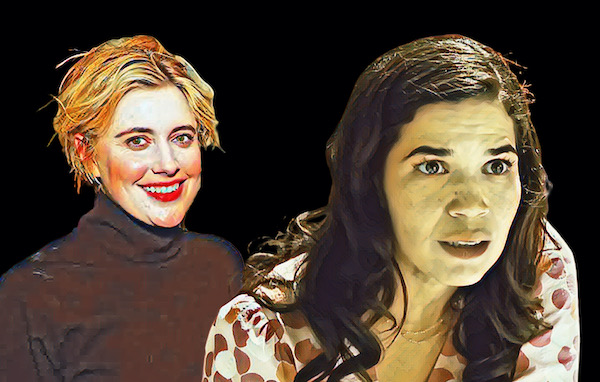
Interestingly, two female “rants” — one in film and the other on TV — have impacted not only women but also men, who now have a greater perspective on what “women feel obligated to be.” America Ferrera’s monologue in Barbie (2023), which led to her Oscar nomination, is an example of this. Her speech explores the critical reflection on the expectations of feminine perfection imposed throughout history, especially in the context of consumer culture and the fashion and beauty industries.
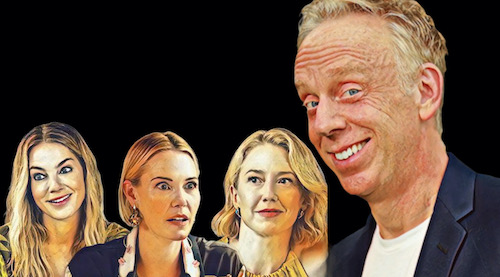
In The White Lotus, in the final episode of the third season, Carrie Coon’s character, Laurie, delivers another powerful monologue. The character finds herself in an existential crisis, more introspective, but with a similar focus on the search for meaning as we age. During a conversation with friends, Laurie reveals that she tried to fill a void with various personal “religions” — work, love, motherhood — but they all failed. She shares that she has lost faith in these forms of searching for meaning and now finds herself adrift, without a belief system to guide her. The moment was so impactful that it was impossible not to be moved by the actress’s sincere delivery.
Greta Gerwig and Mike White deserve all the praise for their sensitivity and precision in placing the exact words and feelings of their characters in such palpable contexts. Both monologues explore the existential crisis that many women face when trying to balance their personal identities with the roles imposed by society. Barbie’s struggle to understand her identity without being limited by imposed perfection and Laurie’s epiphany, who discovers that she does not need great external justifications to give meaning to her life, are examples of a common search: finding freedom and authenticity in a world that demands conformity.
Female Expectations: Survival Under an Impossible Standard
The monologue written by Greta Gerwig in Barbie reflects an idea that was already expressed in Madonna‘s song, What It Feels Like for a Girl (2000), but in the cinema, this becomes even clearer and more accurate. It’s worth remembering word for word:
“It’s literally impossible to be a woman. You’re so beautiful and so smart, and it kills me to know that you don’t think you’re good enough. Like, we’re supposed to be extraordinary all the time, but somehow we’re always doing it wrong.
You have to be thin, but not too thin. And you can never say you want to be thin. You have to say you want to be healthy, but you also have to be thin. You have to have money, but you can’t ask for it because that’s rude. You have to be a boss, but you can’t be mean. You have to lead, but you can’t crush other people’s ideas. You should love being a mother, but you shouldn’t talk about your kids all the time. You have to be a career woman, but you also have to be a nuisance.
You have to answer for men’s bad behavior, which is insane, but if you point it out, you’ll be accused of complaining. You have to be pretty for men, but not so pretty that you tempt them too much or threaten other women because you’re supposed to be part of the sisterhood.
But always stand out and always be grateful. But never forget that the system is rigged. So find a way to acknowledge that, but also always be grateful.
You should never age, never be rude, never show off, never be selfish, never fall, never fail, never show fear, never step out of line. It’s so hard! It’s so contradictory and no one gives you a medal or thanks! And it turns out that not only are you doing everything wrong, but it’s all your fault.
I‘m so tired of watching myself and all the other women messing around just to get people to like us. And if all of that is also true for a doll that only represents women, then I don’t even know…”
These words are a clear reflection of how women are burdened with a set of contradictory and unattainable expectations. Barbie, like so many women, es, finds herself struggling to meet standards of perfection and eventually realizes that this pursuit is a vicious and self-destructive cycle.
Laurie, in The White Lotus, is at a stage where she has tried many ways to find meaning in her life. She confesses:
“It’s funny because, to be honest, I’ve been so sad all week. I feel like my expectations were too high, or… I feel like as we get older, we need to justify life, you know? And choices. And when I’m with you guys, it’s like… so transparent what my choices were. And my mistakes. I don’t have a belief system, and I… well, I mean, I had a lot of them, but… I mean, work was my religion forever, but I definitely lost faith in it. And then, and then, I tried love, but it was just a painful religion that made everything worse. And even for me, like being a mother, that didn’t save me either. But I had an epiphany today: I don’t need religion or God to give my life meaning. Because time gives meaning. We, we started this life together. I mean, we’re going through it separately, but we’re still together, and I, I look at you guys, and it feels meaningful. And I can’t explain it, but even when we’re sitting around the pool talking about whatever stupid thing, it feels so profound. I’m glad you have a pretty face. And I’m glad you have a beautiful life. And I’m happy just to be at the table.”
This excerpt reveals how Laurie, after so many attempts to fill the void with work, love, and motherhood, now finds herself without ready-made answers. Laurie’s moment of epiphany, in which she recognizes that she doesn’t need external justifications to give meaning to her life, is a powerful liberation. By stating that “time gives meaning” to life, she reminds us of the importance of simple moments and genuine connections.


The Journey to Freedom
Both monologues, although in different contexts, speak to the liberation from external expectations and the need to redefine feminine identity in a more realistic and human perspective. They reflect the struggle of contemporary feminism to break out of traditional molds and allow women to find their own identity, without submitting to unrealistic ideals. Barbie and Laurie, each in their own way, show us that being a woman is not about meeting a standard, but rather embracing one’s own humanity, with all its flaws and contradictions. After all, at the end of the day, we just want to be ourselves, without having to justify our existence to anyone. Simple. And so complex.
Descubra mais sobre
Assine para receber nossas notícias mais recentes por e-mail.
 miscelana.com