
As published in CLAUDIA
After the intense Thailand of The White Lotus, HBO MAX will soon take us to a different scenario: a dystopian United States with The Last of Us. That’s right, the long-awaited second season of the series that has become one of the platform’s biggest hits since its debut in 2023 has arrived.
Expectations were high when HBO announced the adaptation of the game for television — and the news was received with a mix of enthusiasm and caution. Video game adaptations for audiovisual media don’t always have a good track record, but The Last of Us not only deeply respected the original work, but also managed to transcend the format. The series moved even those who had never played the game, consolidating itself as a cultural phenomenon and a milestone in the history of television.
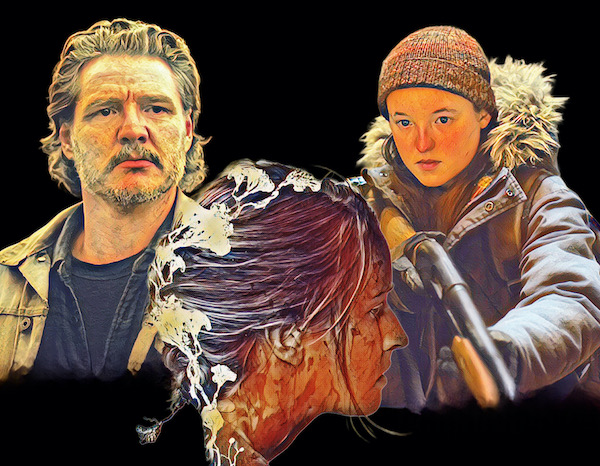
Created by Craig Mazin (Chernobyl) in partnership with Neil Druckmann, the game’s creator, the series impressed the most demanding fans with its high level of fidelity and attention to detail. However, its true success came from the way the game’s universe was expanded: secondary characters gained depth, relationships were explored with more delicacy, and the emotional charge gained even more strength. One of the greatest examples of this is the episode centered on Bill and Frank, which became a worldwide topic and was acclaimed as one of the most sensitive and impactful moments in recent television.
The casting of Pedro Pascal and Bella Ramsey as Joel and Ellie was also an important decision. Pascal was already a practically unanimous choice, but Bella Ramsey faced initial resistance: part of the audience questioned her physical appearance the character in the game, and even her artistic ability. But throughout the season, her performance — raw, authentic, and emotionally powerful — won over even the most skeptical. Now, with the new phase of the story, expectations for the actress grow even more.

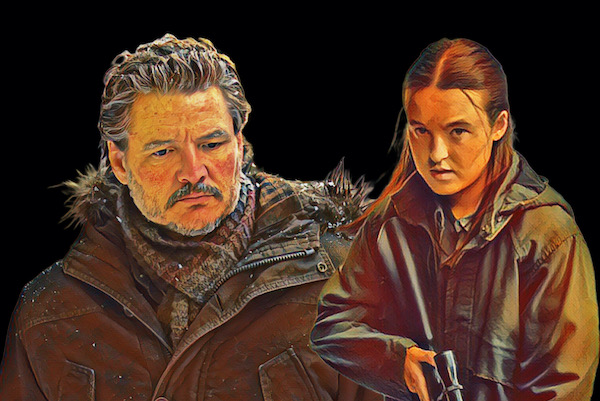
In this second season, we will see the consequences of Joel’s big lie. Ellie will discover that he saved her from a surgery that could have cured humanity, but would have killed her. The relationship between the two enters a crisis, and there is speculation among fans: will we say goodbye to Joel this season? Or have the creators decided to “hold” this moment for the third? In any case, a warning to those who are passionate about Pedro Pascal: don’t get attached. The story that lies ahead revolves around Ellie — and a new character, Abby, who we will meet at the beginning of the season.
With the arrival of Abby, the narrative focus is divided between two intense and complex female characters. Their trajectories are marked by loss, trauma, and a desperate search for meaning. They are like broken mirrors of each other, protagonists of one of the most daring and emotionally devastating narratives ever created in the world of games — and now, on television.
Ellie returns more mature, hardened by her traumas, driven by a silent fury and a thirst for justice that leads her down dark paths. This time jump and this new version of the character will be fundamental for Bella Ramsey to definitively establish herself as one of the great actresses of her generation.
The big news, however, revolves around the casting of Abby — a controversial and fascinating character in the universe of The Last of Us. Played by Kaitlyn Dever, known for her intense performances in Unbelievable and Dopesick, the choice generated both enthusiasm and apprehension. Dever had already been considered to play Ellie years ago, which makes her entry into the series even more symbolic. Abby is a character who challenges the audience’s empathy and demands immense physical and emotional dedication. In the game, she was both hated and adored and now her story will be presented to an even larger — and probably more divided — audience.
This duality between female characters has also become a trademark of MAX. Think of House of the Dragon, for example, built on the conflict between Alicent Hightower and Rhaenyra Targaryen. In The Last of Us, however, there are no clear villains: Ellie and Abby are reflections of each other, shaped by extreme circumstances, and trapped in a cycle of violence that threatens to destroy what is left of humanity within them.
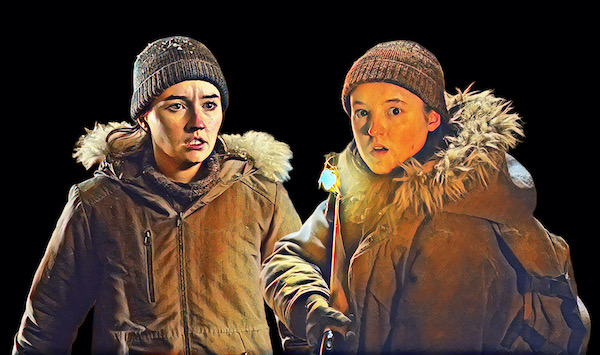

The series, which has already proven its ability to translate the brutality and intimacy of the game into television, now faces an even greater challenge: delving into a bolder, more painful story full of gray areas. The confrontation between Ellie and Abby is not just physical — it is a clash of worldviews, irreparable experiences, of traumas that never healed.
The second season promises to maintain the extremely high technical and emotional standard of the first, while at the same time advancing along narrative paths of more controversial issues. More than a continuation, this phase is an invitation to reflect on empathy, forgiveness, and the limits of what we are willing to do when the pain is greater than everything.
Descubra mais sobre
Assine para receber nossas notícias mais recentes por e-mail.
 miscelana.com