
One of my favorite books has always been The Great Gatsby, written by F. Scott Fitzgerald and published in 1925. The centennial anniversary was three days ago – April 10 – but it is still worth exploring this perfect work.
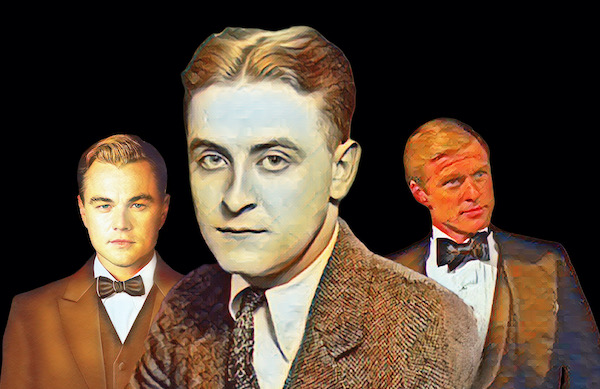
The book cleverly opens with Nick Carraway, the narrator (and alter ego of the writer) alluding to his father’s advice that “‘Whenever you feel yourself about to criticize someone, remember that not everyone in this world has had the advantages that you have had.’” Nick, Daisy Buchanan’s cousin and friend of her husband, Tom, is a neighbor and later confidant of Jay Gatsby.
In the end, when tragedy marks the enigmatic millionaire’s path, Nick concludes that Gatsby was swimming against the current that was always pulling him back to the past, even though he believed in “the green light, the orgasmic future that year after year recedes before us.” Nick begins with a vision of empathy and reflection, where he tries to put himself in the shoes of others, which perhaps makes him understand more about the mistakes and flaws of characters, such as Gatsby and the Buchanans. At the same time, he is constantly influenced by his own morality and by society’s expectations and ends up realizing that the tragedy of the incessant search and the impossibility of achieving our ideals, which makes him less of a dreamer, sadder, and penalized by an entire generation that sought perfection.
Even with this brief and superficial summary, there is no way to insist that you read the book and watch the films. The impact is certainly inevitable. The plot takes place in the 1920s, during the so-called Jazz Age, a time of excess, extravagant parties, and disillusionment. As I mentioned, the book is narrated by Nick Carraway, a young man who moves to Long Island in search of the “American dream” and ends up becoming a neighbor of Jay Gatsby, a mysterious and wealthy man, known for his luxurious parties and his obsession with the woman he loves, Daisy Buchanan.
Daisy, however, is married to Tom Buchanan, an arrogant and unfaithful man. Gatsby, who, we gradually discover, was born poor, made his fortune in a dubious way, now lives only to try to win back Daisy, whom he knew and loved before the war, but lost to Tom.
The book follows Nick as he gets involved in this love triangle, seeing how Gatsby tries in every possible way to fulfill his dream of having Daisy back, now idealized in his mind. But the ending is tragic: Gatsby is murdered by mistake, for a crime that is directly linked to his uncontrollable desire to live a fantasy of love and success. The novel ends with a bitter reflection on the limits of the “American dream” and the futility of trying to relive the past.
The culprit? Daisy deliberately runs over Tom’s lover and joins her husband in placing the blame on Gatsby. As Nick puts it best: “Careless people, who destroyed things and creatures and then took refuge in their money or their vast carelessness or whatever held them together, and let other people clean up the mess they had made.” So perfect and relevant! Even 100 years later.
Who Inspired F. Scott Fitzgerald?
Fitzgerald drew much inspiration from his own life and from people he knew during his youth and adulthood. One of the main inspirations for the character of Gatsby was the figure of Max Gerlach, a nouveau riche millionaire that Fitzgerald knew and who, like Gatsby, came from humble origins and used his wealth to impress others. The most convincing “proof” was the fact that Gerlach called people “old sport” (just like Gatsby) and that he had made his fortune in somewhat obscure ways. Gerlach is the main inspiration for the character because he was a “dubious marginal dandy” who presented himself as a German baron who fled Europe during the First World War but was in fact a bootlegger who used a car dealership and high society friends to hide his illicit earnings. A story considered “typical” of the Jazz Age.
But there are others.
Scholars say that Gatsby’s flamboyant side also had other sources, the most frequently cited being that of millionaire Joseph G. Robin, a New York banker who became very wealthy during the Gilded Age, accumulating and developing real estate, building a railroad network, and making some shady deals with energy companies that sprang up along the coast of Niagara Falls. In 1910 his shady dealings were exposed and he was arrested.
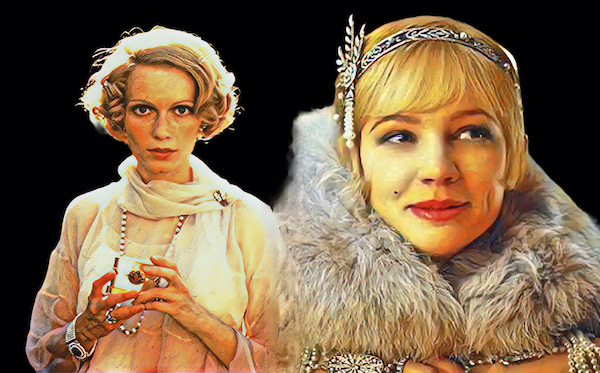
The author’s personal touch on Gatsby is his love for a fickle and vain woman. It is unanimous to point out that Daisy had a lot in common with Zelda Sayre, his wife. Zelda was a wealthy and charming woman, but her relationship with Fitzgerald was turbulent, full of ups and downs. Gatsby’s love for Daisy can be seen as a reflection of Fitzgerald’s relationship with Zelda—a relentless search for what seemed like an impossible perfection. There are also indications that Gatsby’s obsession with Daisy was inspired by Ginevra King, a former love of Fitzgerald’s who was wealthy and unattainable—and whose parents once told him, “Poor people don’t marry rich people.” It’s hard to ignore the parallel.
Why Wasn’t It an Instant Success?
Despite being considered one of the greatest classics of American literature today, The Great Gatsby was not a hit at the time of its publication. Fitzgerald was already well-known, but the public was more interested in lighter romances or adventure stories. The book’s theme—a critique of the “American dream” and the unrestrained pursuit of wealth and status—was something that many readers were not ready to embrace at the time. Fitzgerald’s focus on the frivolity and superficiality of high-society life was not well received by everyone.
Another barrier was the fact that the general public at the time did not identify with the type of life that Fitzgerald described: hypocritical millionaires and high society parties. Readers wanted stories that celebrated success and optimism, while The Great Gatsby offered a darker and more disillusioned vision, especially about the pursuit of wealth.
Its success only came years later, when soldiers in World War II began to read it, finding in the novel a connection with the difficulties and illusions they felt after the war. Over time, the book became an icon of American literature.
Reception and initial impact
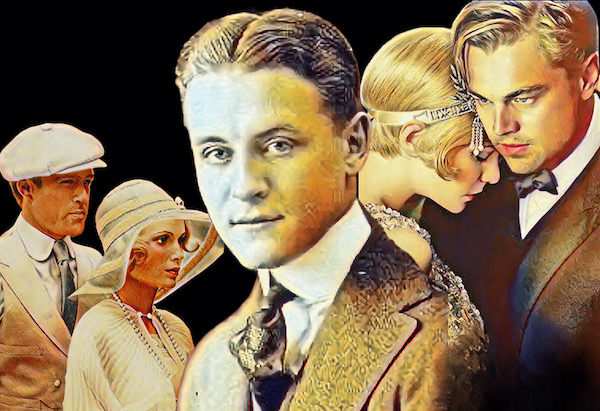
When it was released, the book was not very successful, can you believe it? It sold poorly, received lukewarm reviews, and Fitzgerald was quite frustrated. He believed he had written something great, but the public did not understand it very well — perhaps because they were not yet ready for the subtle criticism that the book makes of the American dream and the superficiality of the elite.
Fitzgerald died in 1940, poor and half-forgotten. But then, during World War II, the book began to be distributed to American soldiers — and this new generation saw something profound, almost mythical, in it. From then on, Gatsby was rediscovered, began to be studied in schools and universities, and became an absolute classic.
The cultural impact
Today, The Great Gatsby is considered one of the greatest works of American literature. It is required reading in schools, cited in films, songs, and even in political speeches. He captured with absurd precision this feeling of beauty and emptiness at the same time — the brightness of parties and the sadness that comes afterwards, like the hangover of an illusion.
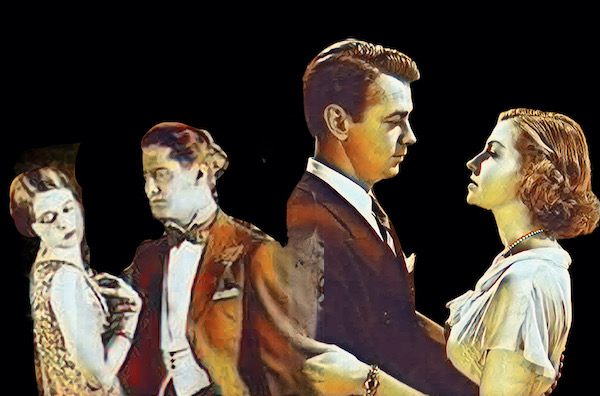
The figure of Gatsby became a symbol: the guy who chases an impossible dream, who builds an entire life to impress someone who may not even be worth it. Its first cinema adaptation was in 1926, in silent film. In 1949, a young Alan Ladd played a darker Gatsby, reflecting the post-World War II climate. In the 25-year hiatus, a film written by Francis Ford Coppola, starring Robert Redford and Mia Farrow, was released, but it was not a success (but it is extremely faithful to the book). Some people think it was a bit cold.

In 2013, the best-known new generation version came out, directed by Baz Luhrmann, with Leonardo DiCaprio as Gatsby, Carey Mulligan as Daisy, and Tobey Maguire as Nick. It is visually stunning and has a modern soundtrack, but it divided opinions for taking some artistic liberties. Still, it renewed interest in the book. There is currently a musical version playing on Broadway.
Ultimately, The Great Gatsby is a book about wanting something so badly that you lose yourself trying to achieve it. It is about identity, illusion, status, love, and the feeling that maybe it is all just smoke and mirrors. It is no wonder that, almost 100 years later, it still makes us think. It is worth reviewing, rereading, and always remembering.
Descubra mais sobre
Assine para receber nossas notícias mais recentes por e-mail.
 miscelana.com