
To understand the complexity of Good American Family, a Star+ series starring Mark Duplass and Ellen Pompeo, you must be familiar with the real story behind the plot — confusing, strange, and scary. I remember that, back in 2019, I wrote about Natalia Grace for CLAUDIA and quickly realized that there was a story there with the potential for a horror film — and, yes, a theatrical story.
Today, there are documentaries, reality shows, and, now, the series. It is a peculiar narrative, which involves themes such as adoption, medicalization, and allegations of deception, elements that caught the attention of the media and the public.

The story of Natalia, a Ukrainian orphan, began when the Baranov family, from Russia, decided to adopt her. Supposedly, she was six years old at the time. However, as events unfolded, what seemed like a normal adoption story turned into a mystery shrouded in controversy. In 2010, Natalia Grace was adopted by Michael and Kristine Barnett, a couple from Indiana, USA. According to the couple, they were touched by the tragic life story of the girl, who had allegedly suffered abuse and neglect.
The Barnetts had three biological children: Jacob, Wesley, and Ethan. The story of Jacob, who is autistic and started college at just 10 years old, was told by Kristine in a best-selling book, The Spark: A Mother’s Story of Nurturing, Genius, and Autism.
From the beginning, the relationship with Natalia was strange. Kristine began to suspect that the girl was lying about her age. Instead of being six or seven, she believed Natalia was over twenty and was making threats — she hid knives in her room and even tried to poison Kristine’s coffee with detergent.
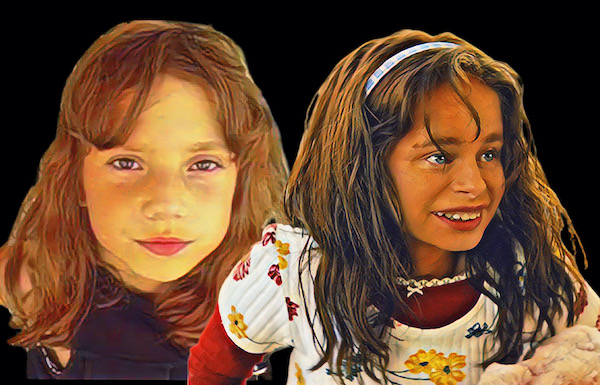
Two years after the adoption, the couple filed a petition to have Natalia’s legal age changed to 22. The change was approved based on estimates made by a primary care physician and a social worker.
Soon after, Kristine and Michael moved to Canada with their three children, leaving Natalia alone in an apartment in Lafayette. They claimed to be helping her financially. But at this point, the narrative shifted: Natalia began claiming that she had been abused by Kristine. The conditions in the apartment were poor—she could not reach the stove, shelves, or mailbox, and she had no phone to call for help. Neighbors quickly realized something was wrong.
The Barnetts claimed they were only trying to protect themselves, as they believed they were dealing with a dangerous person. The pressure of the circumstances took a toll on the couple’s relationship, and they separated in 2019. Both have pleaded not guilty to charges of neglect and conspiracy to commit dependent neglect. Michael was acquitted in 2022, and in March 2023, all charges against Kristine were dropped.

Natalia Grace’s case became a media phenomenon. In 2022, the documentary The Curious Case of Natalia Grace was released, offering a broader and more investigative approach to what really happened. The work brought to light the moral dilemmas faced by adoptive parents, the complexities related to mental health, and the challenges faced by adopted children. Michael continues to live in Indianapolis, but Kristine’s whereabouts are unknown. Natalia was adopted by her neighbors, the Mans, but soon accused them of abuse as well. She currently lives with Nicole and Vincent DePaul, a couple with dwarfism who had tried to adopt her back in 2009.
The series Good American Family is manipulative — in the best sense. The first four episodes are told from Kristine’s perspective, which convinces us that the Barnett family was in danger with Natalia. Ellen Pompeo, in a complex role that is radically different from her performance in Grey’s Anatomy, is excellent as the controversial Kristine. Mark Duplass also delivers a precise performance as the real Michael. But the one who really shines is Imogen Faith Reid in the role of Natalia.
The big change comes in the fifth episode, when the narrative starts to be told from the girl’s point of view, as suggested by the documentary, and reverses all previous logic. Without her walker and unable to take care of herself, Natalia Grace is no longer portrayed as a maniacal con artist willing to destroy a family and is seen as a child desperate to belong to a family — and rejected for being different.
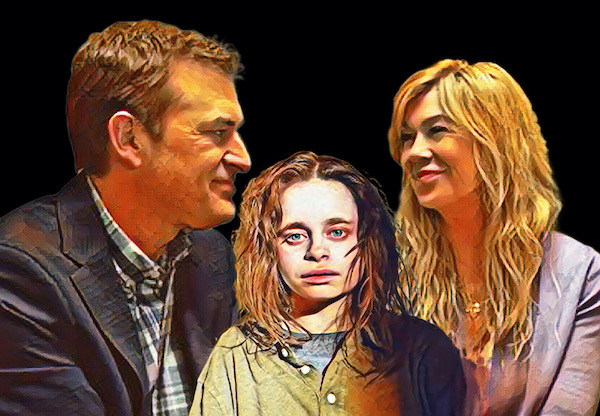
This change in perspective is perhaps the main virtue of the series, precisely because it reflects the extreme complexity of the case. By inviting us to believe in Natalia, the story becomes even more frightening. During the legal proceedings, it was confirmed that she was, in fact, a child at the time of her adoption. In other words: She was left alone when she was only about eight years old. She remained in that apartment for almost a year before moving to another, struggling with limited support and sporadic help from neighbors and church members.
Natalia Grace’s case harshly exposes the flaws in the adoption, justice, and foster care systems. At the same time, it raises a question that the series manages to dramatize with disconcerting precision: Who do we believe is the villain when the truth is ambiguous, fragmented, and painful? Good American Family doesn’t give us easy answers, but it does force us to question how willing we are to listen to—and believe—the pain of others, especially when it comes from someone who, at first glance, doesn’t seem to “fit” into any conventional narrative.
Descubra mais sobre
Assine para receber nossas notícias mais recentes por e-mail.
 miscelana.com