
We have a new season of Black Mirror, which, seven years after its premiere, can already be considered a genre. It was created by Charlie Brooker and always explores the dark and often disturbing implications of technology on society. Each episode is autonomous, with different characters, stories, and settings, but they all share a critical view of the impact of technology on human life, often addressing themes such as isolation, surveillance, digital ethics, data control, social networks, and the possible consequences of unbridled technological evolution. The series is often compared to a darker version of The Twilight Zone, in the sense that it uses science fiction to question moral and social issues.
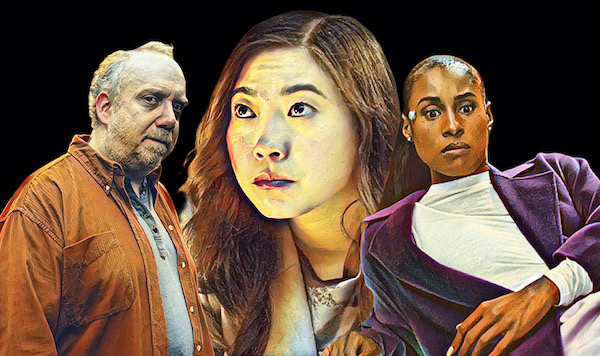
In 2023, the episode Joan is Awful was one of the most interesting and different of the series, but in 2025 many noticed an editorial difference in Black Mirror. “We have six episodes this time, and two of them are basically feature-length films. Some are deeply unpleasant, some are very funny, and some are heartbreaking,” the showrunner said. The cast is once again incredible: Issa Rae, Awkwafina, Paul Giamatti, Emma Corrin, and Cristin Milioti, among others. They’re all interesting, but there are two in particular that are moving: Eulogy and Hotel Reverie.
The difficult process of “remembering” pain
There’s a perfect song about Remembering, which is The Way We Were: “Memories may be beautiful, and yet what’s too painful to remember we simply choose to forget. So it’s the laughter we’ll remember, whenever we remember the way we were.” And how true it is.
The human mind is a complex and often uncharted territory, and the process of accessing the unconscious to reveal repressed or forgotten memories is one of the greatest challenges in psychoanalysis. That’s because they are painful or disturbing memories and as a “protection,” what causes immediate psychological suffering is “forgotten.” After all, they are often associated with trauma or emotionally intense experiences, which is why they are stored in the unconscious, out of reach of consciousness. But, despite “avoiding” pain, memories do not disappear completely. They continue to influence the person’s behavior and emotional state in indirect ways.
Repressed memories do not remain inaccessible forever. Over time, or through therapeutic interventions, it is possible to access these memories and bring the contents of the unconscious to the surface. This is not a simple thing, as it involves facing experiences that the ego tries to keep hidden. And the episode Eulogy combines this process and – of course – the use of Artificial Intelligence to “help” break down the defense.
The inspiration for the episode combines curiosity and something personal for Brooker. The first came from what he saw in the documentary The Beatles: Get Back, in 2021, where technology enhanced images and extracted John Lennon’s vocals to improve him. The other was the death of his father. “I had to give a eulogy at his wake, and we were looking for pictures of him to display on a projector on the wall. Before smartphones, it was very easy to forget that you just didn’t have that many pictures,” he said. “What that means is that these pictures are really evocative when you look at them, because there are fewer pictures, but they’re also imperfect. Today, we take pictures and you can adjust so that no one blinks or everyone looks happy. Back then, half of my pictures were overexposed.” […] So there was something special about that. And if, in a fit of anger, you rubbed someone’s face, you would destroy a precious artifact.”
And so was born the episode in which Phillip (Paul Giamatti), a rather withdrawn and isolated man, receives a call from a representative on behalf of a woman named Kelly Royce (Patsy Ferran), informing him that Kelly’s mother, Carol, his ex-girlfriend, has passed away and that her family would like his help with the memorial. There is a central problem: obviously still hurt by Carol, Phillip has trouble remembering the facts correctly and has ‘forgotten her face’.
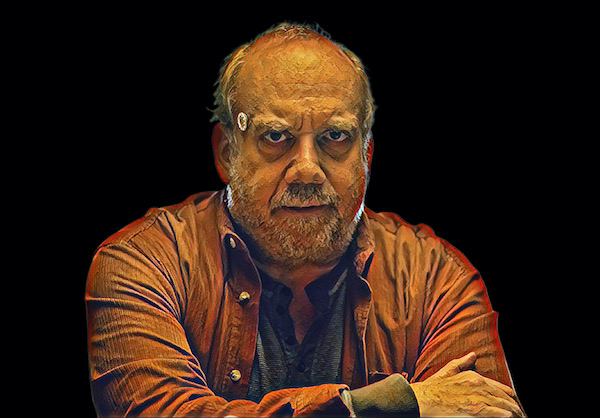
The alternative is to look for old photos he has with Carol to help him remember and have facts for the tribute. But the personal process is not simple: the anguish is incredible because in the tortuous process of freeing his unconscious – and remembering what he ‘chose to forget’ – he does not use the methods taught by Freud (free association, dream analysis, or transference) but since the AI is also not someone he has any relationship with (hint, here’s a twist), he is forced to revisit his pain. The perfect metaphor is that the program can process up to 1,500 photos, but recommends at least six images. The process of casting Phillip is revealing.
Paul Giamatti is spectacular in portraying the sadness, agony, and guilt of a man revisiting old memories with a new perspective. The sentimental story, as I warned, has an unexpected twist that returns to what Black Mirror usually confronts: the inability to go back in time and do everything differently.
Philip’s journey into the unconscious is exciting. This is because, in each person’s personal fantasy, facts are felt and remembered in different ways. Not only does Phillip finally remember her face, but he understands his part in the whole story and realizes that he turned her into a villain in his head. “He has a new insight into what she was going through, something he didn’t allow himself to see [at the time]. As a result of that, he falls in love with her again in the end, which is bittersweet because she’s gone,” warns Brooker.
Revisiting old movies: Hollywood’s fear from a new perspective
Hotel Reverie is less personal, but it deserves to be highlighted. Precisely because the discussion of AI caused a major strike in 2023 and much of what was discussed is here, with additional elements, of course. It’s a kind of Dead Men Don’t Wear Plaid meets The Purple Rose of Cairo.

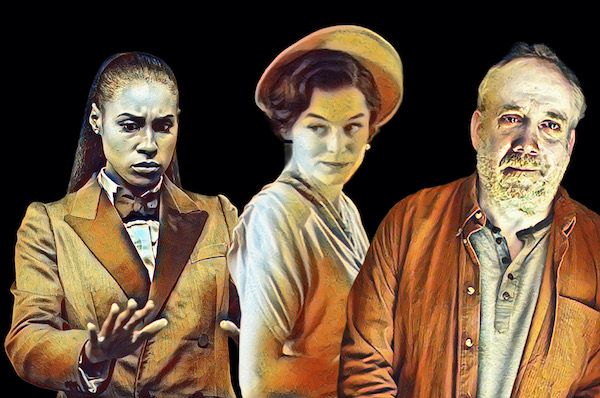
We have actress Brandy Friday (Issa Rae) frustrated with being typecast and yearning for something timeless and romantic — like the Hollywood classic Casablanca. At the same time, the head of a major studio in financial trouble, Judith Keyworth (Harriet Walter), is convinced to use the Redream software, which inserts modern stars into films from the past for interactive remakes. Thus Brandy is the star of the new version of her favorite film, Hotel Reverie. A dream that could turn into a nightmare.
She insists on inverting the hero’s gender and playing “Alex Palmer” herself. In addition to the technological challenge, Brandy will be able to work with her favorite actress, Dorothy Chambers (Emma Corrin), who starred in the 1949 original and is now generated by AI. The problem, there is always one, is that maintaining the original story is easier in theory than in practice.
To resolve small details that are not in the script and create holes in the plot, Brandy needs to ensure that the story reaches the point where she can trigger the final credits and thus be able to leave, otherwise, she runs the risk of being trapped in the alternate reality forever, with her real body falling into a coma.
The worst happens when an accident takes the Redream out of the air with Brandy still inside the film. In the meantime – in the real world, everyone flies to solve the problem – in virtual reality, Brandy and Dorothy fall in love, which makes the whole process gain a new dramatic layer.
Here, Charlie Brooker commented that the ending was determined before the beginning (I’ll avoid SPOILERS). According to him, the inspiration for the episode came from an idea that one day restoring an old film could include talking to someone in the work. And, of course, if it went wrong. But film buffs will find that the biggest inspiration, and one mentioned in the episode, is David Lean’s classic, Brief Encounter.
Thus, the new season of Black Mirror brings us a deeper and more complex reflection on the challenges and dilemmas of our daily lives. It deals with universal themes such as grief, love, identity, and regret, with the growing presence of artificial intelligence, virtual reality, and memory manipulation, creating a disturbing and, at the same time, deeply human narrative. If Black Mirror was previously a dystopia about the future, now it becomes a reflection of how the present can be equally disturbing when the tools we create to improve our lives begin to challenge our humanity. Something that always demands a pause for reflection.
Descubra mais sobre
Assine para receber nossas notícias mais recentes por e-mail.
 miscelana.com