
For those who were teenagers in the 1980s, April 14 is a special day: today, 40 years ago, the film that “defined Generation X”: The Breakfast Club was released.
Four decades later, the film remains as relevant as the day it premiered. Directed by John Hughes and released in 1985, The Breakfast Club became a watershed moment in teen cinema, shaping not only the teen genre but also the way we talk about identity, belonging, and vulnerability in youth.
“We’re all pretty bizarre. Some of us are just better at hiding it, that’s all.”
— Andrew (Emilio Estevez)
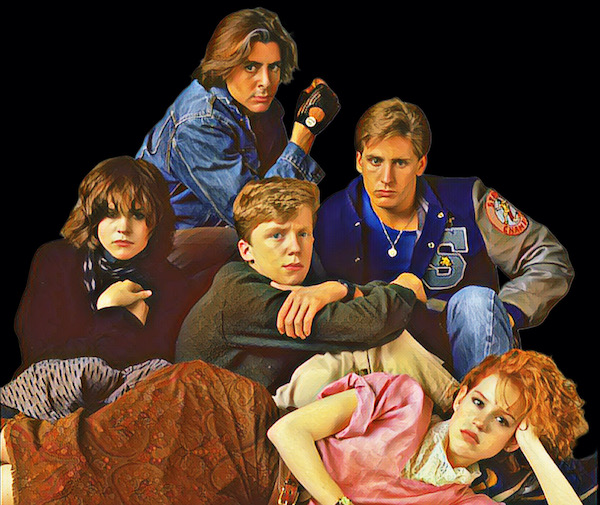
On a Saturday, five strangers and many labels
The premise is simple: five teenagers who don’t know each other are forced to spend a Saturday of detention together in the school library. Each one represents a stereotype: the athlete, the princess, the nerd, the weirdo, and the rebel. But throughout the day, what seemed like a meeting of opposites turns into a journey of self-knowledge and empathy.
Little by little, the characters let their guard down and share their stories. They talk about absent or demanding parents, deep insecurities, and overwhelming expectations. That’s where the film gains strength: it shows that, behind every social label, there is a human being trying to be accepted, trying to be seen.
“Screws fall out all the time. The world is an imperfect place.”
— Bender (Judd Nelson)
An honest script, striking dialogue
John Hughes, screenwriter, and director, had a rare talent for listening to young people and placing them at the center of the narrative without condescension. The dialogues in The Breakfast Club are intense, real, full of important silences. Instead of extraordinary actions, the film relies on the power of conversation, listening and breaking down barriers. It is a sensitive portrait of a phase of life in which everything seems urgent, dramatic and definitive.
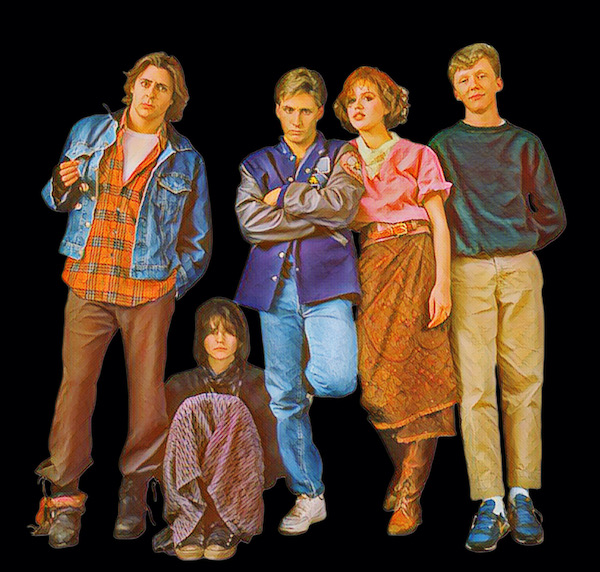
The cultural impact: why did it become a classic?
More than just a teen movie, The Breakfast Club became a cultural lens. It shaped the imagination of an entire generation and influenced everything that came after. Series like Stranger Things, Glee, Euphoria, and Riverdale have direct traces of Hughes’ aesthetic and narrative. Films like The Perks of Being a Wallflower, Easy A, and Lady Bird carry its DNA.
“I’m not a freak. I’m not a freak.”
— Allison (Ally Sheedy)
The song, which was written for the film, took a while to find a band that would agree to record it and only appears in the credits when the five make a pact not to forget each other when they return home. normal classes. When the music starts, we get the answer. It’s chilling.

What brought authenticity to the film was that, although the script was written by Hughes, several lines and interactions between the characters were developed from improvisations by the actors themselves during rehearsals. For example, the scene where everyone is sitting on the floor, opening up emotionally, was built based on real conversations between the cast and Hughes.
And this was the director’s signature: he always created an intimate environment on set and didn’t allow many adults to be around during the filming of the more emotional scenes, so that the actors would feel comfortable being vulnerable. This helped create the unique chemistry between the cast.
And to think that instead of The Breakfast Club in the original, the film had several working titles, including The Library Revolt and Detention. The final name came from a slang term used by students at New Trier High School (attended by children of Hughes’ friends), who referred to the Saturday detention group as “The Breakfast Club.”
“I can’t believe this is happening. I can’t believe I’m here. I can’t believe I’m actually talking to you.”
—Brian (Anthony Michael Hall)
A film about the present — even 40 years later
What makes The Breakfast Club so timeless? Its ability to touch on truths that are still ours. Even in 2025, when adolescence is expressed through social media, avatars, and influencers, the feeling of not belonging and the desire to be understood remain the same.
The film reminds us that everyone, at some point, has been (or still is) the “nerd,” the “weird,” the “popular” trying to keep up the act, or the “rebel” dealing with their hidden pains. And so, four decades later, it continues to find new audiences — and rekindle memories in those who have seen it dozens of times.
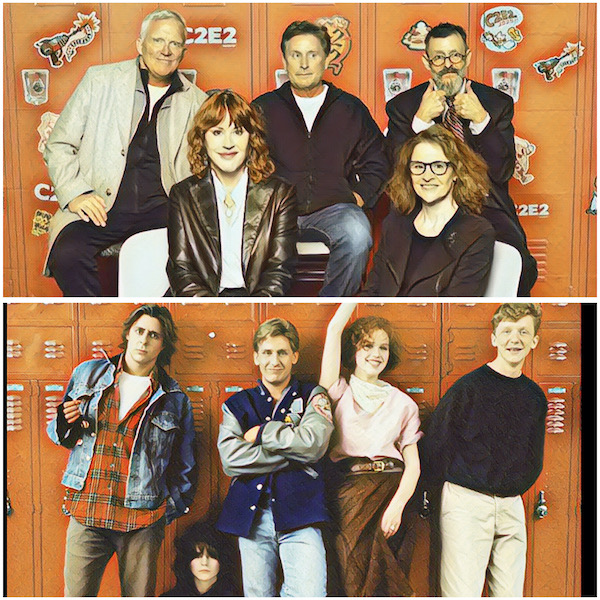
Despite the success and strong chemistry of the cast, the five actors never acted together in another project. Hughes even thought about a sequel years later, but gave up because he thought the magic was in the fact that their connection had only happened once. That’s why when they got together in 2025 to celebrate the anniversary, it was so special. The actors took the opportunity to remember the film’s late director, John Hughes, who was also known for iconic teen movies like Sixteen Candles and Ferris Bueller’s Day Off, among others.
“Don’t you ever, for any reason, do anything to yourself. Are you listening to me?”
— Claire (Molly Ringwald)
The Breakfast Club is not just a portrait of the 80s. It’s a portrait of the teenage soul — and because of that, it transcends generations. It’s a powerful reminder that, at the end of the day, we’re all a little bit alike. We all just want to be seen, heard, remembered… and understood. What the final gesture of the raised fist portrays: the silent scream of millions of teenagers around the world. Timeless.
Descubra mais sobre
Assine para receber nossas notícias mais recentes por e-mail.
 miscelana.com
1 comentário Adicione o seu