
The Étoile series is about to premiere on Prime Video and promises to renew the general public’s view of classical dance. In a scenario where ballet is often portrayed in cinema as torturous (Black Swan) or melodramatic (Flashdance, Turning Point), there is rarely room for a respectful, realistic, and light-hearted approach to the lives of dancers. This is exactly where Étoile stands out: with an engaging plot, subtle humor, and a high-level technical and artistic cast, the series has everything to win over both dance lovers and those who have never set foot in a ballet room.
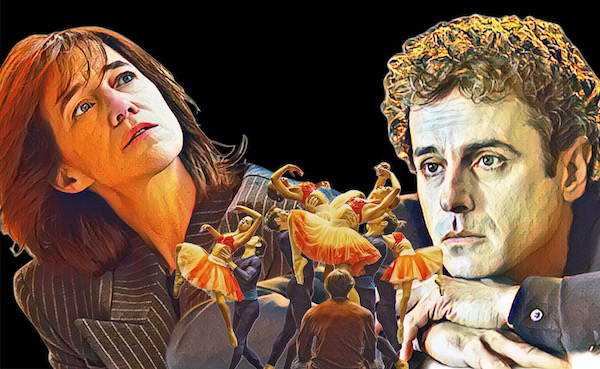

Created by Amy Sherman-Palladino and Daniel Palladino — the couple behind The Marvelous Mrs. Maisel and Gilmore Girls —Étoile is set between Paris and New York, alternating the tensions and charms of two great dance companies. In the main cast, Lou de Laâge and David Alvarez bring elegance and veracity to their roles. Both have a background in dance: Lou studied at the Bordeaux Conservatory, and Alvarez, a Tony Award winner for Billy Elliot, went on to dance with the American Ballet Theatre. Even so, for the most demanding moments of the choreography, they are dubbed by professional dancers.
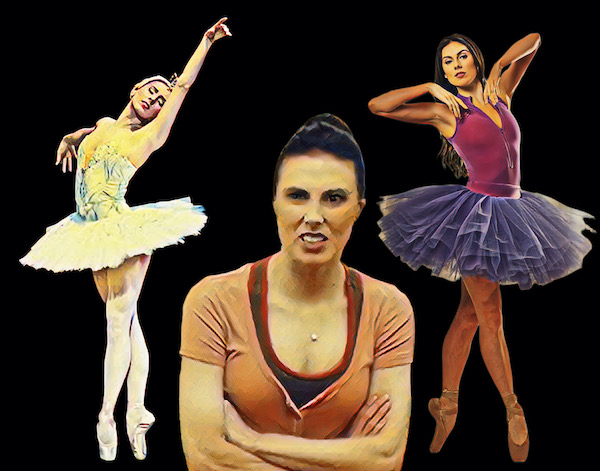
Lou is dubbed by Constance Devernay-Laurence, former principal of the Scottish Ballet, a refined performer with a strong stage presence and now director of the Ballet Grand Prix in Scotland. Ivan du Pontavice, who plays the temperamental Gabin, has his technical movements taken over by Arcadian Broad, a dancer and choreographer known for his virtuosity at the Orlando Ballet. The pairing of actor and dancer is done with such precision that, at times, the viewer will hardly notice the transition between one and the other — a remarkable technical and cinematic feat.

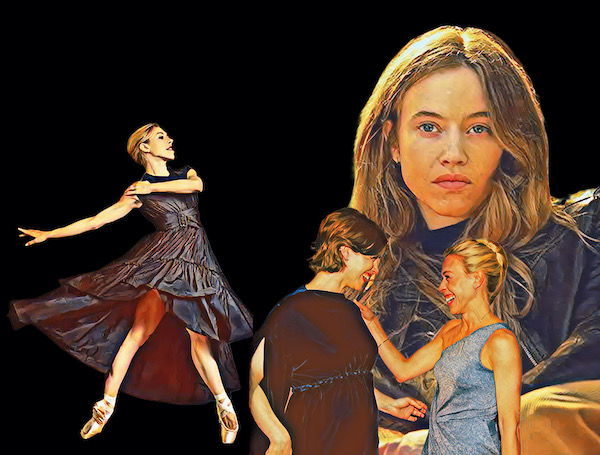
David Alvarez, in turn, performs all of his dance scenes without stunt doubles. His solid training allows him to inhabit the stage with authenticity, something rare in dramatic productions about dance. Another who takes the stage on her own feet is Taïs Vinolo, star of the National Ballet of Canada. French by birth, she plays Mishi, a ballerina who returns to Paris after a season in New York and triggers a delicate rebalancing of egos and legacies within the company.
The cast also features important participations from the world of dance, such as Unity Phelan and Tiler Peck, both principals of the New York City Ballet, and John Lam, principal dancer of the Boston Ballet. These names not only lend credibility to the narrative but also raise the standard of technical execution of the series, making Étoile directly engage with the world of professional dance, something that is rarely seen outside of the stage.

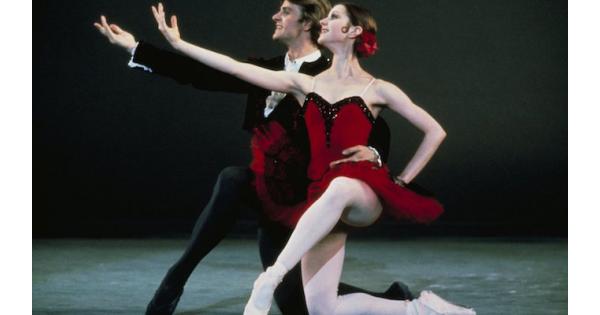
One of the merits of the series is the subtle use of technology to integrate dance and dramaturgy. From The Turning Point, which featured Mikhail Baryshnikov and Leslie Browne acting and dancing, or The Red Shoes, with Moira Shearer, to Black Swan, with Natalie Portman being dubbed in most of the scenes by Sarah Lane, the boundaries between acting and dance have been tested. But Étoile seems to point to a new era, in which scenic talent and technical virtuosity coexist more harmoniously, without sacrificing quality or betraying the integrity of the art of ballet.

More than a series about dance, Étoile is a tribute to life on stage, to rivalries and complicities behind the scenes, and to the body as an instrument of expression. At a time when classical dance is struggling to maintain its place in popular culture, a production of this level, with talented artists, excellent choreography, and a thought-provoking narrative, has the potential to inspire a new generation of dancers, as well as enchant those who simply watch from the outside. Bring on the next act.
Descubra mais sobre
Assine para receber nossas notícias mais recentes por e-mail.
 miscelana.com