
Usually, when we talk about opera, we think of drama, but there are plays that, instead of tragedy, bring charm, humor, and a good dose of romance. Well, that’s exactly what The Merry Widow does — and has done very well since 1905. This operetta, composed by Franz Lehár, was born in Vienna, but it traveled the world, became a film, influenced fashion, and continues to be performed on the most important stages to this day. A success that stands the test of time with lightness and sophistication.

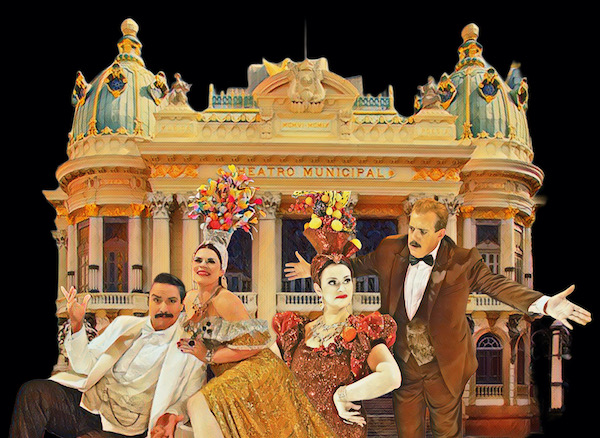
And precisely in the year of its 120th anniversary, it is the work that opens the opera season at the Teatro Municipal do Rio de Janeiro, from April 19 to the 27th, marking its return to the theater stage after more than a decade since its last production. With the TMRJ Choir and Symphony Orchestra, the production was conceived and directed by André Heller-Lopes, with choreography by Rodrigo Negri and musical direction and conducting by OSTM’s principal conductor, Felipe Prazeres. The cast includes singers Gabriella Pace, Tati Helene, Igor Vieira, Santiago Villalba, Ricardo Gaio, Guilherme Moreira, Carolina Morel, Thayana Roverso, Fernando Portari, Geilson Santos, Guilherme Gonçalves, João Campelo, Frederico de Assis, Ciro D’Araújo, Eliane Lavigne, Fernanda Schleder, Loren Vandal, and a special appearance by actress Alice Borges.
The story behind the creation of The Merry Widow is also delightful. It all began when the libretto, based on a somewhat forgotten French comedy, was rejected by several composers. But composer Franz Lehár saw an opportunity to do something special. And he did. He transformed the plot about a rich widow who needs to marry someone from her own country to keep her fortune “at home” into a fun, elegant, and engaging story, full of good music and clever dialogue.
The premiere, at the end of 1905, was a success. Vienna fell in love, and soon the world did too. Berlin, Paris, London, New York… wherever The Merry Widow went, it conquered. And it wasn’t just because of the music, although the waltzes and songs (like the famous “Vilja-Lied”) are truly unforgettable. It was because of the whole work: incredible costumes, beautiful sets, charismatic characters, and that perfect mix of drama and lightness.
At the center of the story is Hanna Glawari, a young millionaire widow from a fictional country called Pontevedro. The government is desperate to keep her from marrying a foreigner — the money needs to stay in the country. The solution? Reconnect her with Danilo, a well-off diplomat and the protagonist’s former flame. From then on, what unfolds is a game of seduction, pride, and reconciliation, with many funny and emotional moments.
But “The Merry Widow” went beyond the stage. It was turned into a film several times — one of the most famous versions was the 1934 version, starring Jeanette MacDonald and Maurice Chevalier — and its songs began to be played at parties, dances, and even weddings. The main character’s style even influenced fashion: dresses and hairstyles inspired by the “merry widow” became a trend.
Since then, the operetta has been adapted by big names in classical music and produced in lavish productions around the world. In Brazil, it also did well, with productions in major theaters and always with great reception from the public. No matter the language or the country, when the first chords begin, the audience immediately surrenders.
The most interesting thing is that, even though it is a work created over a century ago, it still speaks to us. It’s not just about politics and money — it’s about love, choices, and that eternal struggle between what we want and what we need to do. And all of this wrapped up in delightful melodies.
The Rio production takes creative liberty and adds a Brazilian touch: the costumes will pay homage to Carmen Miranda. That’s right, given that the story is set in a fictional country, Heller-Lopes wondered why not bring the story — literally — to Rio de Janeiro, bringing it even closer to the audience. And he succeeds!
In the end, “The Merry Widow” is one of those stories that remind us that opera can also smile — and make us smile along with it. A true musical gem that, with charm and intelligence, remains alive, light, and danceable. For those who are in the capital of Rio de Janeiro, the performances will take place starting today, the 17th, but they will also be held on the 19th, 22nd, 25th and 26th, at 7pm, on the 24th (Projeto Escola), at 7pm and on the 27th, at 5pm. It’s worth checking out!
Descubra mais sobre
Assine para receber nossas notícias mais recentes por e-mail.
 miscelana.com