
I can’t get carried away by the plot of The Wheel of Time and at first I start to justify it by considering it to be “too much fantasy”, but at the same time I’m capable of spending hours and posts discussing a series that involves dragons, a saga to destroy a ring or an intergalactic war. So it’s more of a personal rejection of the story. Still, I follow the series and understand its success, with the conclusion of its third season, where the production values are undeniable.
The success of the Prime Video series confirms that epic fantasy is experiencing a new lease of life, more mature, dense, and emotionally resonant. Based on the monumental work of Robert Jordan, this adaptation brings to the screen a universe in which time is cyclical, destinies are woven like thread, and the hero, far from being glorified, is treated as an omen of doom. At the center of it all is Rand al’Thor, the Dragon Reborn, a prophesied figure who must save the world from destruction… but may destroy it in the process.

The dilemma surrounding Rand is both tragic and fascinating: although he is the only one capable of facing the Dark One, his very existence brings fear, division, and distrust. The memory of his past life as Lews Therin Telamon, the hero who saved the world only to later go mad and decimate it, hangs over everyone like a dark warning. So when the prophecies announce the return of the Dragon, the world does not celebrate, but prepares for the worst. This rejection of the hero, even knowing that he is needed, is a powerful inversion of the messianic archetype that the series works with great intelligence.
Throughout the episodes, we see Rand trying to balance his duty with his sense of humanity. He begins as a simple young man, with no heroic pretensions, but is progressively crushed by the weight of his identity. His isolation is palpable, his transformation is slow and painful, and the series has the merit of not rushing this process. Unlike other fantasy adaptations that rely on action or visual effects, The Wheel of Time invests in psychological drama and moral tension. Rand needs to save the world — but can he do it without losing himself completely?
This type of questioning is what makes the series so relevant. Instead of a triumphant hero, it presents us with a tragic savior, closer to figures like Frodo, Paul Atreides, or even Anakin Skywalker: characters whose heroism costs too much. But at the same time, The Wheel of Time differentiates itself by proposing that destiny is not fixed — that there are cracks in the fabric of the Wheel, and that perhaps, just perhaps, it is possible to break the cycle.
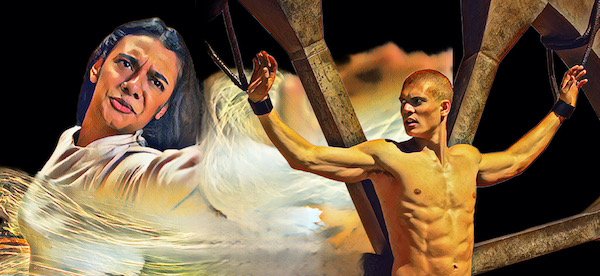
Furthermore, the series’ success is also based on the strength of its universe: a richly constructed world where women occupy positions of immense power, especially the Aes Sedai — and where cultures, beliefs, and social structures are complex, diverse, and believable. The carefully chosen cast brings diversity and charisma, and the visual care with the sets, costumes, and magical choreography make the visual spectacle as impressive as its philosophical content.
The Wheel of Time does not just want to entertain — it wants to make you think. It proposes that true heroism can come with loneliness, doubt, and even rejection. That salvation does not always come from the beloved figure, but from the most feared being. That destiny can be defied, even when it seems inevitable. In times of fast narratives and easy solutions, this is a story that invites the audience to slow down, to observe the cracks in the myth, and to accept that, sometimes, saving the world requires losing a part of yourself.
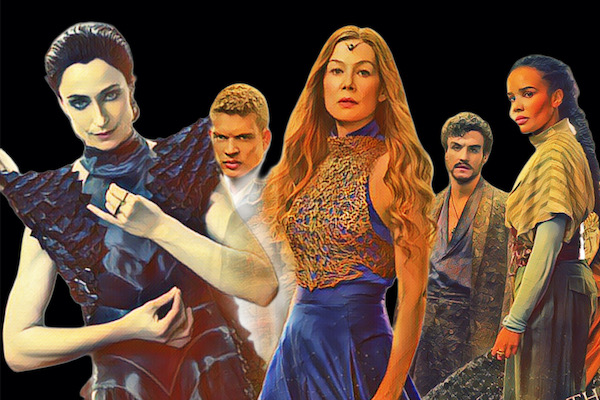
The epic conclusion of the third season left fans anxious. The first two seasons of the series cost over $260 million in total, according to financial records from UK production company Little Island Productions. This suggests an average cost of approximately $130 million per season. In today’s world, keeping fantasy content on air (let’s not forget that the platform also has Rings of Power) puts The Wheel of Time at risk of stopping right at its peak.
Particularly, given its success and approval ratings superior to Rings of Power, it would be a shot in the foot if Prime Video didn’t renew the series, but it’s so complex that “completing” it would be as crazy as Rand with the superpower he has. And so we wait!
Descubra mais sobre
Assine para receber nossas notícias mais recentes por e-mail.
 miscelana.com