
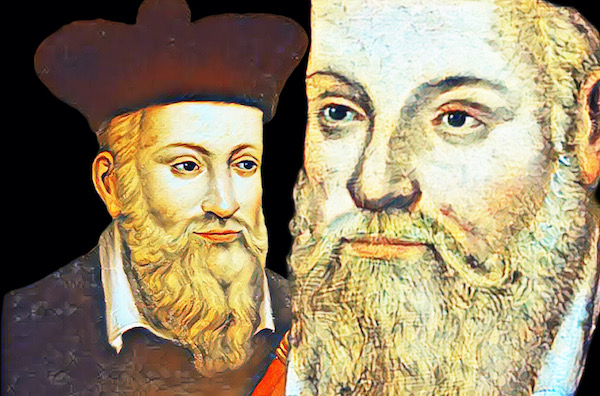
With the death of Pope Francis in April 2025, the collective fascination with ancient prophecies was rekindled — especially those of Michel de Nostredame, better known as Nostradamus, the enigmatic 16th-century French astrologer whose predictions continue to unsettle, inspire, and intrigue the popular imagination, even almost 470 years after his death.
Who was Nostradamus?
Born in 1503, in the Provence region of southern France, Michel de Nostredame was a doctor, apothecary, and astrologer. He lived in times of profound political, religious, and health instability — he witnessed outbreaks of plague, religious wars, and the constant fear of the Apocalypse. It was precisely in this climate that he published, in 1555, his most famous work: “Les Prophéties”, a collection of poetic verses in the form of quatrains (four rhyming lines) that aimed to predict future events.
Why were the visions encrypted?
Nostradamus’ prophecies are written in a highly symbolic, ambiguous and fragmented language. In addition to using archaisms, Latin, Greek and Provençal expressions, he jumbled dates, names and geographical references. Many believe that this style was deliberate — a way to avoid religious and inquisitorial persecution, since astrology was viewed with suspicion by the Catholic Church at the time. Others suggest that he used this style to protect himself from public backlash in case his predictions did not come true.
How did he live, and how did he die?
Nostradamus’ life was marked by personal tragedies, including the death of his wife and children during the plague. He later remarried and gained notoriety as a healer and seer. Attracting the attention of the French nobility, including Queen Catherine de Medici, he spent his final years writing and consulting horoscopes. He died in 1566, supposedly after predicting his own death: “At dawn you will see me no more,” he is said to have said — and, in fact, he died that morning.

Prophecies that “came true”?
Over the centuries, several events have been associated with his predictions:
- The French Revolution: With references to “people rising up against their kings,” many believe that Nostradamus anticipated the collapse of the French monarchy.
- The rise of Napoleon and Hitler: Some interpreters claim that descriptions of a “leader of terror” coming from the West point to these figures.
- The September 11 attacks: Lines such as “two brothers separated by chaos… the great city in flames” were retroactively linked to the attack on the Twin Towers.
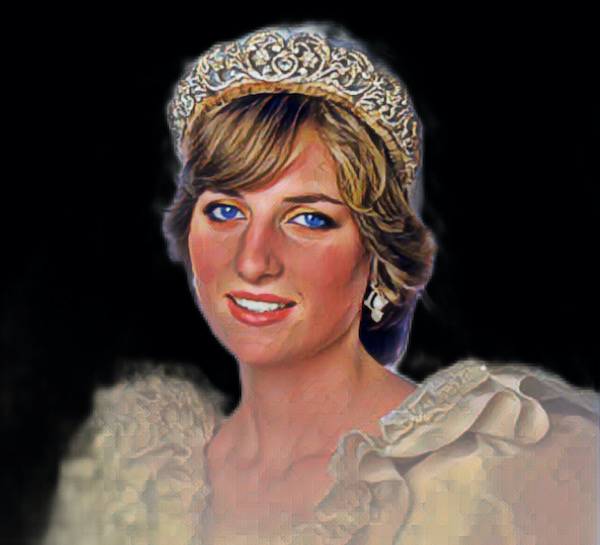
- The death of Princess Diana and the COVID-19 pandemic were also mentioned in lists of “fulfilled prophecies,” albeit in a rather generic and debatable way.

And 2025? Pope Francis and recent prophecies
With the death of Pope Francis, a passage from the book of Nostradamus gained prominence, which states:
“For the death of a very old pontiff, a Roman of good age will be elected. Of him it will be said that he weakens his sight…”
For some interpreters, this refers to the end of Francis’ papacy and the election of a new Pope who would divide or weaken the Church. Another verse speaks of:
“A young man of dark skin, with the help of the great king, will hand over the purse to another of red skin.”
This passage has been associated with the possibility of choosing an African Pope, such as Cardinal Peter Turkson or Robert Sarah, both often cited as “papaables.”
Others still connect these events with the prophecy of Saint Malachy, who predicted the existence of 112 popes, the last of which was called “Peter the Roman”—under whose command Rome would be destroyed and the “terrible Judge” would come. Francis would be the 111th on the list, which fuels fears (and speculations) about an imminent end for the Church as we know it.
Prophecy or projection?
It is important to remember that Nostradamus’ prophecies are extremely vague, and his language allows for multiple interpretations. Often, the verses make sense only after the events, when they are retroactively applied. Still, their fascination remains intact, especially in moments of crisis or transition, such as the election of a new spiritual leader after the death of a Pope.
Whether Nostradamus really predicted the future or merely projected fears of his time, we may never know. But his figure—shrouded in a mist of mysticism, ambiguity, and poetry—continues to make us wonder: what if he was right?
Descubra mais sobre
Assine para receber nossas notícias mais recentes por e-mail.
 miscelana.com