
The discussion of 2025, or at least the first half of the year, is around the success of two great series that have barely started airing their second season, and are already dividing fans. Although The Last of Us and Andor belong to very different universes, platforms and genres, both stood out in 2023 (Andor premiered in September 2022 and The Last of Us in January 2023) and generated a lot of conversation on social media, with intense reactions and surprises that left their mark on the audience. Each had a profound impact in its own way, but there are elements where one can be considered superior to the other.
A distinction needs to be made: journalists who praised Andor had the opportunity to see the entire season in advance (I am among the lucky ones) while the group that got to see some of The Last of Us, if any, was more restricted. Both praise both series, but there is no escaping that Andor has the lead, which does not diminish The Last of Us in any way. Here is why.

The Emotional Impact of The Last of Us
The Last of Us, as an adaptation of an acclaimed video game, has been a moving and deeply human experience. Its ability to balance action scenes with intimate moments of character development, especially with Joel and Ellie, creates a narrative that reaches a wide audience, not just fans of the game. One of the greatest strengths of The Last of Us was the way it dealt with grief, survival, and the power relations between the characters, with twists that, although already expected by fans of the game, were still powerful for those watching for the first time.
The series was a huge success, with surprises not only in terms of narrative but also in how it expanded the game’s already established universe. The way they adapted and maintained the dark and emotionally heavy tone was one of the series’ greatest strengths. However, the fact that the story was already known to those who played the game may have taken away some of the surprise for this specific audience.

Subversion and Political Drama in Andor
On the other hand, Andor did not have a pre-established game or story, but it still managed to stand out impressively. Andor brought a narrative more focused on political drama and empire-building to a familiar universe like Star Wars. With a slower and more complex pace, the series delved into the darker side of resistance and combat against an oppressive empire. Andor‘s surprise comes more in the way it distances itself from the action expectations of Star Wars and, at the same time, builds a solid story of morality, loyalty, and sacrifice.
The way the series dealt with the internal motivations of characters like Cassian Andor and the radicalization of the system was a surprise to many longtime fans of the franchise, showing that Star Wars can explore other aspects beyond the simple fight between good and evil. The audience’s reaction was approving, especially for those who wanted something deeper than the standard that other Star Wars productions usually deliver.

It is worth noting that, although everyone knows Cassian’s fate in Rogue One, Andor manages to generate emotions and surprises, even knowing what will happen to the hero. The character development and world-building still manage to captivate the viewer, showing that Cassian’s tension and internal dilemmas can be explored in surprising ways, even when his future is already known.
What The Last of Us Does Better
The Last of Us excels in character development and emotional impact. Ellie and Joel’s journey is the heart of the series, and the way it explores themes of loss, love, and redemption, without losing the intensity of an apocalypse, is what makes it so special. The balance between action and drama is remarkable, and its ability to surprise the audience with moments of great emotion, often accompanied by unexpected losses, is one of the series’ main strengths.
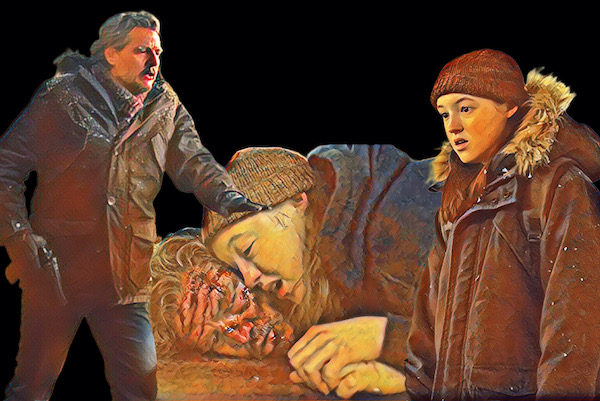
Another point to highlight is that many viewers, without knowing the game, believed that Pedro Pascal would be the protagonist throughout the series. The death of his character at the end of the first season was a great shock for those who didn’t know what would happen, adding a layer of surprise to the plot. This also brought to light the responsibility of Bella Ramsey, who takes on the central role of the series in the second season. Although the actress has received praise, she is still not unanimous, and now has the difficult task of “carrying” the series alone.
What Andor Does Best
Andor shines in its world-building and exploration of political themes, a difference when compared to other productions in the Star Wars universe. The series manages to show the real costs of fighting against an empire, addressing themes of espionage, resistance, and subversion. The rhythm, the slower pace, and denser narrative allow for an immersion that, for many, makes the story more rewarding and surprising, especially for fans of science fiction and political drama.
Latino Blood in the Apocalypse and the Galactic Rebellion
Pedro Pascal, a Chilean-American, and Diego Luna, a Mexican, are two shining examples of how the entertainment industry is becoming more inclusive. Pascal, born in Santiago, Chile, and raised in the United States, gained worldwide prominence as Joel in The Last of Us and as The Mandalorian in the series of the same name. His rise to central roles in major franchises demonstrates a significant change in the representation of Latino actors in Hollywood.
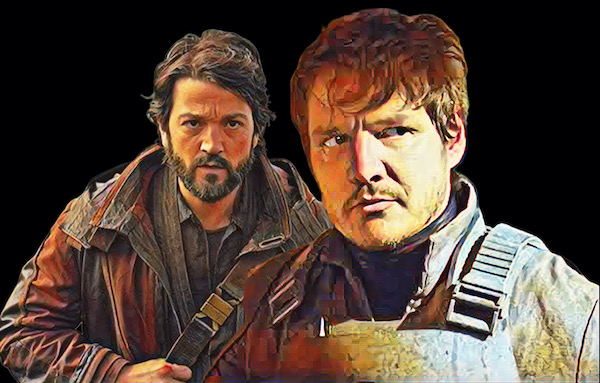
On the other hand, Diego Luna, with his career consolidated in Mexico, brought depth and humanity to the character Cassian Andor in Andor, a series that explores the behind-the-scenes of the Rebellion against the Empire. His performance was critically acclaimed, standing out as one of the most complex in the Star Wars universe.
Both actors have not only landed prominent roles but have also paved the way for greater Latino representation in large-scale productions. While Pascal continues to expand his presence in the Star Wars universe, Luna ends her journey with Andor, leaving a legacy of deep and meaningful characters.
Two Surprises, Each in Its Own Way
While both series share the ability to surprise audiences, the type of surprise they deliver is what sets them apart. The Last of Us impresses with its emotional impact and the visceral way in which it connects the audience to the characters’ journey. Andor, on the other hand, wins over audiences with its political and dramatic depth, bringing a new perspective to the Star Wars universe. Both, however, have the power to surprise and move, each in their own way.
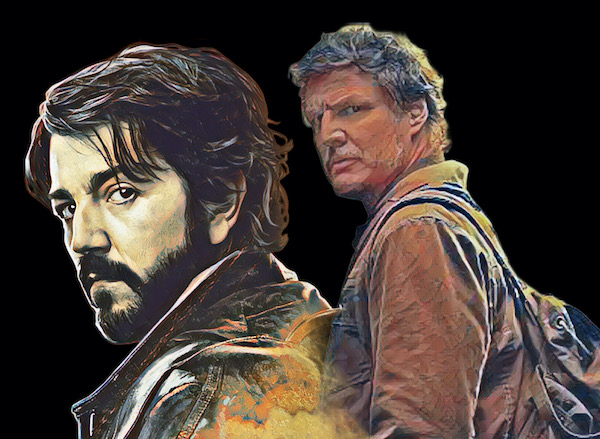
Although Andor was proclaimed “the best of the year,” and I agree with that statement even without having watched the rest of The Last of Us, both remain outstanding works. If The Last of Us defies expectations with the death of central characters, Andor wins over with the complexity of its plot, showing that, even when we already know the fate of its characters, there is always room for more surprises.
Descubra mais sobre
Assine para receber nossas notícias mais recentes por e-mail.
 miscelana.com