
As published on Bravo! Magazine
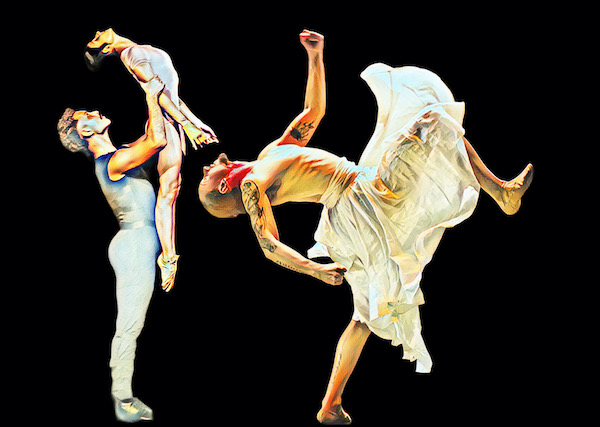
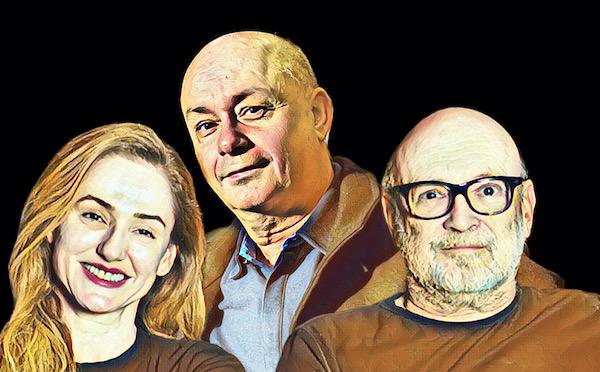
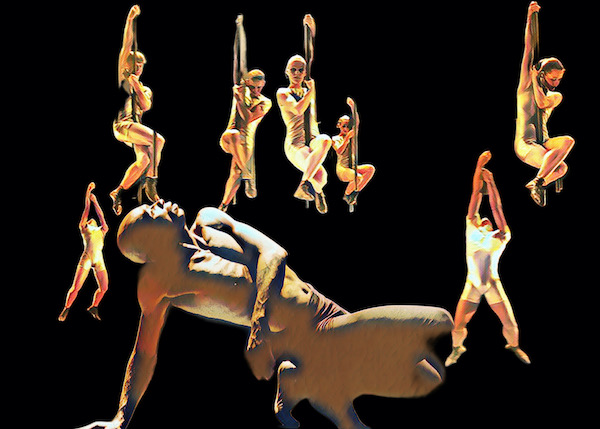
Over five decades, Grupo Corpo has established itself as one of the biggest names in Brazilian dance, earning notable international recognition for its innovation and authenticity. In the context of the company’s 50th anniversary celebrations, Bravo! Magazine spoke with Rodrigo Pederneiras, choreographer and one of the group’s central figures, who offers a fascinating insight into the company’s artistic evolution.
In this conversation, Pederneiras reflects on the different phases of his career, from the first works choreographed by Oscar Araiz to the search for his unmistakable language, based on Brazilian musical and cultural influences. With the sincerity of someone who has gone through many challenges and transformations, he also shares his passion for music and how it has always been the basis of his creative process, allowing dance and music to become a unique and harmonious expression.

BRAVO! How do you see the group’s evolution over these five decades, both artistically and in terms of international recognition?
RODRIGO PERDENEIRAS
It’s been a long time. I think we can think of three different phases during these 50 years. The first phase with Maria Maria, Último Trem, and more narrative works choreographed by Oscar Araiz. At the time, I was just a dancer. That was the first phase. After the 1980s, when we really started to take on the artistic side [Rodrigo and his brother, Paulo]. Because what happened? Oscar came and brought lighting technicians, costume designers, set designers, and everything else, and we had no control over the creation of the company. So, in the 1980s, we started to take on these roles, and it was a period of great learning. Because we worked with the material we had, the songs depended on what we were listening to at the time. And I’ve listened to classical music my whole life, ever since I can remember. So, we started working first with Brazilian classical composers, then we started to broaden our range, moving on to Chopin, Mozart, Strauss, etc. And in the early 1990s, it started a little earlier with Missa do Orfanato, but that really started our change. That’s when we started to discover our way of being, our way of doing things.
BRAVO!
So…
RODRIGO PERDENEIRAS
I think the turning point was in 1992, when I was 21, with music by Uakti and Marco Antônio Guimarães, when we started to invite composers to create. This was an impressive leap for us because they came up with new ideas that we didn’t have, and we started to let them influence us. So, from then on, we started to create our own language, a language that added Brazilian elements to the pieces. I think these three phases are very clear in our trajectory, and the 1990s were the ones that made us who we are today.
BRAVO!
Let me take a step back: you were a dancer, and then you took on the artistic side of creation. How was this transition? Because when we look at Grupo Corpo, it has a unique language that is a signature. But what is this creative process like for you?
RODRIGO PERDENEIRAS
Actually, when I started dancing, I met Oscar [Araiz] right away, and I went to Buenos Aires a lot to take classes with Oscar’s company, but I always wanted to choreograph. I started on my own, for amateur companies, for schools, including ours. I developed it over time. As I said, the 1980s were years of total learning, so the transition happened very smoothly, because I really wanted to be a choreographer, more than a dancer.
BRAVO!
I find it fascinating when we see the whole thing, even more than the solos, how everything is connected. Is that in the music?
RODRIGO PERDENEIRAS
Yes, it’s in the music. My passion has always been music. I learned to choreograph by listening to music, and it was a very important thing in my trajectory, in my career, you know? Because I feel that music and dance, and choreography, this spatial thing you mentioned, have to be one and the same. It doesn’t have to be one thing surpassing the other; they have to be united. It’s the attempt. Sometimes we succeed, sometimes we don’t. [laughs]
BRAVO!
There was a time, and this was a difference in classical dance, where narrative was essential, but there was the “symphonic”, but George Balanchine, for example, hated it when people called his ballets symphonic. But then you’re saying that dance comes from music. Is there a story, beginning, middle, and end, for you, in your head, when you choreograph a complete symphony, or is it just feeling?
RODRIGO PERDENEIRAS
No, there isn’t a story with a beginning, middle, and end, but there is a central idea, which I pursue all the time. Before starting, this central idea has to be star is well-matured, is well matured for the work to take off well. I don’t think dance is an art form that lends itself well to narrative. Since you mentioned Balanchine, he said: Dance is not theater, it is not words. You need to find this other path, this other vein of dance, so that it reaches people, but without telling a story. It reaches them because it is fundamental. But, once again, sometimes we succeed, sometimes we don’t. I usually say that the thrill of dance is very difficult because moving people is very difficult. If you can create new sensations, make people feel new things, then it’s a great thrill.
BRAVO!
What were the main challenges in these five decades?
RODRIGO PERDENEIRAS
Coexistence. The financial side is also always very difficult. There are 22 dancers, all of whom have formal contracts, vacations, 13th salary, health insurance, and everything, so the financial side is very heavy. But we always prioritized the dancers. Sometimes, in the most difficult financial moments, when things were more complicated, we, the partners, were the ones who didn’t get paid. Or when it was late, it was never for the dancers. They are important. First them, second them, third them. Then, who knows, we’ll think about other things.
BRAVO!
It’s been five decades, and how many generations? Personal relationships built throughout this journey?
RODRIGO PERDENEIRAS
Yes. I’m in my third marriage, and I was married to three dancers. [laughs] I think that already shows something in this relationship. We travel a lot together, and we have a very close relationship, because we’ve always traveled a lot. Sometimes we spend seven months of the year traveling. On the road, this relationship gets closer, but it’s not always easy. The basis of everything is respect, you know? If there is true respect, things are much easier, they are much calmer.
BRAVO!
And is there a particular show that stood out, something behind the scenes that left a lasting impression on you?
RODRIGO PERDENEIRAS
There was a situation in Lyon. Sometimes we would perform for up to three weeks in Lyon, at the Maison de La Danse, and we were the only company in the world that had ever done that. But in Lyon, something happened that I think was brilliant and moved us. We did a three-week season, and during the last show, I think, Onkotô, as soon as we started, the entire city went out. There was a blackout in Lyon, which is very rare. We waited, and when it didn’t come back, the audience left without seeing the second part. So, what did we do? We were going to leave the next day at night and decided to put on the show for anyone who wanted to come back. The theater let the audience know, and they came back to watch the show. But as a thank you for doing this for them, I don’t know how they arranged it, everyone brought a flower. When it was over, the stage was covered in flowers. It was one of the most moving things I’ve ever experienced.
BRAVO!
I was going to mention that the response abroad to Grupo Corpo was immediate. Did it always have an “accent”?
RODRIGO PERDENEIRAS
It’s funny. Especially in Lyon. Guy Darmet, who was the director of Maison de La Danse, used to say that with Grupo Corpo he made a lot of money because he didn’t need to put up posters, he didn’t need to advertise, he just had to put it on the schedule and everything would sell out in two days. Twenty shows, and everything would sell out in two days. We created a very loyal audience abroad.
BRAVO!
I would say that in Brazil, too, right?
RODRIGO PERDENEIRAS
Yes, in Brazil too. Wherever we go, it sells out, right? [laughs] It’s impressive, because we haven’t done the Municipal in Rio for many years, but there were always five shows that sold out at the Municipal. Because of the pandemic, they took a break, but we’re getting back to it now, including the international part. The guys are in France [we spoke at the end of March]. They stayed for a month, came back, stayed for a week, and then went to the United States.

BRAVO!
I really like how you always put together the program, reviving repertoire, and presenting something new.
RODRIGO PERDENEIRAS
Yes, that’s the idea: whenever a new piece premieres, we look for another one that hasn’t been danced in Brazil for a long time. Sometimes it’s not even the one that’s been around for the longest time, but it’s one that we haven’t shown in Brazil for a long time. So we’re reviving this repertoire and bringing it back, so that it doesn’t get lost in the past.
BRAVO!
What are your main influences in your creation besides music?
RODRIGO PERDENEIRAS
Look, once again, I’m going to look for Balanchine, because when I started doing dance, I was crazy about him. I watched everything. Another one who, for me, is the greatest choreographer of all time, is Jiří Kylián. I don’t know if I can say it’s an influence, because the works are very different. I also like Franco Dragone, who was the guy who created Cirque du Soleil. I spent two months in Paris, and I worked with him. I’m still with them. [laughs]
BRAVO!
Over these 50 years, dance has evolved a lot, too. Has there been an adaptation? How do you see the evolution of contemporary dance?
RODRIGO PERDENEIRAS
I think there was an impressive growth, qualitatively as well, not just quantitatively. There was a huge growth. So many different choreographers started to emerge; it was a very fertile period of creation. Especially in the 1970s, 1980s
BRAVO!
Is there a profile of a Grupo Corpo dancer?
RODRIGO PERDENEIRAS
No, not at all. They are very different people. The first thing we look at is their classical technique. When we need to hire someone, people come, stay here for three days, take classes, and have lunch with us. Those who have a classical technique, we ask them to stay for another two, three days to learn parts of the repertoire, to see if they do well. Because it’s funny: there are people with a phenomenal technique, but when they start doing the variations, they don’t know what’s north and what’s south. It’s amazing how they get lost; it happens a lot. And, at the same time, others already have a musical ear that has to do with it, because there is a lot of work that we do that requires coordination. And, obviously, we also look at personality types. How the person presents themselves on stage and everything else. There is no specific body type.
BRAVO!
And what is the routine like when you are not traveling?
RODRIGO PERDENEIRAS
From Monday to Friday, there are classes from nine to ten thirty, there is a break, and at eleven, the rehearsal starts and goes until three. It is a straight six hours.
BRAVO!
Was being outside the Rio-São Paulo axis important for Grupo Corpo?
RODRIGO PERDENEIRAS
I think that this was, in a way, even fundamental for us to have this longevity, you know? Because when we started, the fact that we worked in Belo Horizonte at that time, in 1975, a much quieter city, we would wake up as Grupo Corpo, have lunch as Grupo Corpo, and have dinner as Grupo Corpo. The focus was total; no dispersion might have existed, for example, in São Paulo, you know? This helped a lot to create a very solid base for the company over time.
BRAVO!
How did the name come about?
RODRIGO PERDENEIRAS
Actually, it was Paulo who came up with the name, because we were already a group of friends who were creating the group, apart from the brothers, all together as well. Paulo came out with this: “There is a Fire Department, a Teaching Staff, who are people who work in the same direction. At the same time, it is a Corps because it is also a dance, you know? But it was thought more in the sense of unity. Corps, one body.
BRAVO!
And what is it like working with your brother? What is this relationship like?
RODRIGO PERDENEIRAS
Oh, it is difficult, it is difficult. It is not easy, no. I avoid discussing these things a lot. Paulo is the Artistic Director, he predetermines things and that’s it. In a way, I withdrew a little from this type of decision. We avoid points of friction that are very easy between brothers. We think differently, it became easier after I backed off.
BRAVO!
And at the meetings at home? At Christmas and reunions at home? No dancing, no work?
RODRIGO PERDENEIRAS
We don’t meet, no. We don’t have family reunions. We had them when my parents were alive, but they died a long time ago. For more than 10 years, so that family spirit was lost…
BRAVO!
If we look at the next 50 years of Grupo Corpo… How do you see the company?
RODRIGO PERDENEIRAS
You must know, of course, Cassi Abranches. She danced with us for 12 years. Then she went to São Paulo, directed the Ballet da Cidade and has a way of working very similar to ours. So, the idea was to bring Cassi to start taking over my role. At 70 years old, it’s time to slow down and she’s starting to take over this creative part. She and my son, Gabriel, who is responsible for all the logistics of the company, travel and everything, all the productions. I see the future in the hands of both of them. Cassi and I are working together, doing things together, one of them with Gustavo Dudamel. It’s been really nice, it’s been really cool. It’s a new way of working for me and for her. But it’s been working out.
BRAVO!
How has the documentary about Grupo Corpo’s 50th anniversary been going?
RODRIGO PERDENEIRAS
It’s a summary of this journey and we’re going to make another book, too, about everything that’s been done so far. And another debut with music by Clarice Assad, this Brazilian composer who lives in Chicago and made a really cool soundtrack. We’re starting to catch up after the company returns from the United States. Because I don’t travel with the company anymore, right? I stopped traveling.
BRAVO!
I was going to ask why, if that was one of your choices not to follow. It’s really hard, right? It’s really tiring?
RODRIGO PERDENEIRAS
I’ve traveled a lot in my entire life, right? My current wife stopped dancing about 10 years ago and traveling alone is tiring. Besides, she’s terrified of flying. Enough, I can’t do it anymore. [laughs]
BRAVO!
Do you have a message you’d like to leave for dancers who are just starting out?
RODRIGO PERDENEIRAS
The field of work is very small, but two things are fundamental. One is to study, study, study, study. And another thing, it’s very easy, especially in this type of profession, where we spend our time taking classes, looking at ourselves in the mirror, and not thinking we’re awesome, not thinking we’re the best. I think it’s important to have a certain dissatisfaction with ourselves. I think it’s strong to go after that. I think it’s very important.
BRAVO!
That’s true, this search for perfection is exactly that, right? We can’t… Because the mirror.
RODRIGO PERDENEIRAS
It’s an addiction, right?
BRAVO!
Is there any composer that you still dream of working with, that you still have this desire to work with, that you haven’t worked with yet?
RODRIGO PERDENEIRAS
Composer? David Byrne, from Talking Heads. I really wanted to work with him.
BRAVO!
And he’s always been involved with Brazilian culture!
RODRIGO PERDENEIRAS
That’s right, exactly. He’s very involved, and I really like his work. The things he does, his shows, are all performance-based, things like that. I wanted to work with him.
BRAVO!
And have you met him in person?
RODRIGO PERDENEIRAS
No, no, no, no.
BRAVO!
Playing for the astral to bring you guys together. It would be incredible.
RODRIGO PERDENEIRAS
Yes, I want to work with him!
Descubra mais sobre
Assine para receber nossas notícias mais recentes por e-mail.
 miscelana.com