
Although it is not one of Alfred Hitchcock‘s most immediately cited films, To Catch a Thief occupies an important place in the director’s filmography, not only for demonstrating his unique ability to balance suspense with lightness and charm, but also for representing a moment of technical and thematic transition in his career. And it turns 70 in 2025.
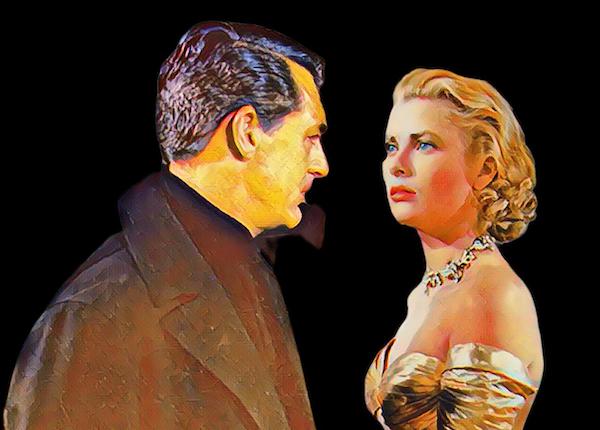
Although it is not among the “best”, it is essential to understand the filmmaker’s development, especially for its pioneering use of the VistaVision widescreen process, which significantly influenced the work’s visual style. This was the first of five Hitchcock films to use this technology, and the visual impact of the widescreen, combined with the stunning photography of the French Riviera, gave the film a striking aesthetic appeal. Furthermore, the film marks one of the director’s last collaborations with Cary Grant and Grace Kelly, whose on-screen chemistry is one of the production’s great attractions.
In narrative terms, Hitchcock revisits themes that are central to his work, such as identity and false accusation — in this case, a former thief wrongly accused of a new wave of robberies —elements that the director would explore in even greater depth in later films. Despite its lighter and more glamorous tone, To Catch a Thief also anticipates darker issues, such as obsession and paranoia, suggesting the denser and more psychological path that Hitchcock would follow in works such as Vertigo and North by Northwest. In this way, the film can be seen as a turning point in his career — an elegant and technically daring work that combines entertainment with experimentation, while also paving the way for some of the most complex and influential films in his filmography.
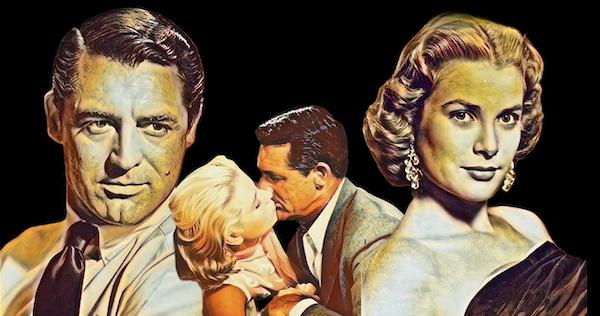
Released in 1955, To Catch a Thief remains a masterpiece that stands the test of time. The script, adapted from the novel by David Dodge, created an intelligent narrative full of twists and turns. The plot is set in the stunning Côte d’Azur in the south of France, where John Robie (Cary Grant), a retired jewel thief, finds his quiet life threatened when a series of robberies similar to his own begin to occur in the region. With the local police on his trail, Robie finds himself forced to get involved with Frances Stevens (Grace Kelly), a young heiress who is vacationing on the French Riviera. She, whose jewel was stolen by a mysterious criminal, begins to distrust Robie, although the tension between them soon turns into something more complex. The story unfolds with chases, mystery, and, of course, a good dose of romance.
What makes the film so special is the chemistry between its elegant and intelligent protagonists, forming a duo that is still remembered today as one of the most iconic in cinema. The box office success of To Catch a Thief was also significant, grossing around $12 million, an impressive feat for its time.
It’s certainly not my favorite Hitchcock film, but there are some iconic scenes. Grace Kelly driving dangerously on the same road where she died decades later is one of the most remembered scenes, but her costumes here are even more stunning than in Rear Window. It’s a “whodunit” where it’s hard to spot who’s imitating Robie and trying to frame him, with several suspects on the dazzling French Riviera. Another iconic sequence is the sly exchange between Kelly and Grant in the suite at the Carlton Hotel, while fireworks explode outside.
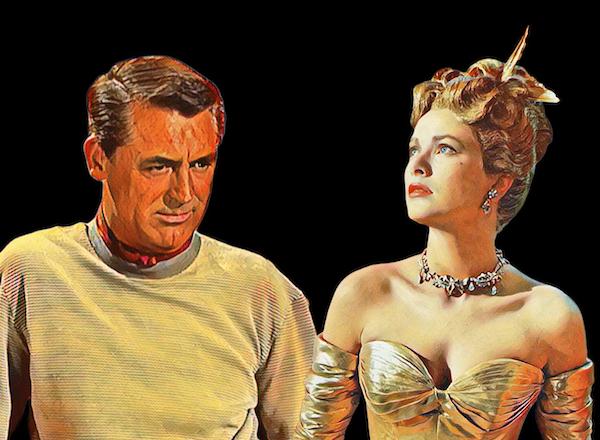
Speaking of costumes, Edith Head often cited her contribution to To Catch a Thief as her favorite work with Hitchcock. For the legendary gold ball gown, the actress’s “piece de resistance” in the film, Head recalls that the director asked Grace to look “like a princess.” Ironically, while making the film, she met Prince Rainier and would actually become a real princess soon after.

To celebrate the 70th anniversary of the film’s release, there will be special screenings at the cinema. In 2024, Paramount will release the 4K Blu-ray version that highlights the film’s stunning photography. Of course! Here’s a suggested conclusion that maintains the engaging and personal tone of its text, well-connecting the themes already presented and reinforcing the importance of To Catch a Thief within Hitchcock’s legacy, especially in light of his 70th birthday:
Thus, seven decades after its release, To Catch a Thief remains a separate gem within Alfred Hitchcock’s oeuvre — perhaps not as full of psychological tension as his great thrillers, but just as elegant, witty, and technically refined. Watching the film today, especially in its restored 4K version, is more than an exercise in nostalgia: it is rediscovering a filmmaker at his peak.
Descubra mais sobre
Assine para receber nossas notícias mais recentes por e-mail.
 miscelana.com