
The scene of Mon Mothma dancing to the galactic hit Niamos in the final season of Andor is not only a moment of silent breakdown or an escape from the series’ political tension, but also became a landmark in the Star Wars soundtrack. While Tony Gilroy’s series explores the rise of the resistance against the Empire and the power plays within the distant galaxy, Nicholas Britell’s music built a unique identity for the series, marking a radical change in the sound style of Star Wars. Instead of resorting to the grandiose and orchestral themes typical of the franchise, Britell was able to bring a minimalist, intimate, and innovative sound, challenging John Williams’ sonic legacy. And, of course, he nailed his originality.
Britell has an unparalleled ability to create complex emotional atmospheres, and he fits into this universe so renowned for his epic music, and how he is putting on a show by integrating modern and intimate sounds in Andor, one of the most acclaimed Star Wars projects.

First of all, let’s talk about this scene. In one of the most memorable moments in Andor, Mon Mothma, played by Genevieve O’Reilly, is seen at an elite party on Coruscant, dancing to a pulsating electronic song called “Niamos.” The song, a mix of galactic dance and synths, is the opposite of what we would expect from a Star Wars production, but it fits perfectly with the atmosphere of political oppression and social decay that permeates the series. The use of Britell’s music here is not only an aesthetic choice, but also a commentary on Mothma’s escape from reality – a woman trapped in a corrupt system and trying to maintain a facade of normalcy.
New York-born Nicholas Britell is one of the most innovative composers of his generation. His career took off with the score for the Oscar-winning Moonlight in 2016, which garnered awards and global recognition, showcasing his unique ability to blend classical music with elements of hip-hop and experimental music. Along with If Beale Street Could Talk (2018), these scores solidified Britell as one of the most respected names in contemporary film music.
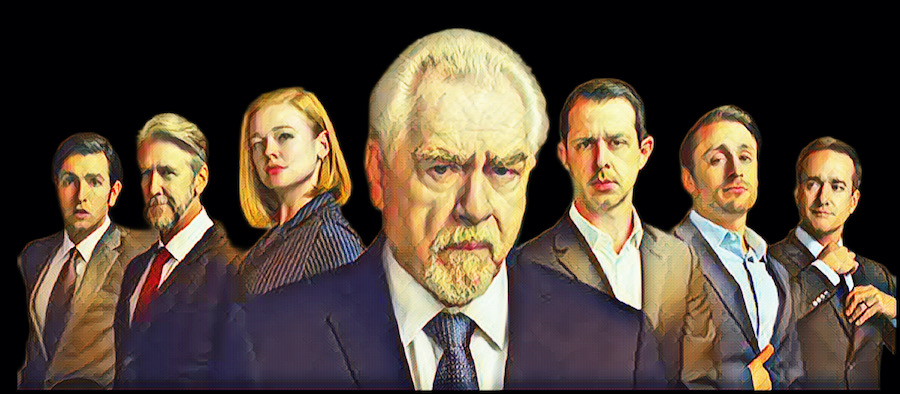
However, it was his work on the HBO series Succession (2018-2023) that earned him an Emmy and cemented his status in the world of TV music. In Succession, Britell was able to capture tension and family drama with minimalist yet grandiose music, using repetitive themes and delicate constructions to illustrate the moral rot and power struggle of the Roy family.
When Britell was chosen to compose the score for Andor, his approach to composing for grand emotional and political narratives was a perfect fit. However, the challenge was enormous: how to compose for a universe that had already been defined musically by the legendary John Williams, with his grand orchestrations and epic themes, but without resorting to them?
John Williams‘ music for Star Wars is undoubtedly one of the most iconic in the history of cinema. Themes such as the “Star Wars Main Theme”, “The Imperial March”, and the Force music are practically immortalized in pop culture. For any composer entering the Star Wars universe, it would be a monumental challenge to deal with the shadow of Williams, who defined the sound of the distant galaxy for more than four decades.
In addition to the significant shadow of a legend like John Williams, Britell also had the excellent work of Michael Giacchino on Rogue One, but Andor is completely different. Tony Gilroy, the showrunner of the series, opted for an approach more focused on the political drama and the internal difficulties of the characters, and Britell was given complete freedom to explore new sounds. A bold, coherent and smart creative decision.
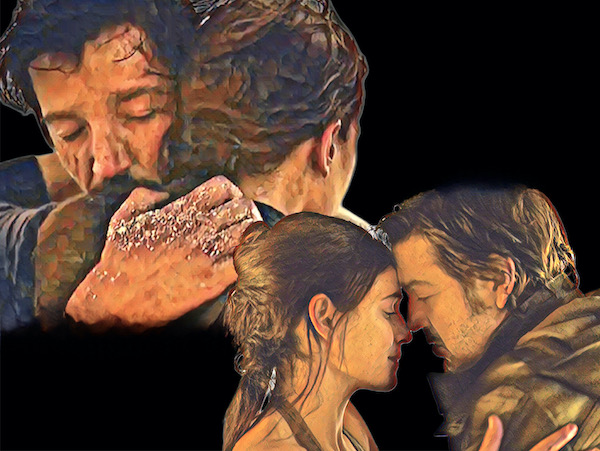
So, instead of resorting to grandiose, epic themes, Britell brought a more intimate musical language and avoided familiar themes from the franchise with bold choices, such as the use of electronic sounds, minimalist textures, and compositions that reflect more the psychology of the characters, such as Cassian Andor. His music creates a feeling of constant tension, isolation, and resentment, which are fundamental to the narrative of the series.
As a result, Andor has a unique sound for the series, which completely opposes the orchestral grandeur that characterizes traditional Star Wars scores. Instead of long and complex orchestral passages, he focuses on simple repetitions and subtle variations. This reflects the inner doubt and emotional isolation of characters like Cassian Andor, who is trying to find his place in a galaxy dominated by a ruthless Empire. The music not only helps to build the atmosphere, but also to reflect the quiet desperation and emotional escape of the characters.
In contrast to Williams’ orchestral music, Britell uses more modern and electronic sounds. He integrates elements of hip-hop, synthesizers, and ambient sounds, creating music that closely resembles the distortion and tension experienced by the characters. The aforementioned scene of Mon Mothma dancing to “Niamos” is a perfect example of how Britell uses music to subvert expectations and bring a more contemporary and futuristic tone to Star Wars.
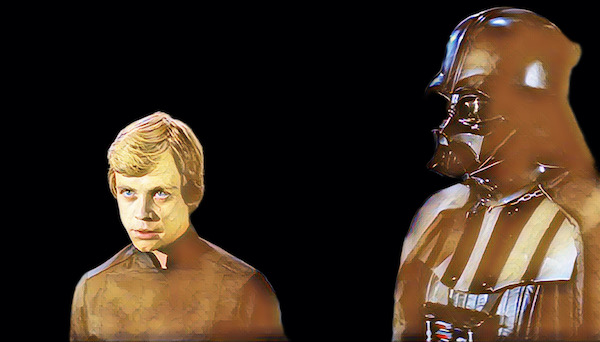
It’s clear from the outset that Britell’s style is the complete opposite of John Williams’ style, making history in the same way. Williams’ themes are easily recognizable and often associated with heroic glory and epic battle, but Britell uses darker and more introspective musicality, an approach that fits perfectly with the tense and political tone of Andor.
Nicholas Britell not only found his own voice in the Star Wars universe, but he also redefined the role of music in the franchise’s narrative. In doing so, he not only brought a new layer of depth to Andor but also challenged himself to bring something entirely new to a space where music is already defined by one of the greatest scores in cinematic history.
In the second season of Andor, his themes are present, but the soundtrack is also by Brandon Roberts because due to a family problem, Britell could not commit to the entire season and divided the production work.
The scene of Mon Mothma dancing to “Niamos” became a symbol of the new sense of freedom that Britell brought to Star Wars. Britell’s work is proof that in the Star Wars universe, there is always room for new sounds and new ways to connect with the emotional complexity of the characters and story.
Descubra mais sobre
Assine para receber nossas notícias mais recentes por e-mail.
 miscelana.com