
I’ve been writing about The Last of Us for years and dealing with the inevitable SPOILERS in light of the faithful adaptation of the game for the screen, including the death of Joel (Pedro Pascal) and the entry of the feared Abby Anderson (Kaitlyn Dever), Ellie’s (Bella Ramsey) archenemy and the character who changes the entire narrative of the story.
It must be acknowledged that the series adapted Abby’s entrance, from her appearance to her immediate, straightforward revelation. Now that the “surprise” has happened and Joel is out of the picture, the plot will focus on Ellie’s obsession with revenge, an inverted mirror of Abby’s trajectory up until now and, more importantly, until the end of the story.
The game had two parts and ends with an open-ended storyline, but if you want to know for sure what will happen to Abby and whether Ellie will kill her, be warned of SPOILERS ahead.
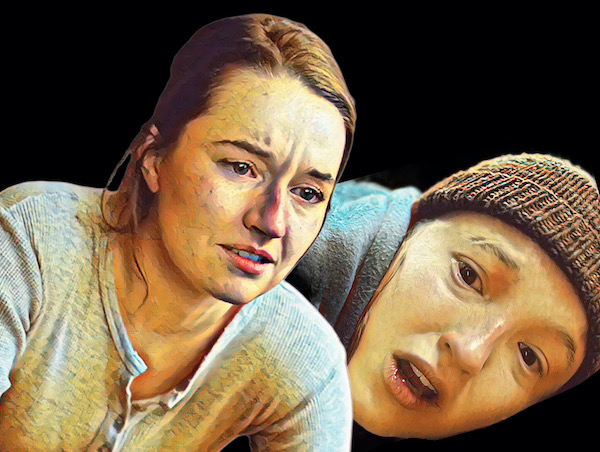
Who is Abby Anderson
Abigail “Abby” Anderson is one of the most divisive and unforgettable figures in the The Last of Us universe, being both protagonist and antagonist, depending on your perspective. Her story, marked by loss, revenge, trauma, and search for redemption, works as a tragic mirror of Ellie herself, with whom she engages in an emotional and physical duel that runs through the entire second game. Abby’s construction in The Last of Us Part II is deliberately uncomfortable: she is introduced as the killer of Joel, the beloved protagonist of the first game, only to later become playable and human, forcing the audience to confront their own moral judgments.
Before the apocalypse, Abby was the daughter of Jerry Anderson, the Firefly surgeon tasked with operating on Ellie at the end of the first game and the first season. Jerry would be responsible for extracting a possible cure for the Cordyceps fungus from the girl, even though it would mean Ellie’s death. Joel, upon discovering this, kills Jerry to save her—a selfish act of love, but also brutal and definitive. In the game, Abby witnesses the impact of this loss and, in the following years, channels all her pain into an obsessive physical and military preparation. She joins the WLF (Washington Liberation Front), an armed faction that dominates part of Seattle and that offers Abby the ideal environment to train, harden, and keep her anger alive.
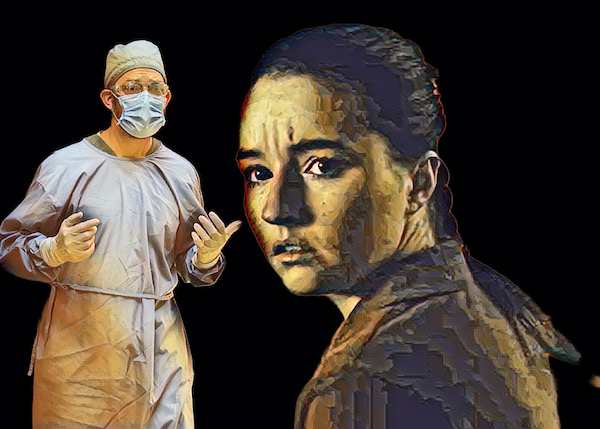
When she finally tracks down Joel with her WLF companions, Abby kills him in an extremely violent way with a golf club—a raw scene, witnessed by Ellie (and, in the game, Tommy (Gabriel Luna)). This moment is the trigger for the entire spiral of violence that follows. The game, however, chooses a radical path: after showing the events from the point of view of Ellie seeking revenge, the narrative backtracks and puts the player in control of Abby, making him relive the same three days in Seattle — but from the perspective of the most hated character to date. This is where The Last of Us Part II reveals itself as a study of empathy and dehumanization.
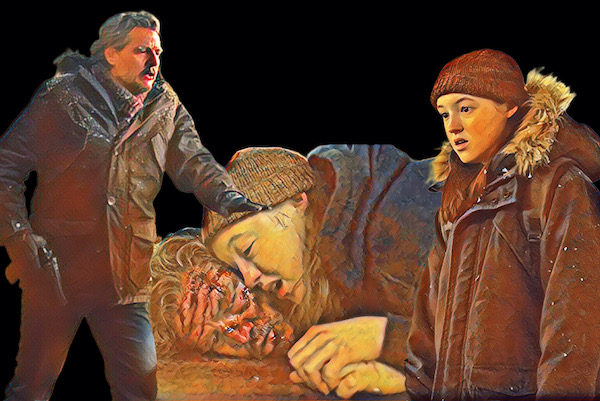
The humanization of an antagonist
The Abby that the player gets to know is a woman marked, yes, by anger and pain, but also by loyalty, humanity, and complexity. Her muscular appearance — the target of unfounded transphobic and misogynistic criticism at the time of its release — is not a gratuitous trait, but the physical expression of the way she dealt with the trauma: transforming her body into armor. At the same time, she carries recurring nightmares about her father’s death, disturbing dreams that evolve as her moral decisions change. These dreams become less bloody as she grows closer to Lev, a Seraphite boy whom she decides to protect, breaking with the extremism of both the WLF and the religious sect to which the boy belonged.
The relationship between Abby and Lev is the axis of her journey of redemption. Lev is a young trans man, rejected by his own religious community, and finds in Abby not only a protector, but someone capable of understanding what it means to live on the margins, being hunted by both the Seraphites and the WLF. Caring for Lev leads Abby to betray her faction, face old allies, and, above all, face who she has become. This choice is not easy. She loses everything — friends, protection, security — but, for the first time since her father’s death, she finds something similar to peace again.

Abby’s relationships with other characters also reveal their contradictions. Owen (Spencer Lord), her former romantic partner, is still an important figure in her life, but the connection between the two is tainted by resentments and irreconcilable differences. Owen longs to escape the war and find the Fireflies, seeking a new beginning, while Abby is still mired in the muck of her past. Owen’s partner and a pregnant doctor, Mel, is a constant reminder of what Abby lost—and what she never had. This tension culminates in tragedy: Owen and Mel are killed by Ellie during her campaign of revenge. When Abby discovers the bodies, the brutality of the personal war they are both waging becomes unbearable.
The final confrontation
The final confrontation between Abby and Ellie takes place in Santa Barbara, months later, and with every appearance of only happening in a third season. Both are physically and emotionally devastated. Abby was captured by a cannibalistic militia called the Rattlers, tortured, and is almost unrecognizable – thin, weak, with her hair forcibly cut. Ellie, on the other hand, has already lost everything: Joel, Dina, Jesse, and now even her sanity. The duel between the two is not glorious, but tragic. Ellie wins, but at the last moment spares Abby’s life. This act of mercy finally breaks the cycle of violence, even though redemption seems too far away for both of them.

Abby’s journey is deeply connected to themes of justice, revenge, loss, identity, and empathy. She is not portrayed as a heroine or a villain, but as a survivor marked by tragedy. In the end, Abby sets off with Lev in search of the remaining Fireflies — perhaps in search of reconstruction, or perhaps just trying to survive another day. Her fate is left open, as is Ellie’s, but her trajectory reverberates as one of the great character studies in gaming history.
Abby’s repercussions were immense and controversial. Laura Bailey, who played her with depth and nuance, was the target of online attacks after the game’s release — many motivated by misogyny, transphobia (with the confusion between Abby and Lev), and resistance to the narrative shift that the game proposes. Even so, Bailey’s performance was widely acclaimed, earning her the BAFTA for Best Performance. Over time, Abby has established herself as a symbol of how video games can challenge the player not only with technical challenges, but also moral and emotional ones.
What to expect from the series
In the television adaptation of The Last of Us, produced by HBO, Abby is played by Kaitlyn Dever and has already generated discussion — generally positive — due to the changes in relation to the game.
Creators Craig Mazin and Neil Druckmann made structural changes because the narrative will be expanded beyond two seasons, allowing Ellie and Abby’s arcs to develop with more depth and time.
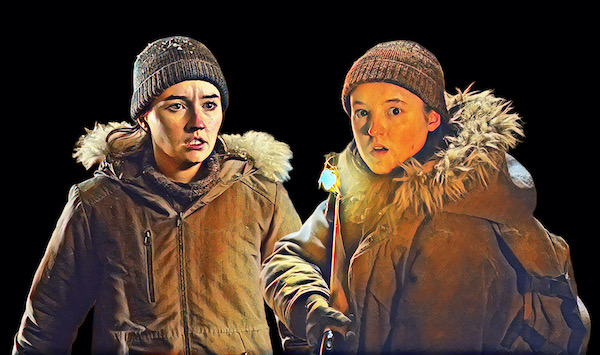
Accelerating Abby’s entry, motivation, and revenge in the series was a decision aimed at both preventing the audience who already knew what she would do from being bored with information that was difficult to hide and, for those who didn’t know, still experiencing the same shock equally as abruptly as in the game. It was a good idea, although what was not possible to match was the surprise that the players had because they were Abby before knowing what she was coming or who she actually was.
With that out of the way, it will now be possible and certain for empathy for Abby to be built more progressively. The bond with Lev, for example, should gain even more space, as well as the character’s internal moments — her crises, nightmares, and the slow reconstruction of her identity after the trauma. Furthermore, themes such as masculinity, strength, dysphoria, and belonging, already present in the character, can be further explored in audiovisual language. The series, therefore, promises to deepen the character without softening her complexity, keeping her as an uncomfortable, powerful, and essential figure for the narrative.


In the end, Abby Anderson remains one of the bravest characters ever conceived in a video game. She challenges the player to feel anger, then compassion. To hate her, then understand her. To play as her, even without wanting to. She shows that in a destroyed world, monsters are not always the others — and that no one, not even those who killed, is beyond humanity.
Her journey does not offer easy comfort, but it provokes, transforms, and stays with the player long after the game ends. And if the series manages to achieve the same feat, it will have overcome its greatest challenge, which is to remain relevant even after “losing” its main star and becoming a story of revenge. But, in the end, it is unlikely that we will not have empathy for the very person who violently broke our heart.
Descubra mais sobre
Assine para receber nossas notícias mais recentes por e-mail.
 miscelana.com