
In 1605, a work destined to change the course of Western literature emerged from the presses of Juan de la Cuesta in Madrid: El ingenioso hidalgo don Quijote de la Mancha, by Miguel de Cervantes Saavedra. The publication of this first part of what would become a landmark in narrative fiction will be 420 years old in 2025—an anniversary that invites us to reflect not only on the book’s longevity but also on its decisive influence on the way we understand the novel, fiction, and even reality.
To understand the importance of Don Quixote’s scale, it is essential to place it in its historical context. The work was written at the beginning of the 17th century, in a Spain that was still enjoying the imperial glories of the Golden Age, but was already suffering the cracks of political and economic decline. It was a time of transition: the medieval world was giving way to a new era of rationality, science, and realism. It was in this environment, where romances of chivalry were still popular among a nostalgic audience, that Cervantes decided to undertake his satire. But he went beyond pastiche: he produced a text that mocked old models while transcending them, inaugurating a new way of thinking about fiction.

Cervantes’ life contributes to understanding the spirit of the book. Miguel de Cervantes was born in 1547 in Alcalá de Henares and lived a life marked by misfortune. He fought in the famous Battle of Lepanto (1571), where he lost the use of his left hand, which earned him the nickname “the lame man of Lepanto” — and spent five years as a prisoner in Algiers after being captured by pirates. Upon returning to Spain, he encountered financial difficulties and became involved with the royal bureaucracy, where he was accused and imprisoned several times. It was in his mature years, at around 58 years of age, that he published the first part of Don Quixote, as a poor and little-known writer.
The genesis of the book has notable elements. Cervantes published Don Quixote to ridicule the then-popular novels of chivalry, such as Amadis de Gaula, whose protagonists lived incredible and unlikely adventures. The character of Alonso Quijano, an impoverished nobleman who goes mad from reading so many of these books and decides to become a knight errant under the name of Don Quixote, is an explicit parody of these narratives. However, as the plot progresses, laughter gives way to empathy. Don Quixote becomes a tragic hero, a misplaced idealist whose madness reveals profound truths about the world. His faithful squire, Sancho Panza, provides a realistic counterpoint, and together they form one of the most famous duos in world literature.
The work was immediately well-received: Don Quixote became a bestseller, circulating throughout Europe. The book was translated, plagiarized, and commented on to the point that an apocryphal author known as Alonso Fernández de Avellaneda published a false sequel in 1614, which motivated Cervantes to release the authentic second part in 1615, which was more complex and metafictional. In it, the characters know that they are characters in a book and discuss their fame, anticipating literary games that would only be revisited centuries later by authors such as Borges and Italo Calvino. This second part, written with an awareness of the impact of the first, raises the novel to an extraordinary level of sophistication and self-reflexivity.
The importance of Don Quixote is not limited to the past. Considered by many to be the first modern novel, it establishes a new way of telling stories, in which the narrator is ambiguous, the characters have psychological depth, and the boundaries between reality and fiction become blurred. The alternation between the comic and the tragic, the multiplicity of voices and perspectives, the dialogue with other works—all of this anticipated central characteristics of the contemporary novel. It is no wonder that authors such as Dostoyevsky, Flaubert, Proust, and Kafka acknowledged their debt to Cervantes.
Furthermore, Don Quixote has become a symbol of the struggle between idealism and pragmatism, dream and disillusionment. The image of the knight facing windmills—which he believes to be giants—has gone beyond the literary realm and become a cultural archetype. “Quixotism” has come to designate noble attitudes, yet out of touch with reality, with philosophical, political, and existential echoes.
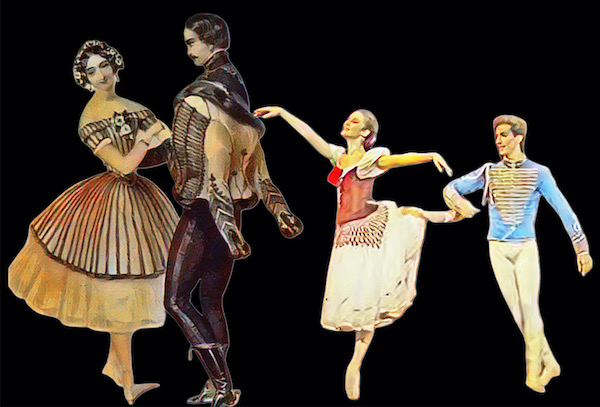
This permanence is reflected in the countless cultural adaptations, reinterpretations, and artistic appropriations that the work has received over the last four centuries. The character has been immortalized in sculptures (such as those in Madrid), paintings (especially by Honoré Daumier and Picasso), famous illustrations (such as those by Gustave Doré), and even in ballet (Don Quixote, by Ludwig Minkus, still performed by classical companies such as the Bolshoi and the Royal Ballet). In cinema, the adaptation by Orson Welles deserves special mention — an unfinished project that consumed decades of his life — and the film The Man Who Killed Don Quixote (2018), by Terry Gilliam, which took more than 25 years to complete and has become, in itself, a kind of cinematic “quixotism”.

In the theater, the most famous reinterpretation is the musical Man of La Mancha, by Dale Wasserman, Mitch Leigh, and Joe Darion, which premiered on Broadway in 1965 and became a worldwide success. The song The Impossible Dream became an anthem of idealistic perseverance, used in speeches, campaigns, and films. And even on television, Don Quixote reappears — whether in animations, such as episodes of The Simpsons or Tom & Jerry, or in subtle references in pop culture, from Marvel to children’s literature.
In 2025, as we celebrate the 420th anniversary of the publication of the first part, the world revisits a work that never ages. Quite the opposite: Don Quixote has perhaps never been so relevant. In an era marked by fake news, fragmented realities, and crises of meaning, the fundamental question that runs through the book is: What is real? — resonates with renewed force. The idealism of Don Quixote and the skepticism of Sancho Panza reflect universal human dichotomies, always in dispute.

Cervantes died in 1616, the same year as Shakespeare, another literary genius. His death went almost unnoticed, but his work has survived all fads and ruptures. Today, Don Quixote de La Mancha has been translated into more than 140 languages, tops the lists of the greatest novels of all time, and continues to be the subject of adaptations, studies, debates, and reinterpretations. The 420 years are not just a chronological milestone — they are an invitation to reread, rediscover, and celebrate the birth of the novel as we know it.
Descubra mais sobre
Assine para receber nossas notícias mais recentes por e-mail.
 miscelana.com
6) “an apocryphal author known as Alonso Fernández de Avellaneda published a false sequel in 1614, “ you still think, not knowing that was the game.. But..when Cide Hamete Benengeli is the fictional name of the writer and Miguel de Cervantes is not mentioned, but is omitted as the writer of this book in the English edition, then I also omit him in the name. The -H- and the -U- are silent letters, you don’t pronounce them. As mentioned earlier; the -V- you pronounce as the -B-. Cervantes sometimes signed as Cerbantes. What ’s left of Cid Hamete Benengeli minus Miguel de Cervantes = Siren The name of Avellaneda minus ‘i Saavedra’= Siren II,Siren two or too, in other words: this is the second written book by Siren or: it is also a book written by Siren, the Sireniacal Gentlemen, a group of writers in London at that time, including Ben Jonson (= SP), John Donne ( wrote the poems) and ‘the two friends’, John Fletcher & Francis Beaumont who had the task to write the loose stories.7) “second part in 1615, which was more complex and metafictional,.. raises the novel to an extraordinary level” you understand, but that’s because the DQ is an initiation tale: from apprentice to companion and then to master.8) “Don Quixote de La Mancha,” you dare to say,not knowing that La Mancha did not exist.. that region is established in 1691. Please say Don Quixote de la Mancha.. many names have threeexplanations. The real title is “The history of the valorous and wittie Knight-Errant Don-Quixote of the Mancha.. of the dirty spot!
CurtirCurtir