
“Who are you?” This simple question, asked by a confused Cassian Andor (Diego Luna) to Syril Karn (Kyle Soller), echoes throughout the series — and is the perfect gateway to the intimate, political, and desperately human drama that Andor delivers in its final season. Now that I can finally talk about the most impactful secrets and twists (yes, without fear of giving away spoilers!), it is both a relief and an invitation: the audience needs to prepare for what is to come. As Diego Luna told me in an interview with CLAUDIA, Andor has been a long, intense journey, and it is not over yet. We will have even more twists, revelations, and emotions in the last three episodes next week. Get ready.
Andor is not about the great hologram heroes, the mythical Jedi, or the names that fill the history books of the galaxy. It is about the forgotten. The silenced. Those who fight on the margins and whose lives will never be recorded with medals or monuments. And few characters represent this as strongly as Cassian Andor and Syril Karn — two sides of the same tragic coin.

Both are driven by an obsession: Cassian by survival and, later, by the cause; Syril by order and the desire to prove her worth. Neither will be remembered in the official records of the Rebellion or the Empire. But it is precisely these erased names that carry the weight of the story. In Andor, what seemed small reveals itself to be essential. And it is in this detail that the series shines.
With impeccable performances by Diego Luna, Genevieve O’Reilly, and Stellan Skarsgård, Andor delivers a narrative that is Star Wars for adults, with all the consequences, moral doubts, and ambiguous decisions that the universe has always hidden under special effects. Here, everything matters. Nothing is left aside. And we can finally talk about it without a filter.
As the series moves towards its inevitable climax, the mirror between Cassian Andor and Syril Karn becomes impossible to ignore. One becomes a rebel not out of idealism, but because there is no escape. The other becomes an agent of authoritarianism because he does not know how to be anything else. Both are driven by an emptiness — an absence of belonging, of recognition, of meaning — that makes them more alike than they would ever admit.
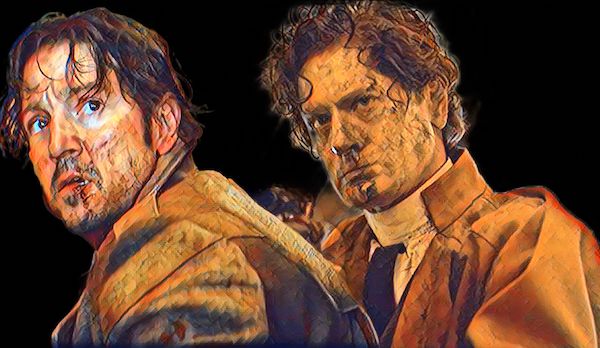
Cassian and Syril are men who seek a place in the world, but find only walls. The “who are you?” that one hears with contempt, the other internalizes as an obsession. Cassian fights against the system because it has discarded him. Syril clings to the system because it is all he has. And in the end, neither of them will be remembered. Neither will have statues. But they are the ones who move the galaxy. They are the ones who make the gears turn — with blood, sweat, wrong choices, and small acts of courage or cowardice. Andor recognizes this and forces us to recognize it too.
This is the series’ greatest triumph: giving center stage to someone who, in other narratives, would be a supporting character. Shedding light on Mon Mothma — not the legendary leader, but the woman surrounded by blackmail, betrayal, and family sacrifices. Letting Luthen Rael emerge as one of the most complex characters in the entire franchise: a man who has sacrificed everything, including his own soul, for the cause he defends with the coldness of someone who knows he will not be remembered as a hero. And an even sadder detail: after doing all the dirty work, the merit of “rescuing” the senator went to the “golden team”.
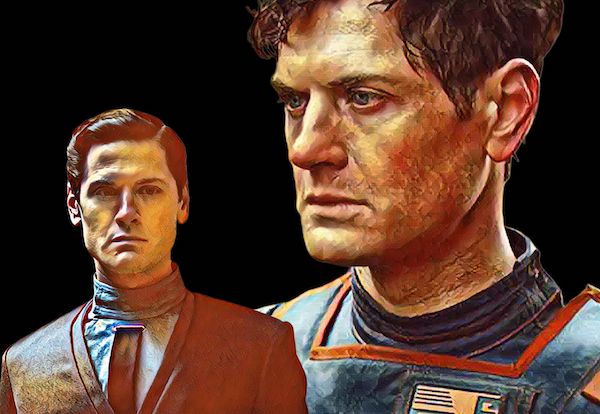

Those who follow the Star Wars expanded universe may have recognized, even if subtly, the group as the crew of the Ghost, the core of the animated series Star Wars Rebels, which has appeared in Ahsoka too. Led by Hera Syndulla, these veteran rebels have been operating on high-risk missions long before the Alliance was formalized, and they are the ones in charge of taking Mon Mothma safely to the rebel hideout.
The choice is not random, nor is it just a nod to the fans. It marks the transition from the isolated senator to the recognized leader of the Rebellion, and symbolizes the union of the various resistance fronts that operated in the shadows. Cassian Andor, although fundamental to the moral heart of the series, could not fulfill this mission. He is still a marked, persecuted, impulsive agent, operating in the dirtiest backstage of the war. His trajectory, at that point, is parallel to politics, not intersected with it. The arrival of the Ghost and her crew points to a turning point: the Rebellion begins to take shape, with its names, ships, and strategies. But as always in Andor, those who make this world go round seek no glory—only survival, alliance, and purpose. But it’s sad because even after Rogue One, the fact that no one ever mentions Cassian Andor means that until now—and not since—“who are you?” was the question for him, too.
The acting is another outlier in Andor. Diego Luna gives Cassian a rare density — eyes that carry guilt, exhaustion, fury, and, very little by little, hope. In a conversation with me for CLAUDIA, he summed it up well: “There are many names, there are many anonymous beings who were crucial in the history of this saga”. And he lives this in every scene. Genevieve O’Reilly, as Mon Mothma, delivers a restrained and devastating performance, where absolute control is a form of despair. Stellan Skarsgård imposes presence and tragedy as Luthen, in one of the most striking monologues on recent television, where he admits to having become what he fights, because it is the only way to win.

Andor does not underestimate the viewer. There is no chewed exposition, and there is no easy breathing. The series demands attention, political reading, and sensitivity to details. It is indeed “Star Wars for adults”, but not because it is dark or violent, but because it understands that the fight against tyranny is not made of glory, but of losses, lies, and difficult pacts. Of characters who don’t shine in the center of the scene, but who support the weight of the story.
And now that the second season is coming to an end — with painful twists, betrayals, and sealed destinies — I say it again: Andor is, indeed, the narrative peak of the Star Wars universe. And yet, it sets the stage for more. More impact, more depth, more silence before the explosion.
If you haven’t seen it yet, run. If you have, get ready. The silence of the forgotten has never been so deafening.
Descubra mais sobre
Assine para receber nossas notícias mais recentes por e-mail.
 miscelana.com
1 comentário Adicione o seu