
I’m a big fan of the series Hacks and of Jean Smart in particular. The series, created four years ago by the trio Jen Statsky, Lucia Aniello, and Paul W. Downs (Lucia and Paul are married and he also stars in the series), deals with themes that are currently at the center of cultural debates: the explosive combination of ageism, misogyny, and generational conflict. And it does so with grace and intelligence, making us laugh and reflect at the same time. They hit the nail on the head. After a more timid start in the face of the phenomenon, The Bear, Hacks has gained space and is today the most awarded comedy on television – and deservedly so.
Even so, I confess that I was unsure whether, after two brilliant seasons, there was enough breath for three more. But, apparently, there is. The success of the series brought big names to supporting roles (such as Oscar winner Helen Hunt) and special appearances by celebrities playing themselves. Hacks is, after all, a series about the behind-the-scenes of Hollywood – and the Industry loves to see itself on screen. Those of us who cover entertainment do too. That’s why I want to talk a little about this new phase of the series.
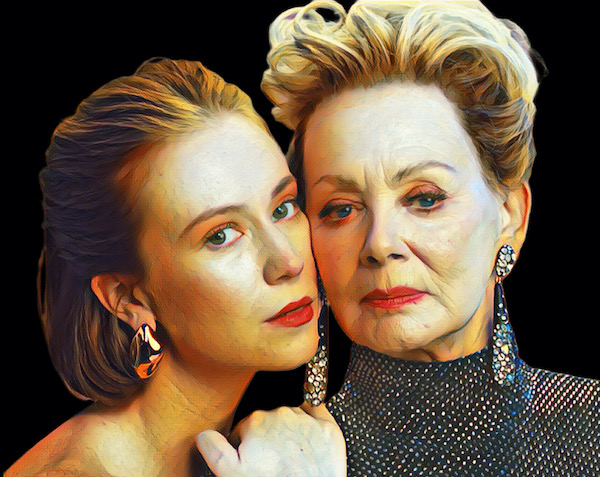
In the first season, we met Deborah Vance (Jean Smart), a stand-up legend in decline, forced to work with the young screenwriter Ava Daniels (Hannah Einbinder) at a time when they both needed to reinvent themselves. They are both difficult, stubborn, and brilliant, and the clash of personalities got us hooked on the irresistible chemistry between Jean and Hannah. In the second season, the duo hit the road to test new material in times of cancel culture and, in the end, managed to get along.
What was just a seed in the scripts became a central theme in the following seasons: Deborah wanted to break the glass ceiling of talk shows and be the first woman to host a late-night talk show. The third season delved into this dream, showing how both Deborah’s age and Ava’s youth were seen as obstacles because they were women. Once again, the two end up on opposite sides: when Deborah gets her chance, she chooses not to take Ava with her, and the screenwriter reacts with emotional and professional blackmail to secure her place.
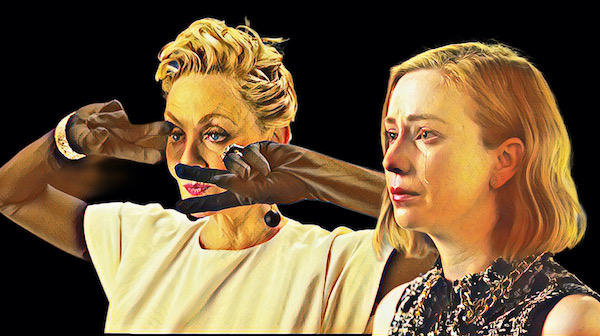
Now, in the fourth season, we see the two in an almost symbiotic and at the same time toxic relationship. The behind-the-scenes dynamics intensify: the work environment brings together baby boomers, millennials, and generation Z, generating hilarious situations – and incredibly real, at least for those on the outside. Deborah finally makes history by taking over the talk show, but faces the impossible challenge of remaining relevant in a saturated market. Perhaps because she has worked for decades in TV production and programming, this part of the series makes me more nervous than it laughs. Because Hacks is very real – and very sincere – in showing how success is built (and destroyed).
Deborah is pragmatic, somewhat insecure, and wants to bet on what “works”. Ava wants to be recognized for her intellectual innovation, which is also a cliché of creative youth. And so, in a stalemate, they lose the chance to balance forces just when they needed each other most. I’ve seen stars, writers, and producers face similar discussions more than once. Because there’s no formula for predicting success. Maybe that’s why it’s so addictive to watch this duo try to decipher what might work.
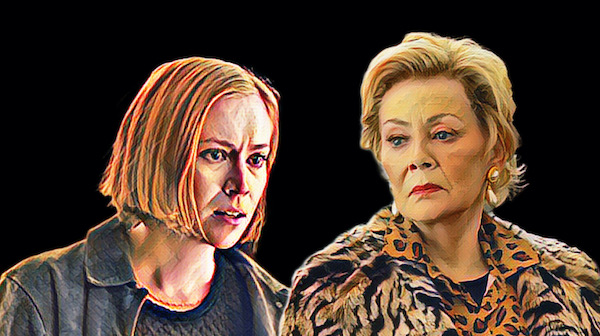
Hacks also works because it’s, in itself, a metalanguage of what its own team of writers and producers experience. And that gives the series an authenticity that’s hard to find. The trio of showrunners conceived the idea in 2015, on a car trip where they were talking about forgotten comedians like Phyllis Diller and Joan Rivers. They found the perfect Deborah Vance in Jean Smart – and the actress, with three Emmys under her belt, delivered much more than anyone expected.
The fourth season premiered to acclaim: 97% approval from critics on Rotten Tomatoes and a 90 on Metacritic. Experts praise Jean Smart’s performance, the sharp script, and the emotional evolution of the story. However, some audiences are uncomfortable with the more acidic tone of this phase, especially with the level of toxicity between the protagonists, who now work together in an even more competitive environment.
The series itself recognizes that it is ending: the creators have already announced that the next season will be the last. It will be a difficult goodbye. Hacks is one of those rare comedies that knows how to be intelligent, exciting, and deeply human without losing its rhythm. And, for those who have lived behind the scenes of TV, it is an uncomfortably true mirror.
Descubra mais sobre
Assine para receber nossas notícias mais recentes por e-mail.
 miscelana.com