
Depending on the version, it was either Mikhail Fokine who read Alfred Tennyson’s poem or Anna Pavlova — the fact is that both Russians, who had already worked together in Imperial Russia and later in the Ballets Russes, understood that there was the potential for a great dance piece. One that would become the signature of the legendary ballerina, and which in 2025 turns 120 years old. A great moment to honor it.
Created in 1905, the solo The Dying Swan would become one of the greatest icons of world ballet because the choreography did not require grand acrobatics or dazzling jumps, but a unique emotional commitment. In just two minutes, the ballerina was to embody the death of a swan, representing, through a weakened body, the struggle against the end, the sorrow, and the beauty of the final breath. What began as an ephemeral farewell solo eventually became one of the most powerful symbols of classical dance.

The Dying Swan: Myth, Poem, and Dance
The connection between the solo and the myth of the “swan song” traces back to the idea that, at the moment of its death, the swan emits a final and enchanting song. Though scientifically disproven, this belief became a powerful metaphor not only in literature but also in art.
Indeed, the first manifestation of this image in literature was the poem The Dying Swan, by Alfred Tennyson, written in 1830 when the poet was just 20 years old. After his father’s death, Tennyson plunged into a period of deep reflection on death and suffering. In the poem, the swan — the last of its kind — sings with a transcendent beauty before disappearing into the waters of death. This symbol of farewell and beauty became one of the pillars of Western iconography.
The wild swan’s death-hymn took the soul
Of that waste place with joy
Hidden in sorrow; at first to the ear
The warble was low, and full and clear;

Let’s go with the version where Fokine had the idea for the choreography, especially for Pavlova. He took this allegory from Tennyson’s poem and transfigured it into movement. The work was built to convey not only the death of the swan, but also its resignation — its fragility in the face of the inevitable. Fokine found in The Swan by Camille Saint-Saëns — already part of The Carnival of the Animals suite — the perfect melody that added even more symbolism to the ballet. In just two minutes, Pavlova was to transform into a being who, despite her fragility, emanated a silent and immeasurable strength.
Pavlova: The Immortalization of the Solo
Anna Pavlova was more than an interpreter of The Dying Swan — she became the very embodiment of the solo. With her slender figure, long arms, and delicate movements, she brought the fragility of the swan to life in breathtaking fashion. For Pavlova, the solo became an extension of her own body, a farewell rite not just for the character, but for her career. The ballerina danced this piece over 4,000 times, and her portrayal of the dying swan became inseparable from her artistic legacy.
Fokine’s choreography, with its slow gestures and arms dissolving into the air, required refined technique — but also deep emotional immersion. For Pavlova, the swan was not just an animal, but a deeply human figure facing death with a unique kind of beauty.
The ballerina, already known for her charisma and impeccable technique, made The Dying Swan one of her greatest legacies, and the solo remained intimately linked to her name until the end of her life. Even when gravely ill, she asked to dance it one last time. Her last public words were: “Prepare the swan costume.” But she never returned to the stage. Pavlova died soon after, yet her final wish to dance left an indelible mark on the history of dance.
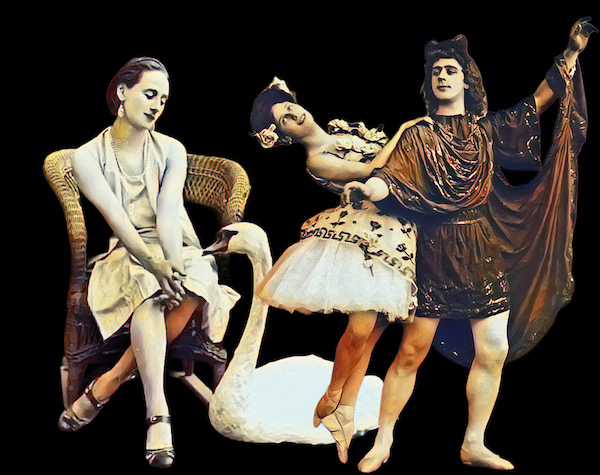
The Solo and Maturity
Though The Dying Swan has become a solo most associated with the later stages of a ballerina’s career, that doesn’t mean only experienced dancers can perform it. The piece requires a deep understanding of fragility and transience — themes that can be explored in many ways. Still, indeed, the solo resonates more profoundly when performed by artists with rich emotional depth, such as those who’ve lived through various roles and experiences on stage.
What truly distinguishes The Dying Swan from other solos is the ballerina’s ability to fully surrender to emotional expression. The focus is not on physical virtuosity, but on the ability to convey the character’s fragility and melancholy. That’s why many of the great dancers who have performed it were in advanced stages of their careers, when technical mastery meets the emotional depth the solo demands.
Great Interpreters and Legacy
Besides Pavlova, many other ballerinas have immortalized The Dying Swan throughout the 20th and 21st centuries, enriching and transforming its interpretation through different styles and eras. Maya Plisetskaya, one of the greatest stars of Soviet ballet, brought a powerful interpretation, marked by emotional intensity and refined technique, emphasizing the swan’s inner suffering. Her version became one of the most acclaimed, blending fragility with immense strength — a commanding and enchanting physical expression. Can I brag? I had the privilege of dancing the solo. It was incredible.
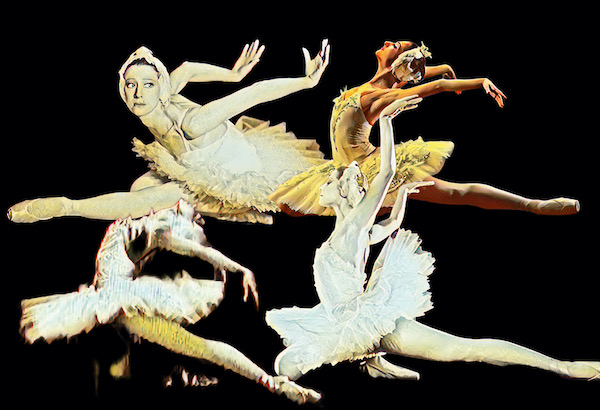
Another great interpreter was Uliana Lopatkina, of the Mariinsky Theatre, whose softness and elegance gave a new dimension to the solo. Her performance, with flowing and graceful movements, kept alive the idea that the swan, despite its imminent death, conveyed a unique and ethereal beauty. Svetlana Zakharova, one of the Bolshoi’s stars, also made history with her version of The Dying Swan, delivering impeccable technique and a dramatic touch, making her interpretation a spectacle of purity and sorrow.
The French ballerina Sylvie Guillem also danced The Dying Swan, bringing an approach that fused her sharp technique with a more contemporary reading of the piece, infusing it with an introspective and existential kind of pain. Like Pavlova, Guillem also managed to merge the fragility and strength of the swan in a completely unique way. We mustn’t forget Natalia Makarova and Galina Ulanova as well.
These interpreters — and many others across the decades — have helped keep the solo alive and relevant, each offering their own vision of what it means to dance the death of a swan. Over time, the solo has not only endured but also adapted to new readings and cultural interpretations, whether in classical settings or contemporary reimaginings.
The Myth of the Swan Song and Its Cultural Relevance
The myth of the swan song is a profound concept that crosses centuries of literature, art, and philosophy. It represents the tragedy of beauty and the inevitability of death, transformed into something sublime. This image of the swan, which at death shows its greatest beauty, transcends pain, symbolizing not just an ending, but a celebration of life through death.
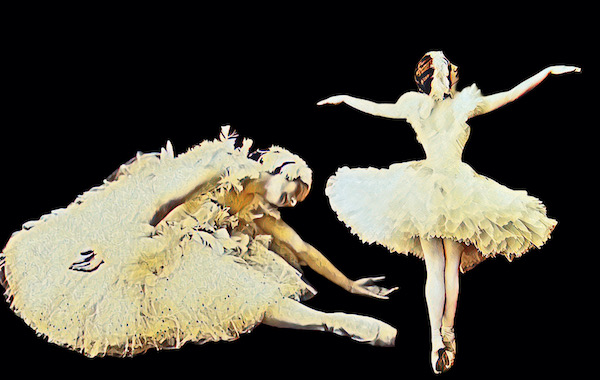
Throughout history, the myth has appeared in various art forms — literature, painting, and theater. Tennyson’s poem was merely one of the early milestones of this artistic imagination, but the idea of a glorious final breath has recurred across cultures and representations. Dance, with its ability to capture the ephemeral, became the perfect language to convey this image. In The Dying Swan, Fokine and Pavlova crystallized the idea that, in the end, we can find beauty in farewell and grandeur in a moment of fragility.
Now, 120 years after its creation, The Dying Swan remains one of the most emblematic solos in classical dance. More than just a choreography, it is a work of art that speaks directly to the human spirit, about the fragility of the body, the beauty of goodbye, and the transcendence of death. Through different performers and interpretations, the solo continues to inspire generations, reaffirming the power of dance as a universal form of expression that goes beyond time and space.
By revisiting this landmark in ballet history, we celebrate not only the 120 years of the solo but also the ability of art to capture the fleeting and transform it into eternity. The swan, who once sang and died onstage, lives on in the collective memory of dance, always ready to remind us that even in the end, there is beauty to be found.
Descubra mais sobre
Assine para receber nossas notícias mais recentes por e-mail.
 miscelana.com