
As published in CLAUDIA
The Rio-born Mayara Magri could have followed many paths, but she chose — or was chosen by — dance. Her refined technique and stage presence quickly caught attention beyond Brazilian borders. In 2011, at just 17 years old, after winning the Prix de Lausanne, she was accepted into the Royal Ballet School in London and, shortly afterward, joined the prestigious Royal Ballet, where she now holds the title of Principal Dancer, the company’s highest rank.
Recognized for her strength, musicality, and elegance on stage, Mayara has built an internationally admired career, portraying classical roles such as Kitri (Don Quixote), Juliet (Romeo and Juliet), and Aurora (The Sleeping Beauty) — always with a personal freshness and intensity. Her interpretation of Odette/Odile, in Swan Lake, is one of the most eagerly awaited precisely because of this rare blend of virtuosity and expressiveness.
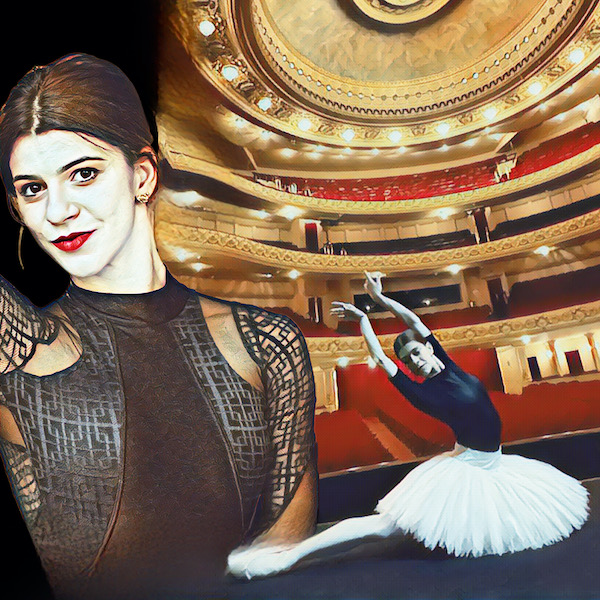
Now she returns to her hometown to dance the most iconic of ballets for the first time at the Theatro Municipal do Rio de Janeiro. The Rio debut of Swan Lake feels like a rite of passage: a homecoming, but also a crowning moment before the audience that saw her begin. For young dance students and art lovers, watching Mayara Magri on stage will be more than just a performance — it will be witnessing the return of an artist who carried Brazilian discipline with her and now gives back, in the form of art, everything she has learned around the world.
In the midst of a packed schedule, Mayara managed to fit in an exclusive conversation with CLAUDIA while adjusting to the time zone and rushing to rehearsal.
By the way, the season opened on May 14 in Rio and runs until the 24th, with the Ballet and Symphony Orchestra of the Theatro Municipal under the baton of Javier Logioia Orbe and general direction by Hélio Bejani. Alongside Mayara Magri, Victor Caixeta, Paulo Vitor Rodrigues, Juliana Valadão, Cícero Gomes, Manuela Rogado, Marcella Borges, and Rodrigo Hermesmeyer dance the leading roles. Since tickets are sold out, on May 16 and 17, a screen will be set up on the Boulevard of Avenida Treze de Maio, with 150 passes per day for free transmission.
CLAUDIA
This is your debut at the Theatro Municipal. What does this moment mean to you, especially performing in Swan Lake?
MAYARA
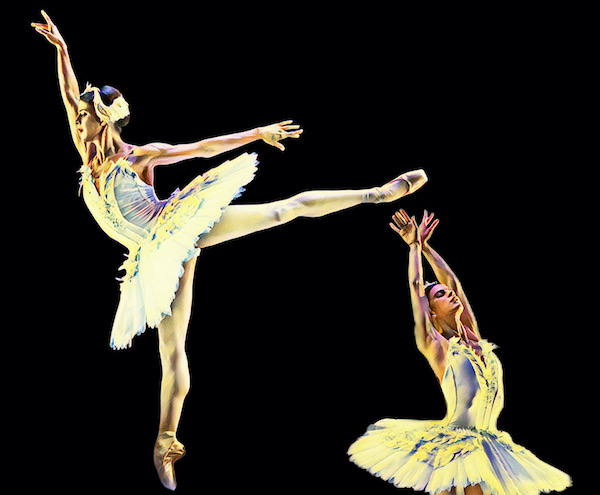
I was very little when I went to the Theatro Municipal for the first time, but I never ended up dancing there because most of the students who perform on that stage are from Maria Olenewa, the theater’s school—and I was a student at Petit Danse. So I always had this thing in my head: “One day I’m going to dance here.” But my path went a different way. I started participating in international competitions and got a scholarship to the Royal Ballet School, and I began performing on stages around the world long before I ever got the chance to dance at home.
CLAUDIA
You took the opposite route. After 13 years of working.
MAYARA
Yes, as a professional ballerina in the Royal Ballet company. I got permission from my director [Kevin O’Hare, at the Royal] to accept an invitation from director Helio Bejani, with support from Petrobras, to make this debut happen. It took all this time, and it really is such an emotional moment. It’s the realization of a dream.
CLAUDIA
How do you adjust in such a short time to a different stage and a different choreography?
MAYARA
Yes, it’s the same music, but the choreography is different. Sometimes it’s actually easier to do a completely different ballet than a similar one, because I still get confused with this version. That’s why I arrived ten days earlier to adapt and get familiar with everything. Let’s see how it goes. Today is my second day of rehearsal. I have until Tuesday to get everything on track! [laughs]
CLAUDIA
Do you remember the first ballet you saw at the Theatro Municipal? Who did you see on stage?
MAYARA
It was Don Quixote with Marcelo Gomes and Dorothée Gilbert. Now we’re friends, and it’s funny. Abroad, we participate in many Galas, so the principal guest dancers always run into each other. When I meet her, I say, “Wow, I remember the first time I saw you dance at the Theatro Municipal,” and I was doing a double shot with Marcelo. [laughs]
CLAUDIA
Life really comes full circle, doesn’t it?
MAYARA
It’s a very small world.

CLAUDIA
Odette/Odile is one of the most iconic dual roles in dance. What are your references, and how do you approach that duality in your interpretation?
MAYARA
Every time I dance this ballet, I work with a different coach. Of course, it’s a ballet you grow up watching, and you form an idea of how it “should” be from a young age. You see the Russians dancing it, so many others, and you think that’s how it has to be. But once you try it in your own body, that’s when you start to find your version. You have to shake off that image of how it’s “supposed to be” and let it come naturally. I try to understand the choreography and its challenges, while letting my body find the lines and express what the music is asking for. Knowing more about my own personality now, Odile—the Black Swan—is much easier for me, but Odette—the White Swan—is more complex. You have to be gentler and not show how hard it is, even though the white acts are much more difficult.
CLAUDIA
Is Swan Lake one of your favorites?
MAYARA
Yes. I really enjoy it, and I think the music already gets you halfway there. If you truly understand the music and its nuances and can express movement within choreography that’s been performed for so long by so many dancers, it’s perfect. I’ve seen every version out there, but I try to disconnect from those images and focus on my own version, my own interpretation of the ballet.
CLAUDIA
Do you have a favorite Odette or Odile?
MAYARA
Natalia Makarova is my favorite White Swan. I watch her all the time.

CLAUDIA
She’s incredible. Yes, her version with Anthony Dowell is unbeatable to me.
MAYARA
Her body is so expressive—and not just the arms. It’s how she rises to pointe. The energy she gives through her neck, the head movements—there are so many details! It’s the kind of ballet that needs lots of rehearsal because with every session, you can add another layer. It doesn’t come out on the first day. Only after many days, once the technique is solid, can you refine the arms. Once the arms are soft, you can work on the neck on the gaze. That’s why it’s so challenging on every level. But if you get to perform it in a beautiful theater, with a live orchestra and a company helping you tell the story, it’s incredible. After 13 years waiting to return home, Swan Lake had to be the one. It couldn’t be anything less.
CLAUDIA
What do you expect when performing in front of a Brazilian audience?
MAYARA
For sure, it will be much louder than abroad, where people only clap politely. [laughs]
CLAUDIA
What is your routine like at the Royal Ballet?
MAYARA
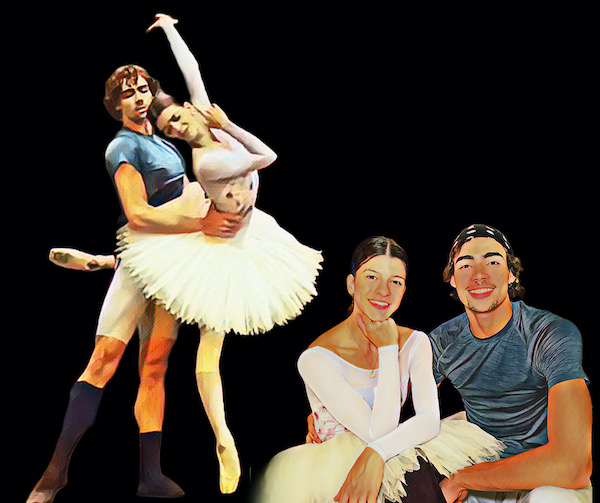
It’s intense because we have so many, many, many performances. I start class at 10:30 a.m. and we go until 6:30 p.m., sometimes working on two or three productions at once, then performing at night, and still trying to do projects like this—traveling, dancing with other companies. But the nice thing is that people really appreciate and value ballet over there. I’m happy that with Petrobras’ sponsorship, we can bring Brazilian dancers back to perform here. I’ll be dancing with Victor Caixeta, who danced for three years with the Mariinsky in Russia and had also never danced in Brazil before.
CLAUDIA
You had already danced together abroad, right?
MAYARA
Yes, I had danced with him in Germany and in other countries.
CLAUDIA
That helps with such short rehearsals, right?
MAYARA
Yes, yes, yes. One less thing to worry about. We had only five days to rehearse, and working with someone I’d never danced with would have been much harder. But everything worked out in the end. He’s a sweetheart. He’s younger than me, but he’s also a principal dancer who worked in Russia—he left because of the war, then went to Amsterdam, and now he’s moving to Vienna to work with Alessandra Ferri.
CLAUDIA
I’ve been following those transitions. As a Brazilian with a prominent international career, how do you see this “responsibility” of being an inspiration to other dancers?
MAYARA
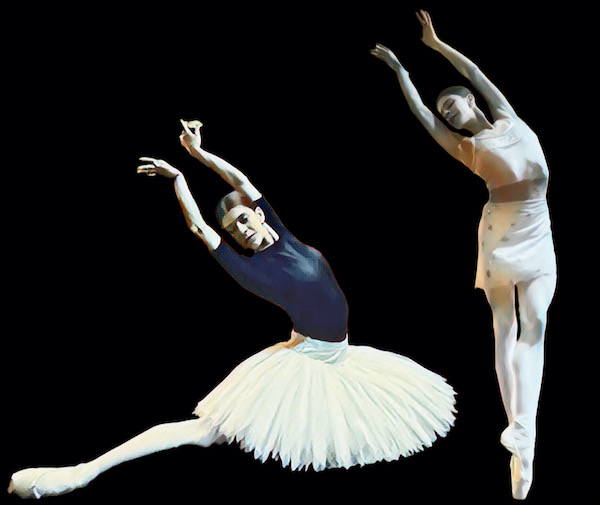
There’s a bit of pressure, you know? But it’s also the pressure of just being at the Royal Ballet. It’s a company with so much tradition. When you study dance history, you study Nureyev, Fonteyn, and dancers who were on that stage. So there’s a lot of weight in every performance. I share the studio with Marianela [Nuñez], and my teacher is Darcey Bussell. Alessandra Ferri worked with me on Romeo and Juliet, and she worked directly with Kenneth MacMillan, the choreographer who created that ballet. She passes on everything she learned from him. It’s impossible to forget how grand it all is—but if I focus too much, I get paralyzed. [laughs]
CLAUDIA
What’s it like dancing with the Royal Family in the audience? [King Charles III and Queen Camilla saw Mayara in Romeo and Juliet]
MAYARA
[laughs] Honestly, it doesn’t mean that much to me, but people think you have to give a ten-times-better performance. To me, they’re just regular people—but afterward, they do come backstage, shake our hands, compliment the performance, and ask where we’re from. When I told the King I was Brazilian and had achieved all my dreams in the company [the Royal Ballet], which I think is the best in the world, he looked so proud.
CLAUDIA
Such amazing stories.
MAYARA
And it’s important to stay grounded, to not let it all go to your head—keep your discipline with work, practice, and rehearse every day. It’s not easy to work with your body; something’s always hurting or there’s an injury here or there. But we have to listen to our bodies and work consciously. Being a ballerina is a lifestyle—you can’t just do whatever you want. You have to be well to maintain the constant pace of performing and rehearsing. Your mind has to be rested. You need your vitamins. You can’t drink too much.
CLAUDIA
Can’t stay up too late either, right?
MAYARA
You have to have better discipline. It’s a lifestyle—there’s no other way. But I love it, I really love it. And my boyfriend, who’s English and also a principal dancer at the Royal [Matthew Ball], helps me a lot. He really gets it, gives me the support I need, and when we’re in these intense performance phases, we create a routine at home—with food, activities, rest—that works really well for both of us. I think we help each other a lot. If I had a boyfriend with a “normal life,” he’d probably be upset with me, because of the choices we have to make—not staying out late, not traveling during performance season, not eating certain things. It wouldn’t work. But it works for me because I’ve made this my lifestyle—this ballerina life is my way of living.
CLAUDIA
That’s wonderful. I was going to ask about him, but wasn’t sure I could, so I’m glad you brought him up. Wasn’t he going to come with you for your debut?
MAYARA
He really wanted to, and I did too, but our director said, “Mayara, I’m already giving you nearly 20 days off,” and he has a performance that’s going to be shown in cinemas, so he couldn’t come. Plus, the Petrobras sponsorship is for Brazilian dancers with international careers. But someday it will happen. Somehow, God willing, it will.

CLAUDIA
And how did that breakfast on Ana Maria Braga’s TV show help make this dream come true?
MAYARA
I was on her show, and she wanted to know more about my story—where I started, what I’d done, what I was doing in London. Some dancers sent in video messages, like Thiago Soares and Hélio Bejani, who is the Director of the Municipal Ballet. I mentioned my dream of dancing here, and he replied that it would be an honor. So I said, “Now that he’s said it on national television…” [laughs] “he’ll have to make it happen.” And he did. One year later, here we are. And it’s going to be really special.
CLAUDIA
It will be a very special debut!
MAYARA
I’ll also have the pleasure of welcoming students from Petit Danse for the dress rehearsal. I come from a social project where I first started dancing, and we’ll have my former teachers, staff, the school director, my family, and students in the audience. That rehearsal is going to be really special because of that, you know?

CLAUDIA
And after your time in Brazil, what’s coming next?
MAYARA
I’ll be performing in Europe and Asia. I’m going to work with the Hong Kong company in China and also in Japan during July and early August. I’m also choreographing two pieces for the Royal Academy of Dance’s international competition, called Fonteyn 2025, which is for children and young people. They asked me to choreograph two solos because, for the first time, they’re bringing this competition to São Paulo, and they wanted to have a Brazilian choreographing for the Brazilians. This has been a very special project and a new connection with Brazil.
Descubra mais sobre
Assine para receber nossas notícias mais recentes por e-mail.
 miscelana.com