
Just when we think we can let our guard down around Deborah Vance (Jean Smart), she hits us with a crossroads that truly makes us hate her. In the final stretch of the third season of Hacks, the series delivers what it does best: digging, with sharp humor and emotional honesty, into the fractures between ambition, affection, and power. After hinting at reconciliations, victories, and a delicate personal and professional repositioning for the comedian, the final episodes reignite the central—and perhaps most painful—conflict of the story: how much this woman, who reinvents herself on stage, still stumbles into the worst versions of herself offstage.
The love-hate game between Deborah and Ava (Hannah Einbinder) keeps us shifting our sympathies, but Ava is almost always right. Deborah uses and abuses people—even those she loves and wants close—and Ava took a long time to earn the recognition she deserved. When Deborah finally admitted that the young woman “is her voice,” it was a powerful and emotional moment.
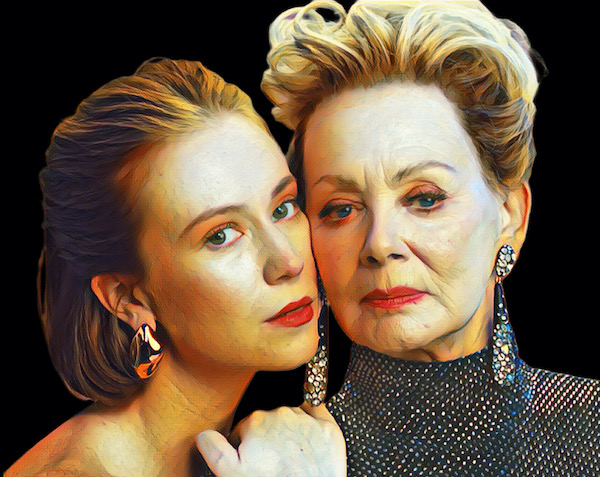
A perfect high
We find the two in one of their best personal and professional phases, in perfect sync. The reconciliation seems solid. It’s a rare moment of mutual vulnerability. But, as always in Hacks, peace is temporary, and Deborah goes back to sabotaging what had seemed resolved.
Let’s face it—it didn’t come from some master plan, but maybe that makes it worse. After relentless pressure from Winnie Landell (Helen Hunt) to push the show to number 1, Deborah and Ava finally succeed through a bold strategy involving social media and by avoiding fighting for the same guests and headlines as the competition. But then comes the impasse. Winnie keeps pushing, insisting it’s time to keep fighting for more visibility, while Deborah wants to enjoy the victory and slow down. Are both right and wrong?
The phone call
A phone call from Bob Lipka (Tony Goldwyn) changes everything. Deborah’s former lover and the network owner is pleased with her success, but she complains about Winnie, asking for help to “get her off my back.” What she says is one thing, what Bob hears is another. “Consider it done,” he assures her. The next day, to Deborah’s surprise, comes the news that Winnie has been fired. The others are clearly shocked—they seem genuinely confused—but Ava quickly realizes that Deborah is surprised, yes, but also knows more than she’s letting on. After all, Ava knows exactly who Deborah is—and what she’s capable of. But if (or rather, when) she confirms the worst, can their friendship really survive?
It’s not as if Ava, who got her position by blackmailing Deborah about her ties to Bob, can pretend to be morally spotless. But Ava always thinks she’s right, doesn’t she? She and Deborah are truly mirrors of one another. Here, Deborah is unlikely to take responsibility or apologize. She may even suspect the damage, but seems unaware, at first, of the impact she has on others. This is the kind of behavior that severs bonds, erodes trust, and confirms Ava’s deepest fear: that, in the end, Deborah will always choose herself.
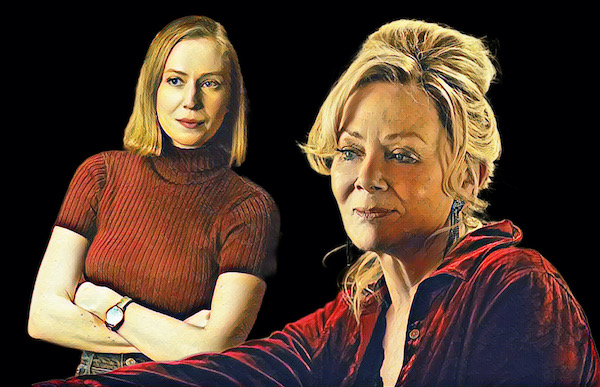
The worst part?
It’s this kind of narrative twist that makes Hacks the most acclaimed comedy series of the moment. Just when we think the storyline has run its course, the script delves deeper into Deborah’s contradictions, without sparing her. She is brilliant, resilient, funny, and pioneering. But also narcissistic, reckless, and manipulative. Her charisma uplifts—and destroys. And, unlike previous seasons, where her mistakes came from insecurity or fear, this time her interference in the executive’s firing stems from comfort, from being back on top, from an unconscious use of privilege. That makes it all the more serious—and harder to forgive.
Deborah didn’t explicitly ask for the firing, but she knew what she was doing. She wanted to ease the pressure and, in the process, destroyed a career. It was a mistake—both moral and strategic. Instead of facing her boss or adapting to the new landscape, she took a shortcut. But that shortcut comes at a price: Ava’s trust. The one person who truly knows her—and still insists on hoping for the best.

What comes next?
Ava is hurt, but not surprised. Her final look at Deborah is a mix of disappointment, exhaustion, and perhaps frustrated love. What becomes of the duo remains to be seen. Hacks has never just been about comedy—it’s always been about the cost of staying brilliant for women the world wants to silence or tame. But it’s also about the damage these women cause to others when they don’t confront their own ghosts.
With this twist, it could either be Helen Hunt’s farewell or the beginning of a deeper role. A four-time Emmy winner for Mad About You, Hunt crafted Winnie as a pragmatic, ambitious woman whose drive mirrors many professionals who forged a path in the industry under immense pressure. “It was fun to take it personally,” she told Vanity Fair. “My character sees it as her mission to get this woman [Deborah] to that spot.” But Deborah’s meteoric success ends up sealing Winnie’s fate.
For Hunt, Winnie’s fall exposes the brutal dynamic between art and power in Hollywood—and the wide gap between intention and consequence. “She just says, ‘tell her to back off,’” the actress recalled. “And then Tony Goldwyn’s character just cuts my head off. And Jean [Smart] reacts with genuine shock.” According to Hunt, this perfectly captures the moment of hubris that often follows success: when people lose sight of their own power and what they’re sacrificing. In the same interview, the actress also reflected on the legacy of the tough executives she met throughout her career: women who had no margin for error, who spoke with brutal honesty and expected the same in return. “It reminded me, retroactively, to have compassion for those strong women who walk in with clear orders,” she said. For Hunt, playing Winnie was a quiet tribute to those figures who balance, every day, the tightrope between what can be created and what can be sold.

And so, the big question left hanging by the final episodes is: how far does Ava’s loyalty go? How long can you love someone who insists on being the worst version of herself almost always? Hacks doesn’t answer—it just lays it bare. And maybe that’s the series’ greatest strength: not saving Deborah Vance from her own nature, but also not letting us fully hate her. She is the most brutal and truthful reflection of what it means to survive—and to thrive—in a system that never offered women the luxury of failure. The problem is, she seems increasingly addicted to that very system.
And, as always, those closest to her are the ones who pay the price.
Descubra mais sobre
Assine para receber nossas notícias mais recentes por e-mail.
 miscelana.com