
In 1945, at the height of Hollywood’s Golden Age, a bold and unsettling film challenged the conventions of melodrama and noir. Leave Her to Heaven, translated in Brazil as Amar Foi Minha Ruína (Love was my Ruin), seemed at first glance to be yet another tragic love story set against breathtaking landscapes. However, beneath the saturated cinematography and immaculate costumes lies one of the darkest and most fascinating portraits of obsession ever crafted by American cinema. Directed by John M. Stahl and starring Gene Tierney at the height of her powers, the film remains a rare gem: Technicolor noir — beautiful on the surface and deeply disturbing within.

The film’s origin traces back to the eponymous novel by Ben Ames Williams, published in 1944. Williams, a prolific New England writer, was known for intense dramas with complex characters, but it was with Leave Her to Heaven that he achieved his greatest literary success. The book quickly caught the attention of 20th Century Fox, which saw in it the opportunity to produce a lavish adaptation with both commercial potential and artistic prestige. The narrative, centered on a woman whose romantic devotion turns into deadly possessiveness, provided fertile ground for exploring deep psychological themes in a refined cinematic package.
The adapted screenplay preserved much of the book’s structure, with minor changes to condense the plot and heighten the conflicts. The choice of director John M. Stahl, a melodrama veteran known for balancing emotion and restraint, proved decisive in setting the film’s elegant and measured tone. Rather than resort to visual hysteria, Stahl allowed the emotional horror to emerge from calculated actions and eloquent silences. The bucolic setting — crystal-clear lakes, mountains, summer homes — stands in sharp contrast to the internal storm raging within the protagonist, Ellen Berent.
Ellen is portrayed by Gene Tierney in an enigmatic, glacial, and hypnotic performance. As a woman whose need for control exceeds the bounds of reason, Tierney delivers one of her most memorable roles. Born in 1920, Gene was already one of the most recognizable faces at 20th Century Fox when she accepted the part. Her symmetrical, almost ethereal face and soft, serene voice contributed to an image of perfection the studio exploited to the fullest. However, in Leave Her to Heaven, this beauty becomes a trap: behind Ellen’s sweet eyes lurks a dangerously unstable mind.
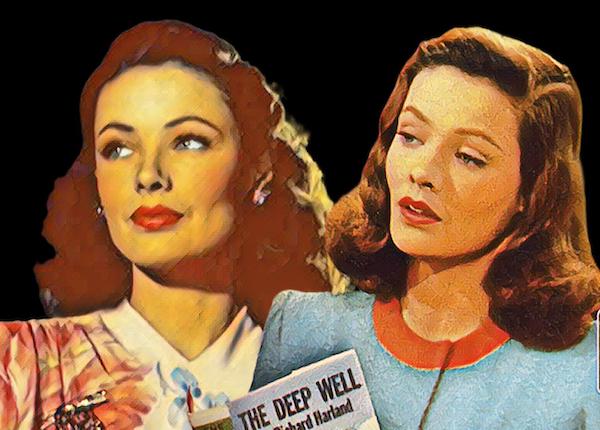
“Leave her to heaven and to those thorns that in her bosom lodge”
— Hamlet
Curiously, the actress was facing real-life challenges that echoed the emotional density of her role. Tierney was diagnosed with severe depression years later, eventually being admitted to psychiatric clinics during the 1950s. In her autobiography, Self-Portrait, published in 1979, she recounts the traumas she endured, including the birth of a severely disabled daughter, the result of contracting rubella during pregnancy after contact with an infected fan. Her struggle with mental breakdown, isolation, and electroshock treatments reveals the invisible toll paid by many actresses of the golden era. When we view her portrayal of Ellen through this lens, an even more poignant layer emerges: the character’s serenity is, in large part, a façade concealing despair and emotional rigidity.
The plot of Leave Her to Heaven revolves around Ellen Berent, a newlywed who falls obsessively in love with writer Richard Harland. Unable to tolerate any division of her husband’s affection, Ellen begins to methodically eliminate anyone she perceives as a threat to her exclusivity: Richard’s disabled brother, the baby she is expecting, even his adopted sister. The scene in which Ellen watches young Danny drown before her eyes remains one of the most shocking in classic film history. It represents a radical inversion of the female caregiver archetype: Ellen doesn’t kill in rage, but with calm, calculated logic, as though removing a piece that’s out of place.
Psychologically, Ellen is a clinical study in narcissistic obsession. Her love for her husband is, in truth, a projection of her desire for absolute control, and losing that control is, for her, akin to death. Her fixation on exclusivity mirrors characteristics of borderline personality disorder, with episodes of manipulation, unstable self-image, and destructiveness. Yet Stahl does not film her as a monster, but as a tragedy: Ellen is the villain of the story, but also its loneliest figure. In the end, her suicide is not portrayed as a moral punishment, but as the inevitable collapse of a soul that could not love without annihilating.
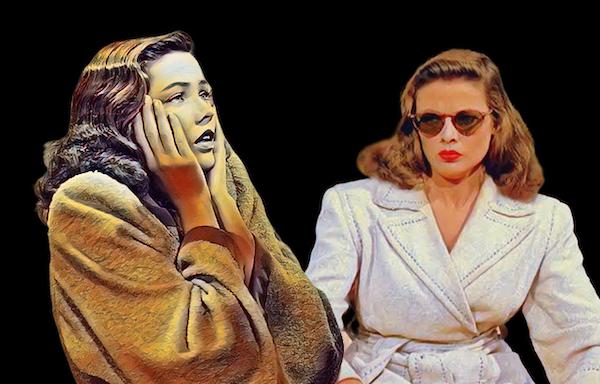
Visually, the film is a technical marvel. The Oscar-winning cinematography by Leon Shamroy makes full use of Technicolor’s potential, elevating the naturalism of the landscapes to an almost dreamlike level. Sunlight, forest greens, and the bluish tones of water are saturated to the point of appearing painterly. This aesthetic amplifies the story’s emotional impact, creating a paradoxical atmosphere where horror emerges amidst beauty. Instead of noir’s usual darkness, we get a brilliant glow that masks the poison.
The costumes, meticulously designed to reinforce Ellen’s psychology, shift between light summer dresses and elegant, formal attire that emphasize her imposing presence. Each outfit mirrors her inner state: initially ethereal and seductive, later rigid and somber. One iconic scene features Ellen in a white swimsuit, lying in a sun chair as she watches Danny drown. The purity of the white set against her cold detachment symbolizes the film’s power to use visual language as moral narrative.
Over the years, Leave Her to Heaven has been rediscovered by critics and filmmakers. Although it was a major commercial success upon release — Fox’s highest-grossing film of that year — its critical reputation fluctuated. In more recent decades, it has come to be appreciated as a rare example of Technicolor noir melodrama and as a film that destabilizes Hollywood’s feminine clichés. Directors like Martin Scorsese and Todd Haynes have cited it as a stylistic and narrative influence, and feminist film scholars recognize Ellen Berent as a precursor to the restless, complex female characters that only became common much later, in the psychological thrillers of the 1980s and 1990s.

The film’s title comes from a quote in Shakespeare’s Hamlet: “Leave her to heaven, and to those thorns that in her bosom lodge.” The phrase echoes as a forewarning of Ellen’s fate: to leave her to heaven’s judgment, as her internal suffering is punishment enough.
Eighty years later, Leave Her to Heaven still disturbs, fascinates, and moves. It is a reminder that beauty can be a snare, that love can be a form of violence, and that the most subversive films often masquerade as romances. Gene Tierney, with her unparalleled screen presence, brought to life one of the most intense characters in American cinema. And in a world where image continues to seduce more than truth, perhaps Leave Her to Heaven remains not just a film, but a mirror—distorted, yes, but eerily real.
Descubra mais sobre
Assine para receber nossas notícias mais recentes por e-mail.
 miscelana.com