
I don’t count myself among fantasy fans, yet I’ve found myself watching quite a lot of content in the genre in recent years — even enjoying it and rooting for it. Likewise, sci-fi has never been my thing, but I’ve also gotten into content from that realm. Maybe due to my skepticism or life experience, I’ve noticed that the apparent boom in titles — even successful ones — started to feel threatened when the world “went back to normal.” Apocalyptic or enigmatic stories began to clash with the most realistic equation in the entertainment world: the high cost of building a different world is no longer considered a worthwhile investment by studios or streaming platforms. What do I mean? For a series to be canceled, success doesn’t matter — if it’s expensive, it’s gone.
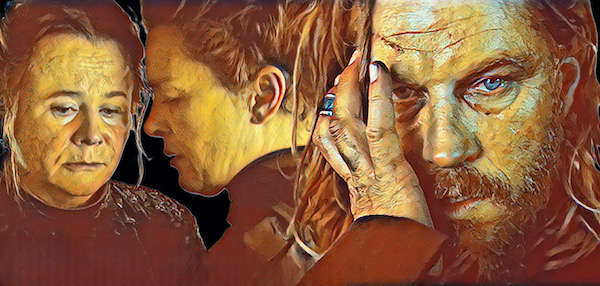
The emblematic case of The Wheel of Time
The announcement of the cancellation of The Wheel of Time, one of Amazon Prime Video’s biggest investments in original content, took fans by surprise. The most recent season — featuring elaborate special effects — was considered an excellent adaptation of the books, and the story was still far from its conclusion. There are many broken hearts out there. It’s as if, alluding to the plot, the powerful Aes Sedai lost the war to the Shai’tan, the Dark Ones, unable to correctly decipher the signs and prophecies.
Launched in 2021 with a reported budget exceeding $80 million just for the first season, The Wheel of Time was intended to be Amazon’s answer to the overwhelming success of Game of Thrones. Based on the extensive book series by Robert Jordan, which spans 14 main volumes, the show needed time and multiple seasons to do justice to the complex universe. But that kind of breathing room came with a high price tag. Too high.
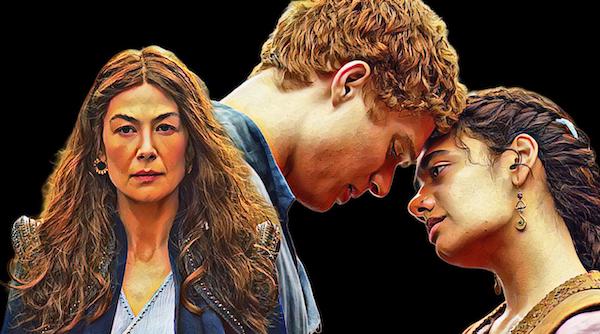
A complex and indecipherable landscape
I’ve mentioned it here on the blog more than once: my perception that the production cost of The Wheel of Time, combined with a story that is both complex and shallow at the same time (sorry, fans!), made its survival in today’s climate difficult. It’s not because I have a crystal ball or some visionary ability — I just follow things with some distance.
Five years ago — which now feels like yesterday — the world stood at the crossroads of entering a new decade at the peak of social media, new habits, and digital etiquette, all of which were changing the world as we knew it. The COVID-19 pandemic only scrambled things further, isolating people, bringing uncertainty, and introducing paradoxical terms like “new reality” or “new normal,” all while technology was taking over every aspect of our lives.

Without Zoom, social media, apps, and other digital tools, social isolation would’ve been far worse. With movement restricted, Hollywood “discovered” that if all studios operated like Netflix, they could make money with less effort. Company mergers cost thousands of jobs, and linear TV lost ground to digital platforms. Even cinema felt threatened, with some pundits predicting the end of the big screen.
Yet, in just five years, not even half of those predictions came true. The “new normal” is turning out to be just a temporary adjustment of the “old normal”: the world is still in-person, people can’t afford to pay for multiple expensive subscriptions, and rising production costs don’t justify the investment. Nothing fundamentally different from before — it only feels new to those who didn’t understand that structural change is extremely slow.
Fantasy is fading — and it’s not alone
In this environment, the genre I love — historical dramas, which surged in the early 2020s, has also been abruptly canceled, often before concluding their stories. The Great, Becoming Elizabeth, The Serpent Queen… all canceled. Then came the sci-fi shows, with the curious and strange Raised by Wolves among the most tragic losses. Even Marvel didn’t continue with many of its superhero spinoffs. Star Wars heavily promoted The Acolyte, only for it to never progress to a second season.
So, how could we expect The Wheel of Time to reach a fourth season?


I have a different opinion from Amazon Prime Video: I would’ve chosen the problematic Rings of Power for cancellation, given that its cost was triple and its success was less than half. But I don’t have access to the real numbers — that’s just my take as an outside observer. The fact remains that a niche audience is devastated by the end of the series, leaving The Wheel of Time stuck in the middle of a conflict close to its resolution.
Streaming isn’t dead, but it’s adapting
Knowing there were no real “mistakes” is what makes all of this feel more unsettling and uncertain. The streaming peak was brief, and it’s already over. What lies ahead?

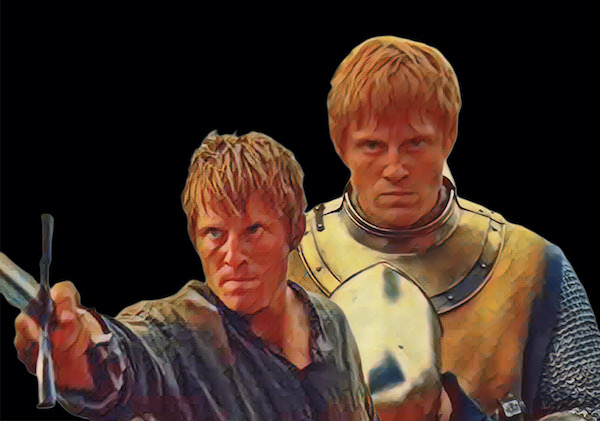
The market is shifting. The era of unchecked expansion is gone. According to data from Ampere Analysis, global streaming subscriber growth slowed significantly in 2024, particularly in North America and Europe. Platforms like Disney+ and Netflix now openly talk about “portfolio optimization” — in other words, fewer risky bets, safer returns.
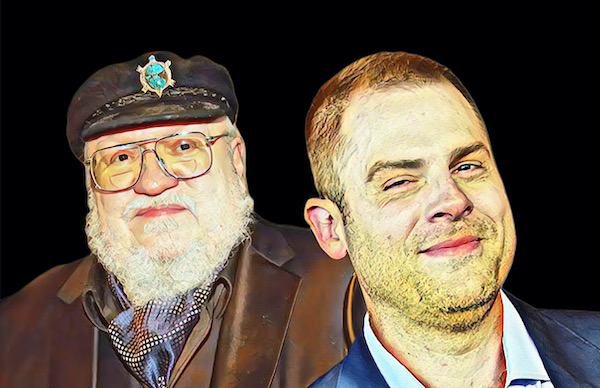
Against this backdrop, I find the delay of A Knight of the Seven Kingdoms concerning, and the lukewarm reception of House of the Dragon, compared to Game of Thrones, another yellow flag. The cost of HOTD, with constant CGI demands for the dragons, has become a real challenge even for HBO Max. I — once again daring to play the specialist — would’ve told the story in three seasons. But from what we’re seeing, it may take a fourth to close the arc. Will the Targaryens survive the “administrative Dracarys”? Without the moral support of George R. R. Martin, things seem even more uncertain.

Dune and the mirage of sci-fi’s future
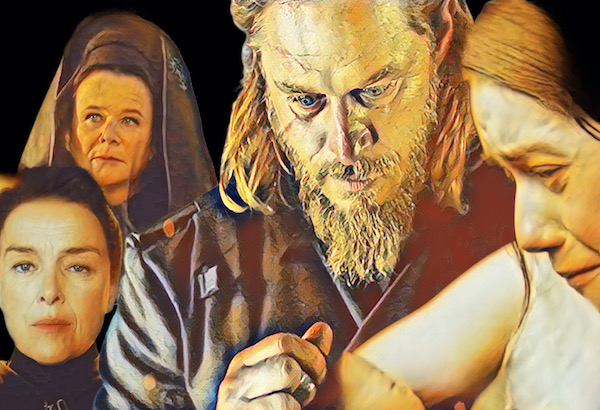
I’m not even talking about Dune or Dune: The Sisterhood, which are also in a “barren” landscape much like their story’s setting. The TV series is set for a second season, but in my view, it’ll be its last. As for the film trilogy, it’s confirmed, but unlikely to continue beyond the third movie.
Denis Villeneuve’s Dune is a rare exception that proves the rule: it received critical acclaim, performed well at the box office, and had a top-tier creative team. Yet even so, the investment is massive, and Warner has already hinted that the franchise won’t be extended indefinitely.

So what is good, cheap, and captivating?
The question remains: what’s good and cheap enough to captivate us? It’s no surprise that true crime remains strong. Blood and injustice never fail — and they’re budget-friendly. Documentary series like Making a Murderer, The Staircase, or even Brazilian productions like Elize Matsunaga: Once Upon a Crime, prove that audiences are still hungry for real stories filled with tension and emotional impact, all at a fraction of the cost of creating a world of dragons, wizards, or distant planets.
Platforms like Netflix and HBO Max have gotten the message. The immediate future won’t be built with elven swords or iron thrones — but with smaller, intense, and — above all — cheaper stories.
Descubra mais sobre
Assine para receber nossas notícias mais recentes por e-mail.
 miscelana.com