
This is a major spoiler post for anyone unfamiliar with The Last of Us game and unaware of Joel’s (Pedro Pascal) cruel fate. Ellie’s (Bella Ramsey) revenge journey is far from over, and far from done claiming victims in the mutual hatred between her and Abby (Kaitlyn Dever). Many will fall at the hands of both, including some beloved by the audience. So here’s a heads-up about what’s still to come to wrap up the third season.
SPOILERS AHEAD.

We’ve seen Ellie kill one of Abby’s friends, Nora (Tati Gabrielle), with a degree of torture. Though cornered and on the brink of death, Nora didn’t give up Abby’s location. After this “victory,” Ellie returns to the theater to find Jesse (Young Mazino), Dina (Isabella Merced), and Tommy (Gabriel Luna).
Before continuing with what happens in the game, it’s worth remembering that the show has changed some important facts. In the original story, unlike the series, Tommy also wants to avenge Joel and is actively hunting Abby. Unlike what we saw on TV, it’s Ellie who goes after him, not the other way around. That’s why we haven’t seen them together yet.
In the game, Ellie’s journey through Seattle reaches unbearable tension, where she, Jesse, and Tommy are all tracking Abby Anderson along a bloody, painful path riddled with loss. Emotionally shattered, Ellie begins to lose herself to her thirst for revenge, while Jesse and Tommy, each in their own way, try to hold onto some shred of humanity. Jesse, in particular, is worried about Ellie and Dina, who is pregnant, trying to act as a mediator in a collapsing world. Tommy, having been involved in the hunt longer, also risks more and more, driven by a mix of loyalty and desperation. That doesn’t seem to be the case here, though.
It’s in this setting that tragedy peaks. After Ellie tortures and kills Nora, one of Abby’s closest friends, she and Jesse return to the theater where the group is hiding. They believe they’re safe for a moment and discuss next steps, but they don’t realize Abby has already found them. In one of the game’s most abrupt and impactful scenes, Jesse opens a hallway door to go look for Tommy and, without warning, is shot in the head. He dies instantly—no time to react, no chance for goodbye—right before Ellie’s eyes. The brutality of the moment is stark, almost cruel in its coldness, and reminds the player once again that no one is safe in this cycle of vengeance.


Immediately after, Abby shoots Tommy, gravely injuring his face. It may not seem like it at first, but he survives, although he loses partial vision and hearing and is left with serious physical and emotional scars. Observant viewers will note that Abby is not alone: she’s accompanied by Lev, who will become crucial to the storyline. Fueled by a fury much like Ellie’s, Abby arrives devastated by the deaths of her own friends, many of whom Ellie has killed in her rampage through Seattle’s underworld. The scene is a grim mirror of Ellie’s journey: now she is the hunted, facing the hateful gaze of the woman she made her enemy. But in fact, so far, only Nora has died, so we’ll see how The Last of Us adapts this.
For Ellie, Jesse’s death and Tommy’s injury are devastating blows—not just because she loses two more allies, but because she begins to realize the true cost of her actions. She carries the guilt—Jesse was only there because of her. Tommy too. And Joel died trying to protect her. The revenge that once seemed to give purpose to her grief now reveals itself as a bottomless pit. Even so, the obsession still consumes her. Despite the final confrontation with Abby at the theater and the promise that it would end there, Ellie can’t let go of the trauma. The image of Joel’s death continues to haunt her.
In the game’s next chapter, Ellie tries to live a peaceful life with Dina and the baby on a remote farm. But peace is an illusion. The past keeps bleeding within her, and the need for closure—or perhaps just meaning—still pulses. So she leaves it all behind to seek out Abby one last time, even knowing how much she’s already lost. Jesse’s death, Tommy’s suffering, and her own emotional ruin are the legacy of a story that began with love and ended in drowning in pain. In The Last of Us Part II, every choice comes at a cost, and in the world these characters inhabit, forgiveness rarely comes before blood.

Lev appears well before the theater scene (where Jesse dies), during the segment in which we play as Abby. He is a young boy who, along with his sister Yara, flees from the Seraphites (or Scars), the violent religious cult they once belonged to. Abby finds them by chance after nearly being killed by the Seraphites themselves. Yara saves Abby, and from that point on, an unexpected bond forms between them.
At first, Abby acts out of impulse and a sense of debt, but throughout the journey to save Yara and later protect Lev, she begins to see herself as a protector—and more than that, she finds in them a form of redemption and connection she had lost since her father’s death. Lev, especially, forces Abby to confront her values, question WLF (the Wolves) orders, and eventually distance herself from the cycle of hate that had consumed her.
Lev’s importance before the confrontation with Ellie
When Abby invades the theater to confront Ellie, she is no longer the same woman who killed Joel in cold blood. Lev is with her, and his presence is crucial. He represents Abby’s chance to start over, to leave behind a world of blind retaliation. Lev’s presence at the final showdown with Ellie is no accident: he is a kind of silent mirror, making Abby realize that what she’s about to do might destroy the last piece of her that still remains.
In other words, we meet Lev before this impactful scene, and we already understand how much he helped “humanize” Abby. That’s why the confrontation with Ellie and the game’s ending gains an extra layer of moral and emotional complexity. Abby has already seen what violence has taken from her, and Lev is the only thing she still has left to try to protect. In the series, it won’t happen this way. That will likely be saved for the third season.
Who does Ellie kill and in what order in the game
The show is taking a different path from the game. In the game, over three days in Seattle, Ellie kills nearly everyone involved in Joel’s murder. So far, we’ve only seen her kill one. Here’s the order of Ellie’s kills in the game:
- Jordan – one of the men holding Ellie while Joel was murdered. She kills him at the precinct, where he’s torturing Dina.
- Leah – Ellie finds her body already dead in a watchtower, killed by Seraphites (not directly by Ellie, but she’s the first of the group Ellie sees dead).
- Nora – works at the WLF hospital; Ellie chases her into a spore-filled basement and tortures her to death with a pipe (this event has already appeared in the series).
- Mel – killed by Ellie in a fight where she doesn’t realize Mel is pregnant (this revelation shakes her deeply).
- Owen – Mel’s partner and Abby’s ex-boyfriend; killed in the same confrontation where Mel dies. Ellie shoots him.
It’s likely the series will introduce Abby and Lev long before the theater turning point. That means we may get to know Abby, her struggles, her relationship with her father (the doctor killed by Joel), and her life with the Wolves before her final confrontation with Ellie. That way, the audience will develop empathy for her early on—something the game saved for later.
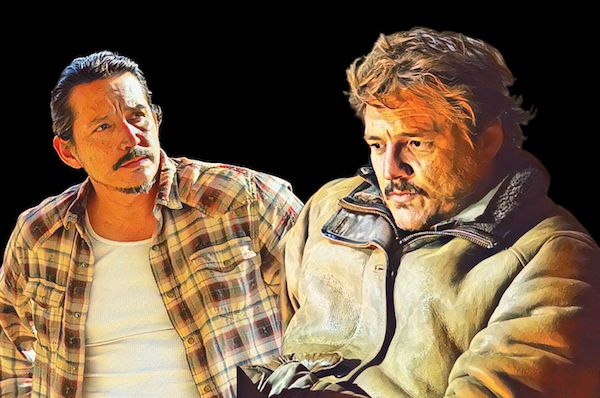
In the series, each of Ellie’s kills might be explored with more emotional depth and direct consequence, for instance, showing the impact of Nora’s death on her colleagues. That should intensify the drama and make Ellie’s journey even more harrowing, humanizing everyone involved.
In the game, we play three days with Ellie and then rewind time to play the same days as Abby. In the show, we might see these events intercut—one episode with Ellie, one with Abby, or even episodes that show the same events from both perspectives. This would create clearer parallels between the two characters and their moral dilemmas.
If the series follows the pattern of the first season, which adapted the entire first game in 9 episodes, the second could adapt half of the second game—or the whole game, but with structural changes. The presence of Nora already indicates that Ellie is on her revenge path, which means Mel, Owen, and eventually Abby are just ahead.

So, what awaits us in the third season of The Last of Us is a steadily tightening spiral of pain, fury, and irreparable loss—experienced in parallel by two women forged by the same trauma, only on opposite sides. By deepening the arcs of Ellie and Abby, the show has the chance not just to replicate the game’s events, but to confront us with the humanity behind each choice. More than a revenge cycle, what emerges is a brutal meditation on grief, guilt, and the faint possibility of redemption in a world that has already lost almost everything.
If the adaptation maintains the emotional rigor and narrative precision of the first season, the viewer will leave this journey emotionally exhausted—and perhaps torn. Because The Last of Us Part II never offers easy answers or comfort. What it delivers, with surgical precision, is the raw pain of consequence. No one comes out unscathed—and that’s exactly why we keep watching.
Descubra mais sobre
Assine para receber nossas notícias mais recentes por e-mail.
 miscelana.com