
It’s strange to think that Bella Ramsey is already 21 years old. When she was stunned as Lyanna Mormont in Game of Thrones, she made her screen debut under 15. Today, she’s a global star — thanks to Ellie, from the HBO Max series The Last of Us. Sounds perfect, right? Not quite. The Last of Us represents a major leap in her career, but it came with a great deal of pain and criticism as well.
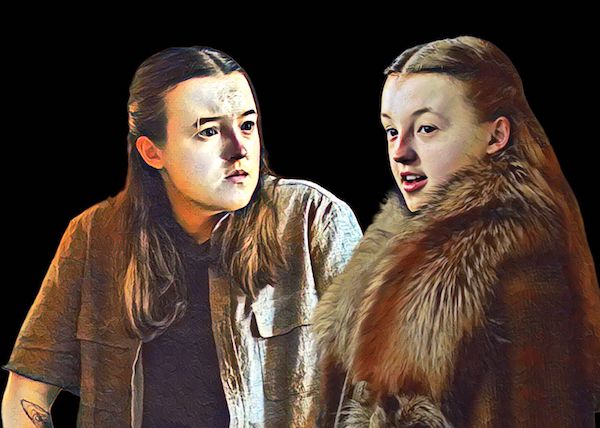
The TV adaptation of the game was followed closely by fans, with many well-known and lesser-known actresses testing for the role of Ellie, although creators Craig Mazin and Neil Druckmann kept most of these names under wraps. Those we know were considered include Game of Thrones’ Maisie Williams, Dafne Keen, who shone in Logan, and, interestingly, both Isabela Merced (now cast as Dina) and Kaitlyn Dever (now Abby). Kaitlyn was strongly considered when the project was still a film, but due to scheduling conflicts and her age (already nearing 25 while Ellie is 14 in the first part of the story), she was eventually dropped. Ironically, she was brought back precisely to play the antagonist who ultimately flips the narrative.
When Bella was announced, purists immediately reacted — she looked nothing like Ellie from the game. But fans were still enchanted by her fierce Lyanna Stark. A real headache. From the moment her name was announced to the reception of the second season, Bella faced a whirlwind of enthusiasm, controversy, and personal attacks — revealing not only tensions between fans and creators, but also deeper issues around representation, misogyny, and the cultural expectations placed on public figures who challenge aesthetic and gender norms.

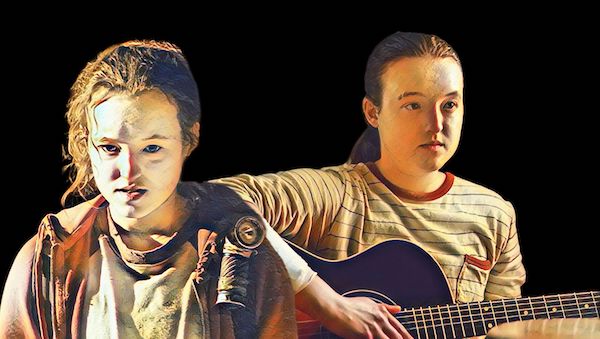
Ellie, her character in The Last of Us, is a teenager shaped by loss, trauma, and a constant struggle to survive in a post-apocalyptic world. Throughout the first game — and the show’s first season — she emerges as a charismatic, intelligent, and fierce figure, while also maintaining emotional vulnerability and deep attachments, especially with Joel, the man who becomes a surrogate father to her. Ramsey’s performance was seen by many as a bold and sensitive choice, but it also triggered immediate rejection from part of the fanbase. The internet — especially its more toxic corners — responded with cruel attacks on the actress’s appearance, questioning her suitability for the role based on narrow standards of beauty and femininity.
Even though many critics highlighted Bella’s emotional performance as one of the series’ strengths, the online noise never stopped. It’s important to note that the negative reception wasn’t the majority view, but it was loud and often driven by prejudice. Ramsey, who identifies as non-binary and uses she/they pronouns, became a target of transphobic and misogynistic hate speech, especially after stating that she didn’t feel confined by traditional gender categories. On top of that, the actress recently revealed that she received an autism diagnosis during the filming of season one, and also struggled with anorexia nervosa — a condition she overcame with the support of her Christian faith. In her words, understanding herself as autistic was a liberating moment that helped her make sense of parts of her personality that previously felt disconnected.

With the announcement of the show’s third season, new controversy emerged. The story will center on Abby — played by Kaitlyn Dever — a character who shares the spotlight with Ellie in the second game. This narrative structure, which was part of the adaptation plan from the start, naturally reduces Ellie’s screen time, which some viewers are now mistakenly interpreting as HBO’s attempt to “hide” Ramsey after the backlash. The truth is that the shared focus between Ellie and Abby is central to the original vision of the game’s creators, and the show is simply following that trajectory — even if the polarized reception of Ramsey has inevitably shaped public perception of the choice.
In the gap between seasons, Bella Ramsey now has the chance to redefine her professional path. She has expressed interest in bold, challenging roles — particularly psychological antagonists. There are also rumors that she’s being considered to star in a new adaptation of the Joan of Arc story, directed by Baz Luhrmann, which would place her once again in a high-profile role, this time as a symbol of historical resistance and spiritual ambiguity.
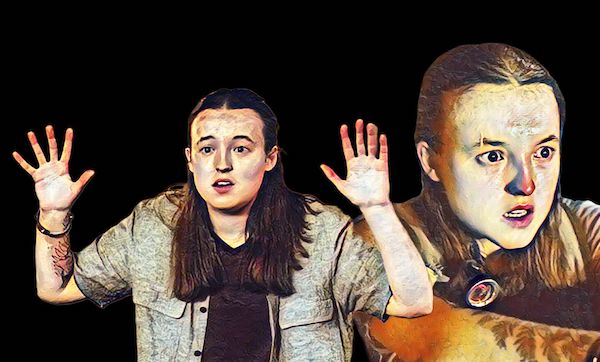
Bella Ramsey, then, is on track to become one of the most singular voices of her generation. Not only for her acting talent, but for her courage in facing the judgments of the industry and the public while carving space for a new idea of what a lead can be — more authentic, less polished, and radically human.
Descubra mais sobre
Assine para receber nossas notícias mais recentes por e-mail.
 miscelana.com