
Warner Bros. and HBO have finally revealed the names of the young actors who will play the protagonists in the highly anticipated new Harry Potter adaptation, this time in the form of a television series. Dominic McLaughlin will be the new Harry Potter; Arabella Stanton will bring Hermione Granger to life; and Alastair Stout will portray Ron Weasley. The three newcomers were selected after an extensive search that, according to producers, involved “tens of thousands of children.” The casting marks the official beginning of a new era for the franchise, now under the HBO Max umbrella.
They will join the already announced veteran cast: John Lithgow (Dumbledore), Janet McTeer (McGonagall), Paapa Essiedu (Snape), Nick Frost (Hagrid), Luke Thallon (Quirrell), and Paul Whitehouse.
But why remake Harry Potter, a film franchise still so present in pop culture? Why now? And what, exactly, changes with this reinterpretation as a series?
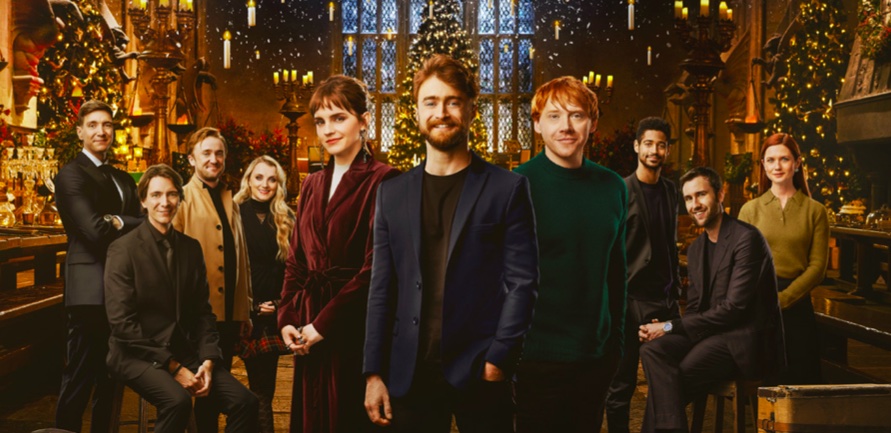
Why remake Harry Potter?
The new series is not just a nostalgic attempt to revisit Hogwarts, but a calculated strategy by Warner Bros. Discovery to revitalize one of its most valuable intellectual properties within a new streaming ecosystem. With the ongoing popularity of expanded universes like Game of Thrones, Star Wars, and The Lord of the Rings, the company aims to establish Harry Potter as a transgenerational and transmedia universe, with potential to span many years in various formats — series, spin-offs, and licensed products.
Rather than creating a continuation (like the controversial The Cursed Child) or focusing on secondary characters (as with Fantastic Beasts, which had an uneven run), the studio chose to return to the original narrative with an ambitious promise: to adapt each book into a single season. This will allow for a more faithful approach, with space for characters, events, and contexts that the films didn’t have time to develop.
A “faithful” — and long — adaptation
According to an official statement from HBO, the series will be a “faithful adaptation” of the books by J.K. Rowling. Fans can therefore expect a deeper dive into the details that were left out of the films directed by Chris Columbus, Alfonso Cuarón, Mike Newell, and David Yates between 2001 and 2011. There is a clear bet on the idea that the books still have much to offer — and that today’s generation, who may know the films better than the original texts, will rediscover the saga in a new way.
Each season will focus on one book, which means, at least in theory, seven seasons. This will make room to explore subplots like Lupin’s past, Percy Weasley’s complexity, the house-elf Winky, the origins of Dumbledore’s Army, the ethical dilemmas of Legilimency, and many other layers that traditional cinematic language sacrificed for screen time.
Production is in the hands of acclaimed television names, such as Francesca Gardiner (Succession, His Dark Materials), who serves as showrunner and writer, and Mark Mylod, who will direct multiple episodes. The presence of J.K. Rowling as executive producer, while expected, brings with it a cloud of controversy.
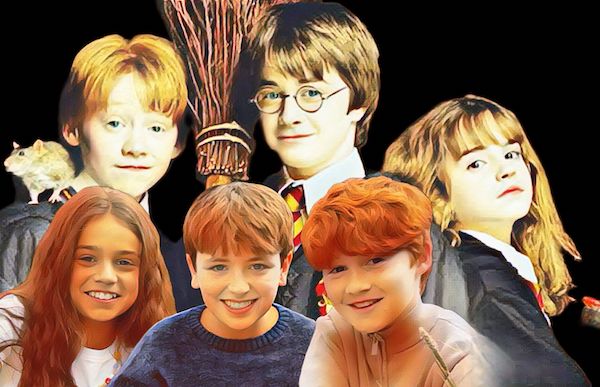
The inevitable controversies
Rowling’s direct involvement is, for many, a source of discomfort. Since 2019, the author has been criticized for statements deemed transphobic. Although she remains the mind behind the wizarding world, some fans and critics now question whether her vision can still be considered inclusive or representative.
Protests against her participation have already emerged on social media since the series was announced. LGBTQIA+ groups and former fans have expressed outrage, suggesting boycotts and proposing to reimagine the Harry Potter universe detached from its creator. Others, however, argue for separating the work from the author, especially when it comes to a new project with a diverse team and potentially more sensitivity to contemporary discussions on gender, race, and inclusion.
It’s worth noting that the original films were also criticized for their predominantly white cast, lack of representation, and absence of openly queer characters. The series now has the chance — and perhaps the responsibility — to correct those shortcomings.
Another layer of controversy involves the apparent contradiction between the promise of a “faithful adaptation” and the more inclusive casting than that suggested by the books — which, while never providing definitive racial descriptions for all characters, have traditionally been read as predominantly white. The casting of British actor Paapa Essiedu, who is Black, as Severus Snape, for example, sparked intense discussion online. While many celebrate the change as a necessary step toward representation and modernization of the work, others see it as inconsistent with the “faithfulness” to the source material. This tension between respect for the original text and a commitment to diversity defines much of the debate surrounding the new adaptation.
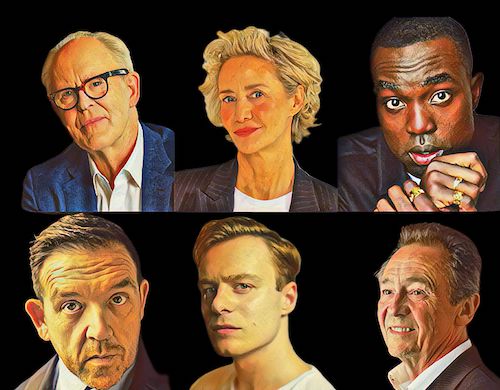
Fan reactions: optimism and resistance
The saga’s fanbase is famously passionate but divided. Many received the announcement of the new cast with excitement and curiosity. Dominic McLaughlin, Arabella Stanton, and Alastair Stout are unfamiliar faces, which may work in the series’ favor, allowing audiences to connect with the characters without the burden of immediate comparisons.
Others, however, remain skeptical about the need for a remake. For a generation that grew up with Daniel Radcliffe, Emma Watson, and Rupert Grint, the idea of replacing them feels almost heretical. There’s also concern that the magic of the books and films may be diluted in an overly extended format, or become excessively “prestige television” in line with the HBO brand.
On Reddit, forums like r/harrypotter and r/television feature polarized opinions: “If it’s like Succession, with emotion and moral complexity, it could be the best Harry Potter product since the books,” one user commented. Another responded, “Seems like another desperate attempt by Warner to cash in on nostalgia instead of creating something new.”

What to expect next?
With the main cast now revealed, filming is expected to begin in the coming months. The premiere has no official date yet, but is likely to occur between late 2026 and early 2027. The series will stream exclusively on HBO Max (which may be rebranded as part of the platform’s restructuring) and will also be part of Warner Bros.’s expansion efforts in Europe, with releases planned in markets such as Germany, Italy, and the United Kingdom.
While the original films will remain available for streaming, the series promises to coexist as a new interpretation — denser, more adult, and potentially more controversial — of a universe that has captivated generations for decades. The challenge will be to balance nostalgia and innovation, reverence and critical revision, in a landscape where magic and controversy walk side by side.
Descubra mais sobre
Assine para receber nossas notícias mais recentes por e-mail.
 miscelana.com