
If Carrie Bradshaw was once an icon from her 30s into her late 40s, now at 60, she seems dimmed, lacking major ambitions or real conflict. “What has this woman gotten herself into?” she asks at the end of the first episode of season three, echoing the thoughts of her fans who still can’t understand why the show has drifted so far from everything that once made it legendary.
The familiarity with the characters — especially the new ones — helps. However, the storylines still don’t reflect the themes that made Sex and the City so compelling back when Carrie, Miranda, and Charlotte were single. Anyone who thinks the show was just about finding a boyfriend is wrong — it tackled so many other issues that are now oddly absent from And Just Like That.

Take Charlotte, for example: her major conflict is defending her bulldog, Richard Burton, while neglecting her responsibilities to her daughters, Rock and Lily. When would that have happened? Only now, with Charlotte in her 60s. Lily is no longer involved with Brady, Miranda’s son, but now has a boyfriend who’s a ballet dancer.
Her neighbor Lisa is stressed out with her PBS project about ten anonymous Black women, while being pressured to include Michelle Obama — although the former First Lady is, well, anything but anonymous.
Miranda is still bouncing between Airbnbs now that Nya is gone, and her Brooklyn home has been sold. Hopefully, now she’ll find a roof of her own. Single again and wanting to explore the wide world of queer women in Manhattan, Miranda rather inexplicably agrees to spend the night with a stranger named Mary (Rosie O’Donnell), who ends up being a nun — but only reveals this after losing her virginity to the lawyer.


Meanwhile, the other two women are dealing with long-distance relationships: Seema gives up on Ravi, and of course Carrie, who’s trying to keep her romance with Aidan alive. But the alarm is clearly ringing (just like the one in her apartment), warning how hard it is to deal with Aidan’s family drama. Their communication is bizarre: he asks her not to call, so they exchange blank postcards, and when they do talk on the phone, it’s only for sex. And even then, they’re out of sync. That’s why she wakes up in the middle of the night and starts writing a book. “What has this woman gotten herself into?” she wonders.
The question echoes because it’s not just about her. It’s about the show, about us. About what happens when iconic characters age, but their stories don’t. And Just Like That wants to be relevant, diverse, modern — but it still stumbles over rushed scripts, unresolved subplots, and a strange reluctance to accept that growing older is about more than just changing cities or partners.
Season three opens with small promises: there’s a bit more lightness, a little less self-importance, and a few moments that recall the original series’ charm. But it’s hard to feel truly invested when the storylines feel scattered, as if no one involved quite knows what they’re trying to say.
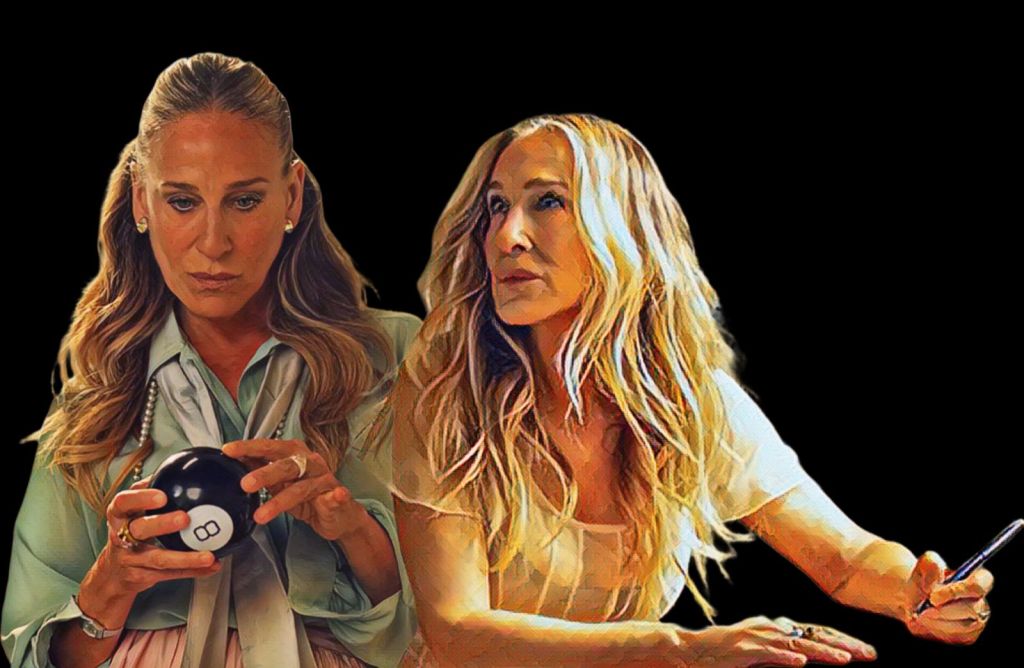
The problem isn’t that Carrie is 60. The problem is that she feels empty at 60 — not of pain or challenges, but of perspective. And those of us who returned out of affection end up watching from a distance, trying to reconnect with women who once felt like mirrors. Now, they’re more like display windows: beautiful, expensive, and out of reach.
So we keep watching, more out of nostalgia than real excitement, hoping that maybe, just maybe, a scene or two will remind us why this story once got under our skin. Deep down, the question remains unanswered — but the urge to ask it is telling in itself.
What has this woman gotten herself into? Maybe an attempt to relive a time that’s already gone. And we’ve followed her right into it.
Descubra mais sobre
Assine para receber nossas notícias mais recentes por e-mail.
 miscelana.com