
Among Jane Austen’s six completed novels, Northanger Abbey may be the least celebrated — the “forgotten cousin” in the literary family that includes works like Pride and Prejudice and Sense and Sensibility. Published posthumously in 1817 alongside Persuasion, the book had actually been written many years earlier: Austen completed its first version in the late 1790s under the title Susan. It was her first finished novel and the first to be sold to a publisher, but it remained unpublished for over a decade, until Austen revised and renamed it Northanger Abbey.
I must confess I didn’t enjoy the book when I first read it, which made me not enjoy the filmed versions either — it’s one of Austen’s works I’ve revisited the least. I used to think that was a personal issue, but I’m not alone. Many readers find it somewhat out of place within the Austen canon. It’s a youthful novel — in its language, character construction, and overt, direct irony. But it also foreshadows much of what Austen would later refine with greater subtlety. In an attempt to reclaim it, it’s worth traveling back in time to understand it.
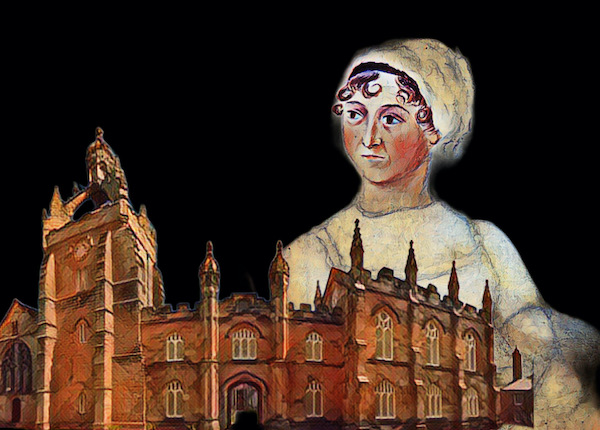
A Satire Ahead of Its Time
As I mentioned, Austen began writing the novel around 1798–1799 and completed it by 1803. In other words, she worked on it during the same period she was drafting Sense and Sensibility (first version in 1795), published anonymously in 1811, and Pride and Prejudice (written in 1796–1797), published in 1813 — her most famous work. In this context, Northanger Abbey stands out from the start for its openly satirical tone.
She was just over 20 when she imagined the story and sold the copyright of the manuscript to a publisher, Crosby & Co., who never published it. Austen even wrote a letter requesting its publication (or the return of rights), but was ignored.
In the novel, Austen gleefully targets the Gothic romance genre — immensely popular at the turn of the 18th to 19th century. The protagonist, Catherine Morland, is an impressionable young woman who devours such literature, filled with dark monasteries, cruel villains, and fainting heroines. When she visits Northanger Abbey, Catherine projects these fanciful plots onto the reality around her, convinced she’s living through a dreadful mystery. But Austen, with a steady hand, dismantles these illusions and makes Catherine’s naivety a tender — and at times hilarious — mirror of how women, starved for agency and adventure, clung to fiction to escape the monotony imposed upon them.

This satire isn’t cruel. Though some readers view Catherine as a kind of “proto-Austen” heroine — a character who anticipates the great protagonists but still feels like a draft — she remains one of Austen’s sweetest and most human characters. Austen doesn’t punish her for her vivid imagination; she simply allows her to grow. Ultimately, the novel doesn’t mock fantasy — it respects it, but proposes maturation. The true danger, Austen suggests, doesn’t lie in evil abbots but in subtle power structures, hasty judgments, and social interest disguised as kindness.
An Essay on Reading
Beyond parodying the Gothic romance, Northanger Abbey is also a meta-literary commentary on the very act of reading. Austen pauses the narrative to speak directly to the reader, defending the novel as a genre — often ridiculed as “girlish nonsense,” — and asserting its literary and social worth. At a time when fiction written by women was seen as inferior, Austen writes plainly: “The novel is a work in which the greatest powers of the human mind are displayed, in which the most thorough knowledge of human nature is delightfully conveyed.”
These moments of direct address make Northanger Abbey feel strikingly modern, almost essayistic. It is less polished than Austen’s later novels, but this rawness gives it a unique charm, like peeking behind the curtain into the creative process of a genius still in formation.

Many scholars note that Northanger Abbey has a looser, more episodic narrative structure than Austen’s more mature works. The tone shifts frequently: it begins as a provincial comedy of manners, becomes a Gothic satire, and ends with a somewhat rushed romantic conclusion. The climax — General Tilney’s sudden expulsion of Catherine — is resolved in just a few pages, with little emotional elaboration.
This acceleration at the end may reflect the author’s youth, but could also stem from an interrupted revision. It’s possible Austen intended to further develop characters (like Eleanor Tilney, for example) or lend more emotional weight to Catherine’s transformation — but lacked time or editorial freedom to do so.
The Least Adapted, the Least Loved?
Northanger Abbey has never achieved the same commercial appeal as Pride and Prejudice or Emma, which is reflected in the few adaptations it has received on film or television. In part, this is due to its hybrid tone: not fully comedic, nor wholly romantic, nor exactly Gothic — just a satire of all those things, ending rather abruptly. The hero himself, Henry Tilney, is considered by some readers one of the blandest in Austen’s gallery, though his gentle irony and sensitivity make him, for others, a charmingly realistic character.
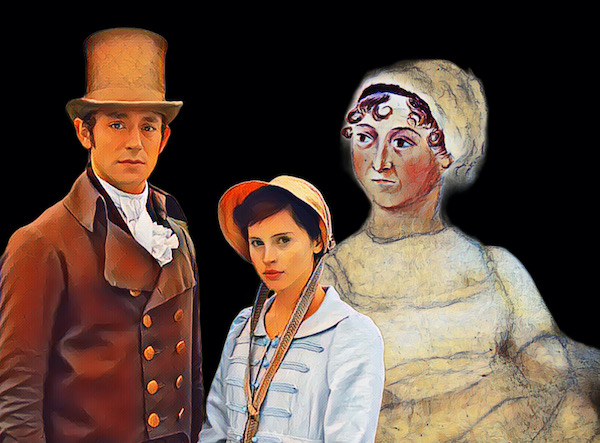
The main TV adaptations include:
- Northanger Abbey (1986): A British television version starring Katharine Schlesinger and Peter Firth. Quite faithful to the book, though dated in pacing and style.
- Northanger Abbey (2007): Produced by ITV as part of their Austen series, starring Felicity Jones as Catherine and JJ Field as Henry. It’s one of the more accessible and visually pleasant versions, though it adds more explicit “Gothic fantasy” scenes than the book suggests, making the satire a bit more literal.
Beyond these, the novel rarely inspires contemporary reinterpretations — unlike other Austen works that have been adapted freely (like Clueless, a version of Emma). Perhaps because of this, Northanger Abbey remains perceived as her “lesser” novel — an unfair simplification.
The Charm of Imperfection
Compared to the restrained irony of Emma or the melancholic depth of Persuasion, Northanger Abbey feels simpler — almost juvenile. But that’s exactly what gives it value. It offers a window into a more spontaneous, direct, almost experimental Austen. It’s also the only novel in which the author actually shows her characters reading novels, discussing literature, and questioning what counts as “valid” reading — a conversation that still resonates today.

Only in 1816 did Austen reacquire the rights and begin revising the work — renaming it Northanger Abbey. She updated it slightly, since the original version contained very specific references to late 18th-century literary trends, particularly the popular Gothic novels of the time (like The Mysteries of Udolpho by Ann Radcliffe). In this update, Austen adjusted some names and references — such as replacing Camilla and Cecilia, novels by Fanny Burney, with “current” reads — but these updates were partial. There’s a disconnect between the time of writing and the time of publication, suggesting she either couldn’t or didn’t wish to do a full revision.
Since Austen died in 1817 before the novel was published, this revision was likely unfinished or, at best, superficial. In fact, the book was published posthumously by her brother Henry, alongside Persuasion, without her having the chance to refine it as she did with works like Emma or Mansfield Park.
But perhaps what contributes most to the rejection of Northanger Abbey today is that few modern readers are familiar with the novels essential to fully appreciating the satire. It loses impact because we’re laughing at a genre that no longer holds much cultural weight. To many, the Gothic element feels like a tonal detour — or even an oddity.
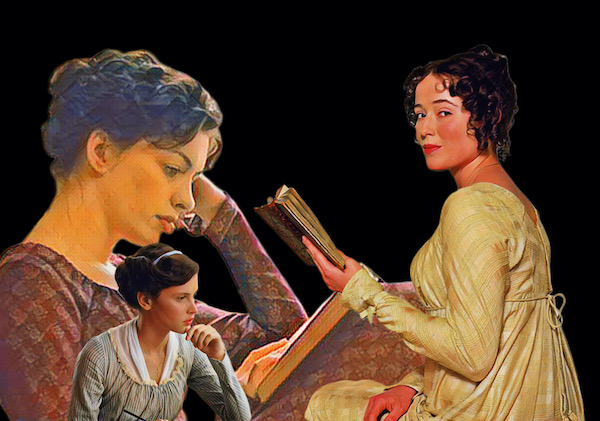
Thus, for many readers, Northanger Abbey is the Austen “B-side”: intriguing, promising, occasionally funny — but lacking the narrative brilliance of her other works.
If Catherine Morland is, in some ways, the least sophisticated of Austen’s heroines, she is also the one closest to the average reader. Her yearning to live an extraordinary story is the same yearning any reader feels when opening a book. Northanger Abbey is, in this sense, a tender and intelligent reflection on the very function of fiction. And like every novel that begins by mocking something and ends by falling in love with it, it might just deserve a more thoughtful look — or a second reading, this time with fewer Gothic expectations and more openness to its delicate irony.
Descubra mais sobre
Assine para receber nossas notícias mais recentes por e-mail.
 miscelana.com
2 comentários Adicione o seu