
Mobland can be summed up as a kind of Landman set in the British criminal underworld. And just as that Paramount+ series is carried by the charisma of its lead, Billy Bob Thornton, here it’s the unique talent and persona of Tom Hardy that make the show worth watching.
Directed and produced by Guy Ritchie (in two episodes), Mobland is not quite Peaky Blinders, nor does it fully embrace Ritchie’s signature style of fast-paced editing, music-video rhythm, and ironic humor in violent scenes. Instead, the story unfolds with a steady hand, favoring drama over flair. What clearly marks this as a Ritchie production is the presence of major English film stars and, especially, the compelling, convincing, and undeniably empathetic performance of Tom Hardy in a role tailor-made for him.
Amid the flood of series about crime families and underworld codes of loyalty, Mobland arrives with a significant pedigree and bold ambitions. Created and written by Ronan Bennett, the acclaimed mind behind Top Boy and screenwriter for films like Public Enemies (2009), the project was initially conceived as a spin-off of the Showtime series Ray Donovan. However, it eventually evolved into a standalone work, though it retains many of the dramatic and structural elements that made Ray Donovan a landmark in televised crime drama.
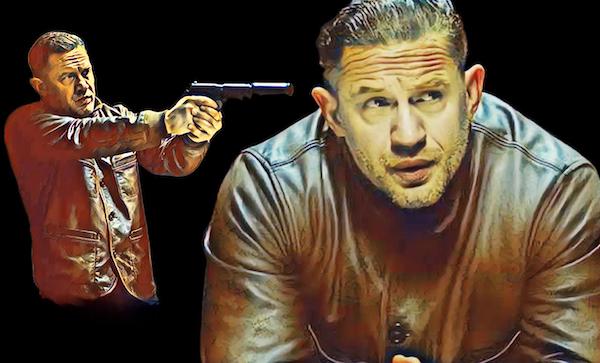
The origins of Mobland are deeply intertwined with those of Ray Donovan. Writer David Hollander, who served as showrunner on Ray Donovan (and directed multiple episodes, including the 2022 follow-up film), collaborated with Bennett during the project’s early stages before the production was reconfigured for a British audience. What remains from this influence is the archetype of the “fixer” — the man who operates in the shadows to put out fires for the criminal elite. In Ray Donovan, this figure was immortalized by Liev Schreiber as the troubled Ray; here, it takes on new life in Tom Hardy’s Harry Da Souza, a man loyal to his adoptive family — the Harrigans — but whose devotion will be tested to the limits of morality.

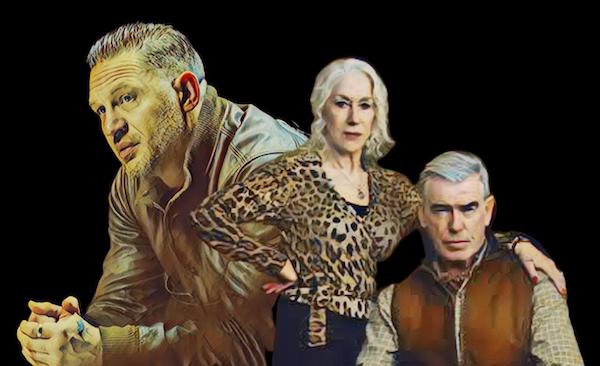
The story unfolds in London, where two crime families, the Harrigans and the Stevensons, vie for control over territory, honor, and legacy. The Harrigans are led by Conrad (Pierce Brosnan), a patriarch who blends pragmatism and brutality with aristocratic bearing. His wife, Maeve (Helen Mirren), is far from ornamental: she exerts discreet yet piercing influence from behind the scenes, a Lady Macbeth of London’s alleyways. Kevin Harrigan (Paddy Considine), the troubled heir, lives in the shadow of his father, while grandson Eddie (Anson Boon) becomes entangled in a violent episode with young Tommy Stevenson — an incident that pushes the families to the brink of war. It falls to Harry Da Souza, the Harrigans’ right-hand man, to clean up the mess with the discretion and cool-headedness his role demands — even if it means confronting personal demons and endangering the fragile balance of his own family.
Tom Hardy’s character is the spine of the narrative. In Harry, we hear echoes of the original Ray Donovan: a man hardened by life, shrouded in silence and contained violence, trying to protect his family even if it means destroying others. Hardy delivers a measured performance, more restrained than his explosive turns in films like Venom — a choice that owes much to Ritchie’s steady direction in the early episodes.
The score, composed by Matt Bellamy (lead singer of Muse) and Ilan Eshkeri, creates an intense, at times operatic atmosphere that amplifies the familial drama that overshadows the criminal intrigue. The aesthetic is urban and raw, reflecting the contemporary tension of a rapidly modernizing London, where codes of blood and loyalty still dictate the rules.
Despite the star-studded cast and high production values, Mobland faced challenges behind the scenes. Helix 3D, the company responsible for set construction, went bankrupt during filming, leaving technicians and workers unpaid. Tom Hardy, in a gesture of solidarity, reportedly offered to cover the crew’s wages, though the studios eventually assumed responsibility. Adding to the difficulties, filming was delayed after a theft of equipment from the London set. These chaotic behind-the-scenes events contrast sharply with the aura of control and power projected by the characters onscreen — an irony not lost on the British press.
Critically, Mobland received mixed reviews. Rotten Tomatoes reports a 76% approval rating, with praise for Hardy’s performance and the brooding atmosphere, while Metacritic lists a score of 59, suggesting a more lukewarm reception. Critics pointed to an overabundance of subplots and a pace that occasionally drags, especially in the midseason episodes. Pierce Brosnan’s adopted Irish accent was also the target of jokes on social media and in reviews. Still, there is consensus that the project is ambitious and that its emotional weight offsets some of its narrative inconsistencies.
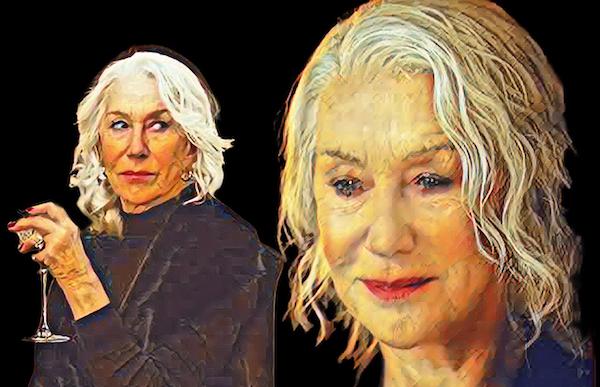
Here lies my own disappointment — particularly with the central couple: both Pierce Brosnan and even more so Helen Mirren seem several tones above the rest of the cast, veering into caricature and clashing with the brilliance of Hardy and the superb Paddy Considine, whose masterful and deeply affecting portrayal in House of the Dragon (unjustly overlooked by award circuits) earned him global recognition. Here, once again, he brings complexity to a man who may appear occasionally “weak” but is surrounded by far more psychopathic characters.
Anson Boon, still most memorable to me as Johnny Rotten in Pistol, plays the rebellious and reckless Eddie, who triggers the war between crime families in London and shows open disdain for his father, Kevin (Considine), with full encouragement from his grandmother, Maeve (Mirren). This toxic and tragic relationship stems from what Maeve calls the “true Harrigans,” a mix of psychopathy and frustration. Maeve manipulates her husband, whom she sees as “weak.” Kevin is more like his father, but in identifying Eddie as like her, the matriarch is really just weaponizing someone to fulfill her own violent urges. Whether the series will last long enough for her to realize that Eddie isn’t controllable remains to be seen. But this arc is the emotional core of the early episodes — and it would be far more compelling if Helen Mirren weren’t playing it so over-the-top, Lady Macbeth-style.

The friendship and bond between Paddy Considine and Tom Hardy, on the other hand, is phenomenal. Brief flashbacks suggest the two men overcame traumatic teenage years together, and although Harry always speaks softly and remains calm, we understand (thanks to Hardy) how dangerous and cunning he really is. His loyalty, however, is to Kevin, not to the Harrigan family per se. Once that connection is lost, which side will he choose?
Mobland may not redefine the crime drama genre, but it represents an intriguing intersection between Guy Ritchie’s pop-noir style, Ronan Bennett’s social realism, and the classic mythology of “difficult men” inherited from Ray Donovan. With strong performances, weighty themes, and a backdrop of intergenerational conflict, the series marks a new entry in the tradition of dysfunctional fictional families, where blood, ultimately, is never just symbolic.
Descubra mais sobre
Assine para receber nossas notícias mais recentes por e-mail.
 miscelana.com