
Angelina Jolie turns 50 on June 4, 2025, and the milestone invites a reflection on her singular journey through Hollywood. Because this is not merely about celebrating a movie star’s birthday, it’s the story of a woman who helped shape the contemporary imagination with talent, presence, and purpose. Jolie went far beyond film sets: she became a symbol of an era when celebrities stopped being mere style icons and began taking on leadership roles in global debates. Her story is one of stark contrasts: between Hollywood glamour and the dust of refugee camps, between challenging roles on screen and intimate struggles off-screen, between the media’s relentless hunger for her image and her constant effort to preserve a sense of personal wholeness amid the storm.

Born in Los Angeles in 1975, the daughter of acclaimed actor Jon Voight and actress Marcheline Bertrand, Angelina Jolie Voight grew up in the spotlight — and in the silent traumas of her parents’ separation. Her father’s absence and her mother’s emotional fragility, combined with the pressures of a family immersed in the film industry, left deep marks on her youth. During her adolescence, she battled eating disorders, self-harm, drug use, and an almost obsessive search for identity — issues she would later address with candor in interviews and public speeches.
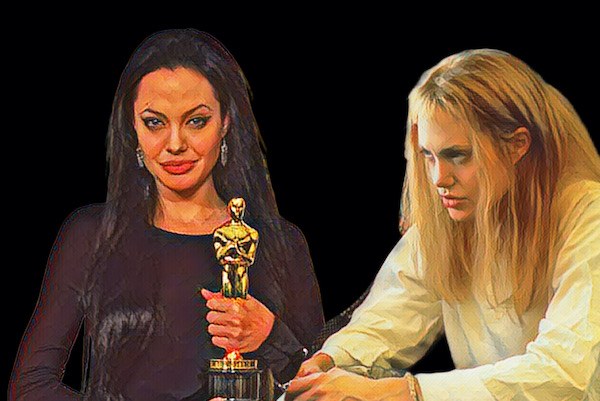
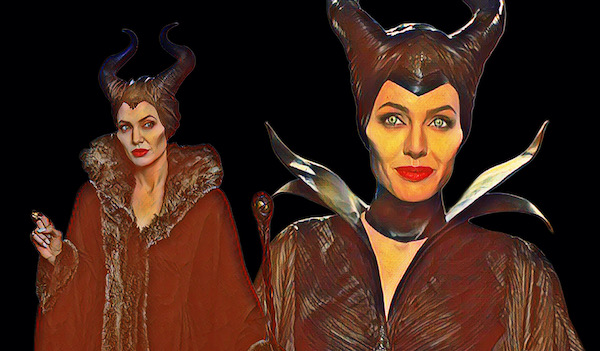
Jolie’s career began in the 1990s, with films that didn’t necessarily point to the stardom that lay ahead. But in Girl, Interrupted (1999), playing the troubled Lisa Rowe, she revealed a dramatic force that could no longer be overlooked. The Oscar for Best Supporting Actress was merely the crowning of a raw talent finally taking shape. In the years that followed, her name became synonymous with screen presence, sensuality, and intensity, in a series of iconic roles ranging from the adventurous Lara Croft — a pop symbol of the early 2000s — to more dramatic characters such as in Changeling (2008), directed by Clint Eastwood, which earned her another Oscar nomination.

But perhaps what sets Jolie apart from other actresses of her generation is the way she expanded her role far beyond the cameras. At the height of her fame, instead of settling into the success of box-office hits like Mr. & Mrs. Smith (2005) and Wanted (2008), she began traveling as a goodwill ambassador for the United Nations High Commissioner for Refugees (UNHCR). She visited war zones, displacement camps, and crisis-stricken regions, from Sudan to Afghanistan. More than just a symbolic figure, Jolie became actively involved in shaping public policy, met with heads of state, and co-founded the Jolie-Pitt Foundation with Brad Pitt, investing in causes like girls’ education, the prevention of sexual violence in conflict zones, and the protection of vulnerable populations.
Jolie also reinvented herself as a filmmaker. Her directorial debut, In the Land of Blood and Honey (2011), tackled the Bosnian conflict of the 1990s with rawness and sensitivity. In Unbroken (2014), she focused on the life of Louis Zamperini, an Olympic athlete and Japanese POW survivor. Though not all of her directorial work has been critically unanimous, her films consistently reflect a concern for giving voice to human stories silenced by official history.
Her personal life — avidly followed by the media — cannot be disentangled from her public image. Relationships with Jonny Lee Miller, Billy Bob Thornton, and most famously Brad Pitt — with whom she had six children (three biological and three adopted from different countries) — were regularly thrust into the spotlight. Yet even under constant scrutiny, Jolie sought to use her platform to speak on issues such as motherhood, adoption, women’s health, and empowerment. Her 2013 decision to undergo a preventative double mastectomy due to a genetic predisposition to breast cancer was shared in a deeply personal New York Times op-ed, which had a global impact by encouraging women to take proactive steps regarding their health.
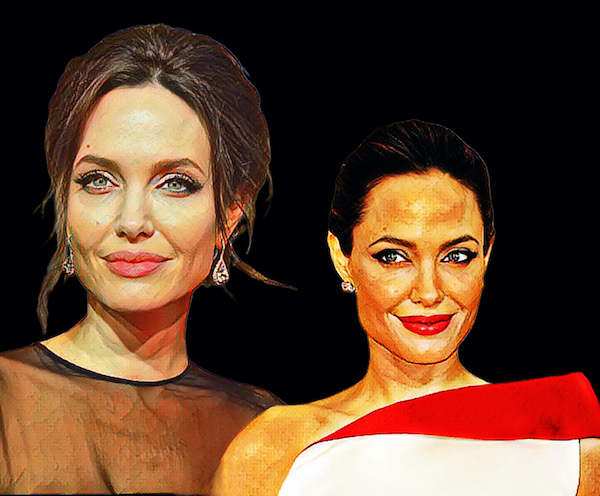
Her separation from Pitt in 2016 and the ensuing custody battle again revealed the difficulty of balancing public and private life, fame and motherhood. Even so, Jolie remained steadfast in her dedication to her family. In recent years, she has been frequently seen attending international events with her children, reinforcing her role as both matriarch and role model for the next generation.
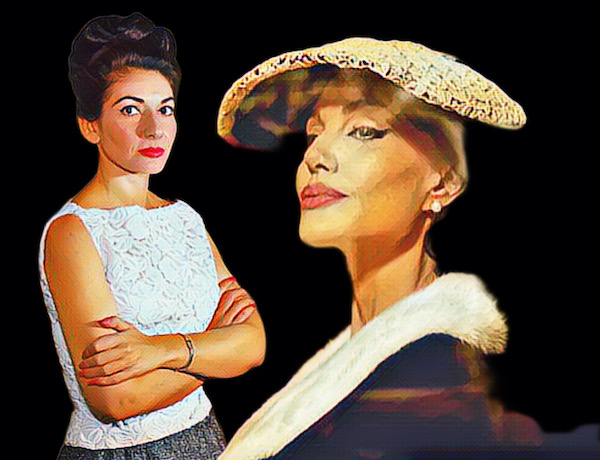
In 2024, Jolie returned to the spotlight with Maria, in which she portrays legendary soprano Maria Callas. Directed by Pablo Larraín, the film was acclaimed at the Venice Film Festival and hailed as one of Jolie’s most nuanced and restrained performances. Her choice to play Callas — a woman both powerful and tragically fragile — echoes elements of Jolie’s own life: an artist whose voice insists on being heard, even when pain tries to silence it.
On the eve of her 50th birthday, Jolie stated in a recent interview that she sees aging as a privilege. “I lost my mother too early. Every year lived is a gift,” she said. The comment is especially poignant coming from someone long perceived as the archetype of untouchable beauty. Today, she refuses to hide the passage of time, revealing a new kind of strength: one that stems from acceptance, balance, and serenity.
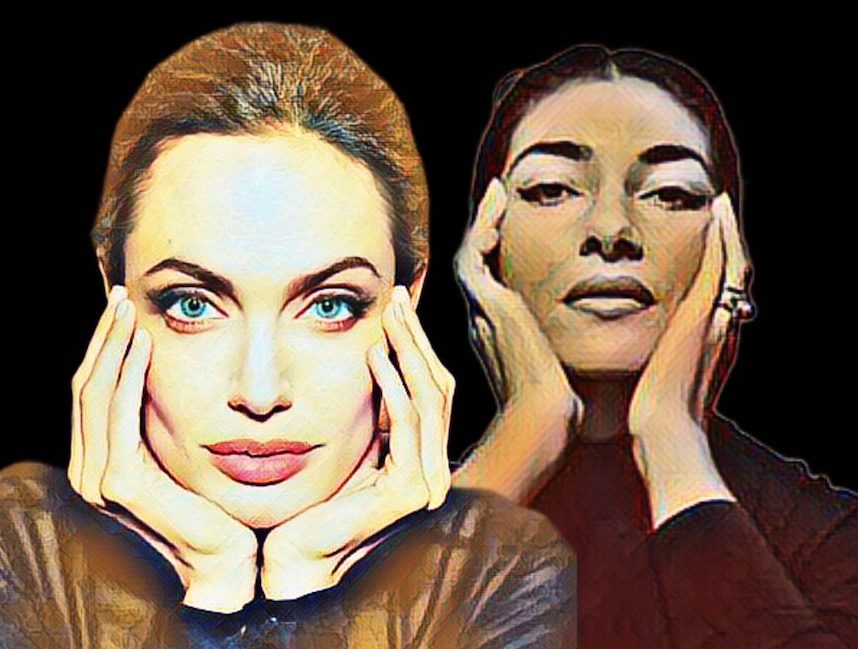
Angelina Jolie turns 50 not just as an award-winning actress, an ambitious filmmaker, or an engaged activist, but as a complex symbol of a femininity that refuses to conform. Her life, marked by both triumph and turmoil, stands as a testament to the power of reinvention and the courage to be vulnerable while staying committed to causes greater than oneself.
If there is one thing that defines Jolie, she can exist in multiple dimensions: muse, mother, activist, artist. And as she marks half a century of life, her legacy is far from concluded — it simply continues to evolve, like she does, with depth, elegance, and purpose.
Descubra mais sobre
Assine para receber nossas notícias mais recentes por e-mail.
 miscelana.com