
It has been 18 years of mystery — a nightmare now shared worldwide and one that directly affected the McCann family, the British couple who were on vacation in Praia da Luz, in the Algarve region of Portugal, in 2007. A place of stunning scenery, now shadowed by the disappearance — and probable sexual abuse and murder — of a 4-year-old girl: Madeleine McCann.
Beyond the trauma of a missing child, the case has become deeply controversial and suspect, marked by prejudice and misinformation that contributed to a painful enigma. The case regained prominence with the launch of a new search operation in early June 2025, now with a renewed focus, coordinated between Portuguese and German authorities. On June 3, the Portuguese Polícia Judiciária confirmed a new phase of the investigation is underway, now concentrated in the Atalaia region, near Praia da Luz. In the same area, Madeleine was last seen on May 3, 2007, just days before her fourth birthday.
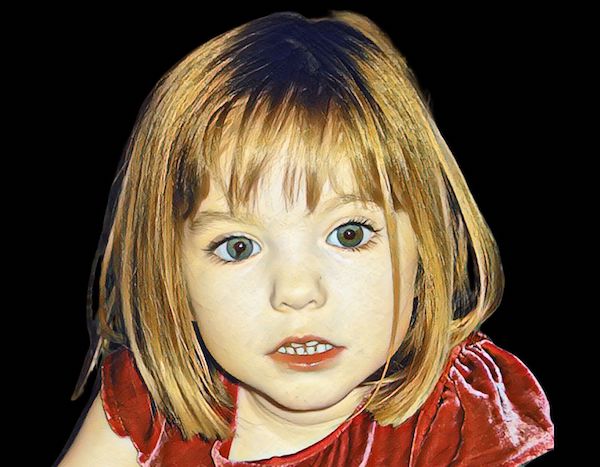
The Madeleine McCann case has become one of the most controversial and debated criminal cases in recent history, not just due to the disappearance itself, but also because of the numerous controversies that have surrounded it over more than 18 years of failed investigations, unconfirmed suspicions, media accusations, and judicial twists.
When the little girl vanished from the apartment where she was sleeping with her siblings, at a resort in Praia da Luz, her parents, Kate and Gerry McCann, had left the children alone while dining at a nearby restaurant — a fact that, from the start, was heavily criticized by public opinion and fueled a moral judgment about the couple’s conduct.
On the other hand, in the early days, the Portuguese police were accused of mishandling the case: there was a delay in securing the area, no proper preservation of the crime scene, and key witnesses were not interviewed promptly. In July 2007, the investigation took a dramatic turn when Madeleine’s own parents were named arguidos — formal suspects — after British sniffer dogs detected traces of blood and the scent of a corpse in the apartment and in a rental car used by the McCanns. However, this line of investigation never held up under scrutiny and was officially dropped in 2008, when the parents were cleared of all involvement.
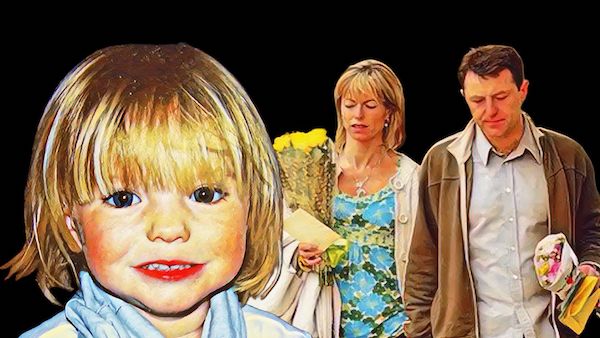
Controversy also extended to the funding of the search efforts. The McCanns created a fund to support parallel investigations, raising millions through public donations. Years later, it was revealed that part of the funds had been used to pay for legal fees, libel lawsuits, and to maintain their communications team, which sparked criticism over transparency and the real motivations behind the campaign. The 2019 Netflix documentary The Disappearance of Madeleine McCann explores this history in detail.
The investigation remains under the authority of a European Investigation Order issued by prosecutors in Braunschweig, Germany, where the main line of accusation now focuses on Christian Brückner, a 48-year-old German citizen and convicted pedophile who is considered the primary suspect in the disappearance. Brückner, currently imprisoned in Germany for a 2005 rape — also committed in the Algarve — had already been linked to the case in 2020, when cellphone location data placed him near the Ocean Club resort on the night Madeleine went missing.
This new phase of the investigation is described as the most ambitious since 2014. A wide area has been sealed off in Atalaia, in a terrain where there once stood an old farmhouse, now in ruins, which Brückner allegedly frequented. The operation involves dozens of Portuguese police officers, German investigators, and sniffer dogs. Equipment such as ground-penetrating radar, excavators, and drones is being used to analyze the subsurface and detect potential cavities or human remains. Wells in the area are also being drained in search of any trace that could clarify Madeleine’s fate.
Behind the scenes, sources suggest this operation was only possible after the analysis of new information, possibly extracted from electronic devices seized from Brückner, indicating he may have visited the site multiple times. This is why the search is concentrated there. So far, however, no conclusive evidence has been made public. The operation is expected to continue through the end of the week, with deeper excavations scheduled for the coming days.
The Madeleine McCann case is one of the most publicized and controversial child disappearances in recent decades. Since the night the girl was reported missing from the apartment where she was sleeping with her twin siblings, while her parents dined nearby, public outcry has been enormous. Fueled by conspiracy theories, early missteps by Portuguese investigators, and relentless British media coverage, the case attracted worldwide attention. Scotland Yard even launched its own parallel investigation, Operation Grange, which has consumed more than £13 million since 2011. To this day, no conclusion has been reached.

With Christian Brückner being named a formal suspect in 2020, declared by German authorities as “the man who likely killed Madeleine,” — hopes of solving the case were reignited. However, as of 2025, he has not been formally charged with her disappearance. Part of the challenge lies in the lack of physical evidence. Prosecutors in Braunschweig continue to try to build a solid case that directly links Brückner to the disappearance — a task that has proven elusive.
Currently, Brückner is serving a sentence that began in 2019, due to end in 2026. That conviction is unrelated to the Madeleine case, which raises the possibility that he may be released before the mystery is solved — unless new, substantial charges emerge to keep him behind bars.
Compared to other cases of missing children or child abuse, Madeleine’s case stands out not only for its media exposure but also for the transnational mobilization of resources and effort. Few disappearances have generated such large-scale financial, political, and emotional investment across so many countries and over such a long time. Even artists and public figures have joined awareness campaigns, and documentaries such as Netflix’s 2019 production have reignited the debate around the case.
Despite all the controversies, criticisms of the initial actions of Portuguese and British authorities, and the intense public scrutiny faced by Kate and Gerry McCann, the couple continues to lead the fight for answers. In May 2024, marking 17 years since the disappearance, they once again released a statement expressing their ongoing faith in the investigation and hope that one day they will know the truth about what happened to their daughter.
Now, with the 2025 excavations underway, the world’s eyes once again turn to southern Portugal. The question remains: are we finally nearing the end of one of the most disturbing mysteries in recent history, or is this just another inconclusive chapter in a saga defined by frustration and silence? The answer may lie buried — quite literally — in the arid soil of Atalaia.
Descubra mais sobre
Assine para receber nossas notícias mais recentes por e-mail.
 miscelana.com