
Here we go again: George R. R. Martin aired a series of complaints on his blog and in interviews—about fans pressuring him to finish the A Song of Ice and Fire saga, and also about how dissatisfied he is with House of the Dragon and the creative liberties taken with his story. I’ve talked about this before, on more than one occasion, and I understand him perfectly.
Writing for the page, for TV, or for Cinema is each a different craft. Books allow for the free imagination of the author—but also of the reader. It creates a much stronger bond between the two. TV and film, on the other hand, carry more weight on the creator’s side, who controls the visuals, dialogue, and everything else in a very specific way—even though each viewer connects with it individually. So, talking about adaptations is always stepping into a minefield. But there are successful cases, and not all authors are as offended by the system as GRRM. Or rather, they’re not as vocal as he is.
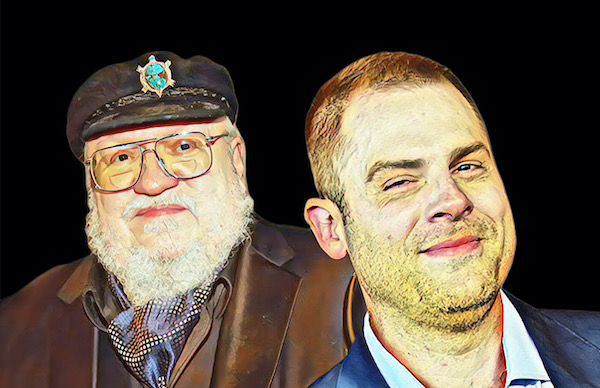
“Most of the book-to-screen adaptations we see today worsen the original story,” wrote Martin. “Showrunners often think they can improve the book—that they know more than the author. It’s not impossible, of course. Sometimes they succeed. But it’s rare. Very rare.” He went on to say that many of these professionals believe they are “fixing” the author when, in reality, they are distorting the essence of the work. Although he made a few exceptions—such as the series Shōgun, which he called a rare example of a respectful and well-made adaptation—Martin reiterated his discomfort with the way many literary classics have been mistreated on screen.
This outburst was interpreted by many as an indirect critique of the Game of Thrones series itself, which started as a faithful adaptation of his books but drifted far from the original plot in the final seasons, culminating in a controversial ending. It’s no secret that Martin was unhappy with the direction showrunners David Benioff and D. B. Weiss took once they surpassed the published books. Since then, the author has repeatedly defended the importance of maintaining the integrity of the stories created in the books—something he believes was lost when television decided to “go faster” than the original narrative.
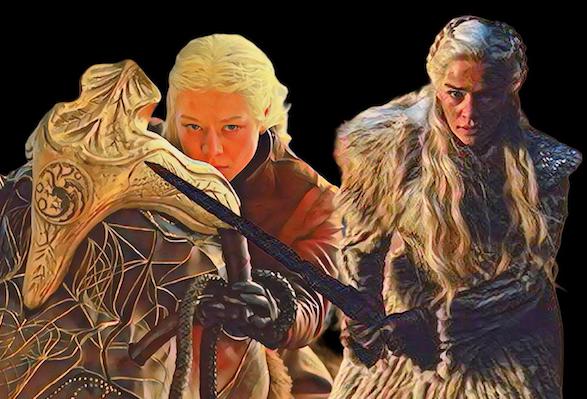
I share the frustration regarding the changes in House of the Dragon, whose chapter in Fire & Blood—about the Targaryen civil war—is one of the most impactful, and is almost unrecognizable on screen. Violent passages are softened, and the core of the conflict—a fight between brothers—is replaced with a standoff between two women. Of course, that’s a personal opinion.
As for Game of Thrones, the one in the “wrong” is George R. R. Martin. The series premiered in 2011, by which time four books had been published, and only one was missing: The Winds of Winter. We’re now in 2025, and the author has announced so many times that the book is nearly finished that he’s lost credibility. He addressed this on his blog as well: “You don’t care about anything but WINDS OF WINTER. You’ve told me that so many times,” he said to fans when announcing other projects he’s involved in. “I care about Westeros and WINDS too. The Starks, Lannisters, and Targaryens, Tyrion and Asha, Dany and Daenerys, the dragons and the direwolves—I care about all of them. More than you can imagine,” he assured. I don’t doubt he cares, but he’s stuck and can’t deny it.

I didn’t like how Game of Thrones ended and have disagreed with some of the choices for years now, here at MiscelAna. I still hold my personal opinion that D&D did the best they could with what they had at the time. And more: the fact that nearly 10 years after the show ended, the book is still not out strongly suggests that what aired—and was massively rejected—was indeed Martin’s planned ending. Yes, Daenerys is going mad, dying, and all that. He missed the train and got run over by the cold winds of time (pardon the pun). Today’s culture doesn’t accept many of the excuses he gave for the mistreatment of women as mere reflections of a “medieval” time—and because of that, much of the story (as happened in the show) gets cornered. It would be more honest to admit that. But it is what it is.
GRRM‘s remarks, as expected, struck a chord with fans, many of whom share the frustration of seeing beloved books radically altered in their screen versions. On social media, readers recalled emblematic cases like Percy Jackson, Eragon, Dune (in its earlier versions), The Hobbit, and even contemporary adaptations like The Wheel of Time and The Rings of Power, whose creative liberties sparked divided opinions. For many, Martin’s complaint sums up an old feeling: that the nuances of books are often sacrificed in favor of fast pacing, simplifications, or attempts to modernize characters and plots without truly understanding the original work.

Other authors have voiced similar frustrations. Neil Gaiman, author of Sandman, openly criticized previous attempts to adapt his work for insisting on rewriting characters or cutting fundamental parts of the narrative. When he finally gained control over the Netflix version, Gaiman made it clear that preserving the spirit of the story would be his top priority—something Martin seems to be pleading to become the rule, not the exception. Even Stephen King, despite being widely adapted, has expressed dissatisfaction with several films based on his books, including calling The Shining by Stanley Kubrick “cold and inhuman,” despite its cult status.
I’ll take this moment to say it’s not just fantasy that suffers in the transfer from page to screen. Period romances increasingly bump into anachronisms that destroy the original. Netflix’s version of Persuasion altered heroine Anne Elliot’s personality so deeply that it made no sense how such a strong, opinionated woman would have ever allowed herself to be persuaded into making the wrong choices in the past. That’s the heart of the whole story (as referenced in the title).
The most borderline offensive, however, is The Buccaneers.


The unfinished novel by Edith Wharton, one of the most important American writers of the early 20th century, was completed by British author Marion Mainwaring and published in 1993—56 years later—as a “final version.” Mainwaring based her work on notes, outlines, and chapters left by Wharton, and it was never fully embraced by fans.
That alone would already spark debate—but it gets worse. The Apple TV+ series decided to significantly alter both the 1937 original and the 1993 ending. Basically, it only kept the title, character names, and a barely recognizable storyline. The rest is radically “original,” fully in the Bridgerton school. But the Netflix series has a duality: while the story (weak and melodramatic) is faithful to the book, the inclusive cast and modern soundtrack work because of that. In The Buccaneers, not even that.
Since Wharton, unlike Martin, can’t speak for herself, I’ll take the liberty of doing so: it’s offensive. No one is stopping anyone from creating new stories—especially if they think the original doesn’t work in today’s world. Gilded Age romances don’t align with feminist ideals—on the contrary. Neither does Jane Austen, for that matter. If it’s politically incorrect, it should be contextualized or left behind—but “updated”? I don’t agree.

The upcoming adaptations of Wuthering Heights and Pride and Prejudice also make me anxious for the same reason. George R. R. Martin’s statement, therefore, goes beyond a mere complaint: it is a public declaration about authorship, creative respect, and the value of literary text.
At a time when adaptations multiply thanks to the appetite of streaming platforms for pre-tested content with an established fanbase, the author’s warning echoes as a plea for integrity—and perhaps for a bit more humility from the audiovisual industry. The question remains whether, with upcoming series like House of the Dragon and A Knight of the Seven Kingdoms, now in production by HBO, Martin will finally see his universe portrayed the way he always envisioned. I doubt it.
Descubra mais sobre
Assine para receber nossas notícias mais recentes por e-mail.
 miscelana.com
1 comentário Adicione o seu