
The final trailer for the fifth and final season of Stranger Things caused a major stir among fans and critics alike, as the video confirmed that the series’ concluding episodes will be released in three parts: November 26, December 25, and December 31, 2025. After that? Goodbye.

The trailer blends nostalgic scenes from previous seasons with new, intense, and symbolic imagery, hinting at an apotheotic conclusion for the saga of Hawkins’ residents. Though sparse in detail, it suggests that the final season will be marked by great emotional and narrative intensity. Expectations are high that all the threads left open since 2016 will be resolved, with special emphasis on Will Byers’ arc, which now appears more central than ever. One rumored episode title, “The Rightside Up,” functions as a direct counterpoint to the “Upside Down” and suggests an attempt to restore order—albeit at a steep cost.
With the main cast returning in more mature versions of their characters and the promise of emotional reunions, Stranger Things seems determined to end its run with a balance of action and feeling, reaffirming the show’s commitment to nostalgia, its 1980s pop culture references, and its desire to conclude the story epically. Nearly ten years ago, Stranger Things made history as a cultural phenomenon and cemented Netflix’s status as a major content player.
Stranger Things: From nostalgia to cultural phenomenon
When Stranger Things premiered quietly on Netflix in July 2016, few could have predicted that it would become one of the biggest sensations in contemporary pop culture. Created by brothers Matt and Ross Duffer, the show arrived with little fanfare, but quickly captivated audiences and critics alike with a skillful blend of suspense, science fiction, emotion, and a visual style that directly paid homage to the 1980s. Today, it is more than just a hit show: it is a generational symbol.
The origin: a love letter to the 1980s
The Duffer Brothers were self-proclaimed fans of Stephen King, Steven Spielberg, and John Carpenter—influences that permeate every frame of Stranger Things. Their goal from the start was to create something that felt like an old movie you stumbled upon on a dusty VHS tape: eerie, emotional, and delightfully strange. The project was initially rejected by several studios, who didn’t know how to market a show led by children that clearly wasn’t aimed at children.
Netflix, still on the rise as a producer of original content, took a chance. The creative freedom offered by the platform was essential for the Duffers to maintain their original vision. The working title was Montauk, and the story was set in Long Island, New York, inspired by real conspiracy theories about government experiments. Later, the setting was moved to the fictional Hawkins, Indiana, and the name changed to Stranger Things—a direct evocation of the strange things that could happen in any American suburb.

Casting the impossible: the alchemy of the ensemble
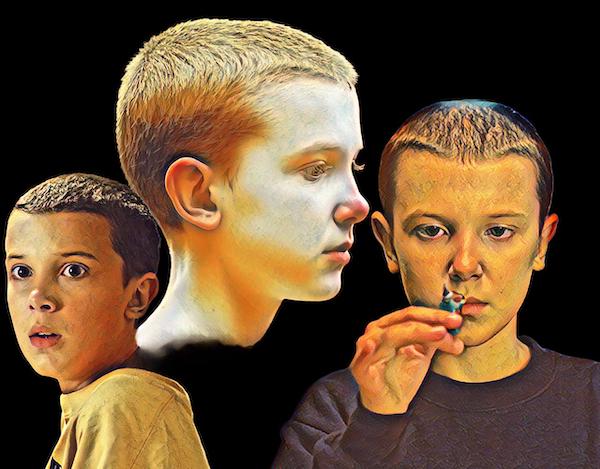
One of the show’s greatest triumphs was casting. The Duffers sought young actors with innate talent who looked and behaved like real kids—not polished “child stars.” That’s how Millie Bobby Brown, then 11 years old, landed the role of the enigmatic Eleven. Finn Wolfhard (Mike), Gaten Matarazzo (Dustin), Caleb McLaughlin (Lucas), and Noah Schnapp (Will) completed the core group with astonishing chemistry.
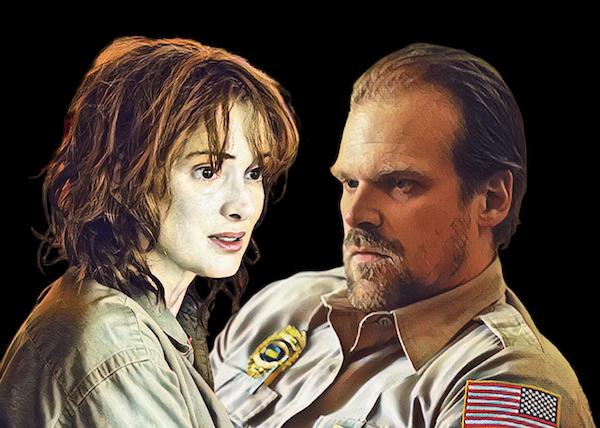
On the adult side, casting Winona Ryder as Joyce Byers was a masterstroke. An icon of the ‘80s and ‘90s, her presence brought an added layer of nostalgia to the project. David Harbour (Hopper), previously known for supporting roles, became a global star.
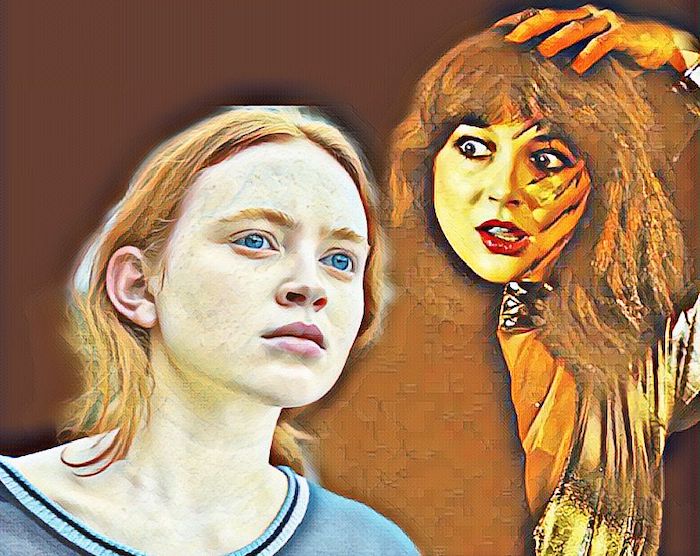
As the show progressed, more cast members became essential to its success: Natalia Dyer (Nancy), Charlie Heaton (Jonathan), Joe Keery (Steve), Maya Hawke (Robin), and Sadie Sink (Max), each of whom helped expand the mythology of Hawkins without losing the emotional essence of the story.
Season by season: growing with the characters
The first season introduced the disappearance of Will Byers and the arrival of Eleven, a girl with psychic powers escaping a secret lab. The supernatural suspense was layered with cultural references—from E.T. to The Goonies to A Nightmare on Elm Street. At the same time, the writing was deeply emotional, exploring friendship, grief, fear, and coming of age.
The second season explored the consequences of contact with the Upside Down. Though criticized for lacking innovation, it deepened character relationships and introduced the fearsome Mind Flayer.
The third season, more colorful and inspired by ‘80s shopping malls, had a near-satirical tone but ended with one of the show’s most emotional conclusions. Hopper’s supposed sacrifice and the group’s separation marked the show’s narrative maturation.
The fourth season, split into two volumes, was the darkest and most ambitious. It introduced the villain Vecna, a figure combining psychological horror with physical brutality. With long episodes and more sophisticated visual effects, the show embraced an almost cinematic scale. At the same time, it highlighted trauma, depression, and the pain of growing up—especially in Max and Eleven’s arcs.
Why did Stranger Things become a phenomenon?
There are many reasons for Stranger Things’ cultural impact. First, it knew how to revive nostalgic aesthetics without relying solely on them. The references were never empty—they were baked into the show’s DNA. For those who grew up in the ‘80s, it offered a reunion with the past. For younger generations, it was a stylish gateway into that world.
Moreover, Stranger Things crafted charismatic and complex characters. The group of nerdy friends—with their bikes, RPG games, and unshakable loyalty—evoked universal memories of childhood. The audience’s empathy for characters like Eleven, Steve, Hopper, and Max is what kept the show alive, even when the writing played it safe.
Musically, the show also set trends. Songs like “Should I Stay or Should I Go” (The Clash), “Heroes” (David Bowie), and especially “Running Up That Hill” (Kate Bush) returned to the charts decades after their original release, thanks to the emotional power of the scenes they accompanied.
In fashion, Stranger Things-inspired outfits returned to store windows. Online, the fandom created theories, fan art, memes, and heated debates over every detail of the show. It was perhaps the last great streaming series capable of uniting multiple generations around a single cultural event.
What to expect at the end?
The fifth and final season has no confirmed release date yet, but it’s known that the story will once again be set in Hawkins and will return to a more focused structure, according to the creators. The kids are now teenagers transitioning into adulthood, which will be reflected in the themes explored.
The spotlight will likely fall on the final confrontation with Vecna, the reconfiguration of the Upside Down, and the closing of emotional arcs—especially Eleven’s. There is clear anticipation that not all characters will survive. The series may end on a bittersweet note, with sacrifice and growth, while still celebrating the power of friendship and love.

Legacy
Regardless of how it ends, Stranger Things has already left its mark. It launched new talents, reinvented formulas, bridged generations, and proved that science fiction and fantasy stories can also be deeply human. It’s not just a show about monsters and telekinetic powers: it’s about how we face the unknown while still trying to understand ourselves.
Descubra mais sobre
Assine para receber nossas notícias mais recentes por e-mail.
 miscelana.com