
The success of Ginny & Georgia stems from a mix of melodrama, strong lead performances, and, above all, the courage to portray teenagers with rare honesty. It’s a kind of The Gilmore Girls, but bolder, with characters who aren’t easy to like. Still, once you start watching their story, one thing is certain: you’ll be hooked until the end. And there are always surprises. But more importantly, even though the plot may be soap-operatic and overly dramatic, there’s delicacy and seriousness in how it tackles various psychological themes—both concerning the teenagers and the complex mother-daughter relationship.
Just as a reminder: Ginny & Georgia premiered in 2021 and centers on the intense relationship between teenager Ginny Miller and her mother, Georgia, a charismatic and impulsive woman whose youth was marked by abuse, poverty, and violence. In Season 1, mother and daughter move to the quiet town of Wellsbury in search of a fresh start, but secrets from Georgia’s past—including the suspicious deaths of former partners—soon surface, disrupting Ginny’s emotional stability. To cope with the pressure, Ginny resorts to self-harm.

Season 2 delves deeper into these conflicts: Ginny begins therapy and tries to reconnect with her mother, while Georgia confronts the weight of her traumas and struggles to maintain control over her family’s life. At the same time, Ginny’s relationship with neighbor Marcus experiences highs and lows marked by mental health issues, and the family’s perfect façade begins to crumble under investigations and painful confrontations. The series shifts between teen drama and psychological thriller, always maintaining an intense emotional focus on trauma, motherhood, and survival.
The third season of Ginny & Georgia dives even deeper into the themes that made it a phenomenon: the contradictions of trauma-laden motherhood, the psychological effects passed from one generation to the next, and the fine line between protection and control. In this new batch of episodes, the show’s creators—with showrunner Sarah Glinski at the helm—chose to face, with both bravery and sensitivity, the emotional consequences of Georgia’s actions, while also deepening Ginny’s journey toward emotional independence.
I’ll skip the spoilers and details of the just-released season and instead highlight the quality of the themes explored among the teens. Rather than resorting to sensationalism, the series opts for introspection: we are led to understand the character’s motivations—not to absolve her, but to uncover the roots of her destructiveness. This approach is strengthened by Brianne Howey’s performance, delivering her most complex and devastating version of the character. Georgia, in season three, remains charismatic—but she’s on the brink of collapse. What once appeared to be total control is revealed as a fragile façade masking unresolved pain, survival strategies inherited from a brutal childhood, and a teenagehood marked by abuse and abandonment.
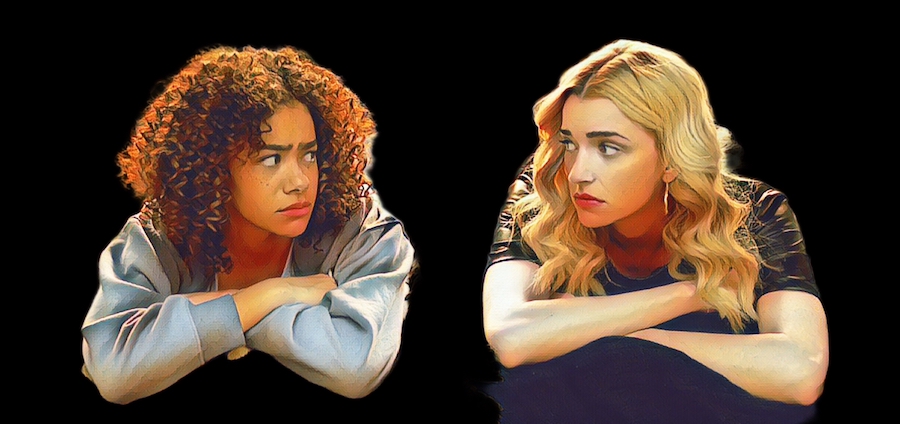
Many viewers and critics have speculated whether Georgia might have a clinical diagnosis, such as Borderline Personality Disorder (BPD) or another severe personality disorder. While the series never labels her with a specific diagnosis, her behaviors—impulsiveness, manipulation, intense fear of abandonment, difficulty maintaining stable relationships, dramatic mood swings, and a history of trauma—mirror many criteria associated with BPD. Creator Sarah Lampert has stated in interviews that Georgia wasn’t written with a specific disorder in mind, but rather as someone who developed extreme defense mechanisms after a life filled with pain. Sarah Glinski emphasized that the focus isn’t on diagnosis, but on Georgia’s struggle—and failure—to break the cycles that shaped her.
This refusal to simplify the character is one of the show’s greatest strengths. Georgia is neither a villain nor a heroine: she is someone who survived the only way she knew how, and who, in trying to protect her children, perpetuates patterns of destruction. Season three explores this with particular emphasis, especially in scenes between Georgia and Ginny, who is now trying to establish clearer emotional boundaries. Ginny’s mental health, already treated seriously since season one, gains new depth as she chooses to continue therapy, face past traumas, and build a self-identity that doesn’t solely exist in opposition to her mother.
The creative team’s care in depicting mental health is evident throughout. The presence of specialized professionals behind the scenes helped ensure that topics like self-harm, depression, anxiety, and psychological abuse were approached responsibly. Ginny’s relationship with her therapist, for instance, avoids clichés and highlights the importance of active listening, emotional validation, and the gradual construction of autonomy.

Another highlight of the season is the development of Marcus’s storyline, as he continues to struggle with depression profoundly and honestly. The series doesn’t offer magical solutions but insists on the importance of communication, friendship, and raising mental health awareness among young people. Attention to detail—such as silences between dialogues, gestures of physical discomfort, and shifts in rhythm—reinforces the authenticity of these experiences.
With its light aesthetics and fast pace, Ginny & Georgia could easily fall into the trap of treating complex issues superficially. But season three proves that behind the sharp humor and dramatic twists lies a real commitment to emotional truth. By not labeling Georgia, yet showing the devastating consequences of her untreated traumas, the show invites viewers to reflect on the many forms of pain that hide beneath perfect smiles. And by following Ginny’s—and now also Austin’s—journey toward healing, it reminds us that breaking cycles is hard, but possible.
More than just a family drama, Ginny & Georgia now stands as a bold and complex portrait of mental health in everyday life—without romanticizing suffering and without condemning those who fail while trying to do the right thing. A series that has, at last, matured alongside its characters—and its audience. Above all, it leaves us with hope. If only all soap operas were like this!
Descubra mais sobre
Assine para receber nossas notícias mais recentes por e-mail.
 miscelana.com