
Making jokes about the public education system in underprivileged communities may seem inappropriate, but Quinta Brunson, the star and showrunner of Abbott Elementary, wanted to pay tribute to her teachers and her mother. Instead of opting for drama to expose the challenges of the educational system, she chose to approach it with warmth, smiles, and laughter.
One of the most acclaimed comedy series in recent years, Abbott Elementary emerged as a love letter—and at the same time a critical manifesto—and since 2021 has built a solid reputation as one of the sharpest and most human comedies on network television. Inspired by her mother, who was a teacher for decades in Philadelphia, the setting of the story, Quinta adopted the mockumentary format to explore the daily lives of a group of educators in an underfunded school that overflows with humanity, empathy, and humor.
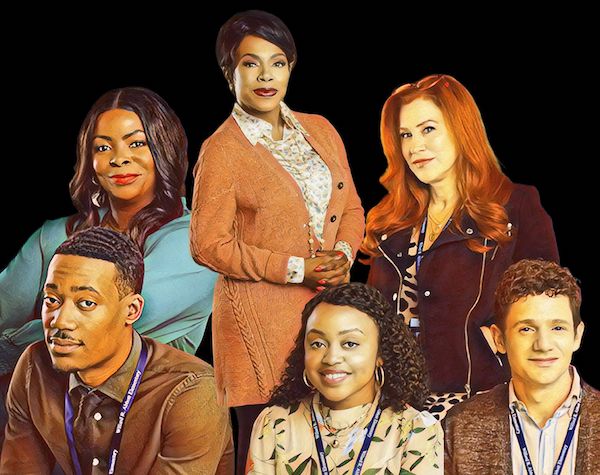
The show’s success was almost immediate. In its first season, Abbott Elementary drew attention for its balance of social commentary and levity, its consistent cast, and the wit of its writing. Quinta Brunson, who plays the idealistic teacher Janine Teagues, became one of the leading voices in new American comedy, earning an Emmy nomination and winning the Golden Globe for Best Actress in a Comedy Series in 2023. The show also won major awards such as the Emmy for Best Comedy Writing, as well as ensemble categories, thanks in part to the magnetic performance of Sheryl Lee Ralph as veteran teacher Barbara Howard.
However, over the years, Abbott Elementary has faced a decline in award recognition, especially compared to its initial wave of acclaim. Part of this can be attributed to the emergence of heavyweight contenders—such as The Bear, Only Murders in the Building, Hacks, and Reservation Dogs—that have expanded the thematic scope of contemporary television comedy. Another possible explanation lies in the persistent bias against network television, which, despite offering innovative and socially relevant content like Abbott, still struggles to compete with the prestige of streaming and cable productions. Additionally, the show’s consistent, effective, and unsensationalistic formula may paradoxically seem “less daring” when compared to competitors that lean into more overt aesthetic experimentation.
Even so, the strength of Abbott Elementary continues to be its consistency: episode after episode, the series delves deeper into the dynamics of the titular school with a rare combination of tenderness, realism, and critique. This became even more evident in the fourth season, which aired in the first half of 2025, standing out not only for its character development but also for its approach to weightier themes—without ever losing its comedic tone.
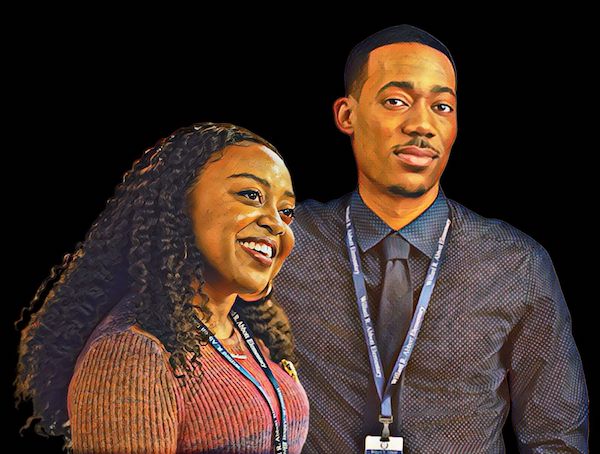
Last season, followed Janine during a period of transition: after accepting a temporary position at the Department of Education, she found herself torn between a desire for systemic change and a longing for the classroom. Janine’s arc was emblematic of the season, reflecting the tension between idealism and pragmatism, between institutional advocacy and the concrete experience of teaching. Her absence affected her colleagues—especially Gregory Eddie (Tyler James Williams, always brilliant), whose unresolved romantic tension with Janine took on new dimensions—less idealized, more adult, marked by distance and hesitant reunions.
The big twist came in the form of the riskiest move in TV tradition: after two seasons of will-they-won’t-they, season three finally brought Janine and Gregory together. A stable central couple has long been considered a narrative dead end for sitcoms—but is it, really?
Season four marks a return to the traditional 22-episode format. Janine returns to the classroom, more mature and aware of her limits, and her romance with Gregory finally takes shape—not as a melodramatic climax, but as an organic evolution between two characters who know each other deeply. The season also provides a broader portrait of Abbott Elementary, with episodes focused on students, parents, and even district-level administrative decisions.
One of the year’s most celebrated moments was the unexpected crossover with the cast of It’s Always Sunny in Philadelphia. In a surprise guest appearance that quickly went viral, actors Charlie Day, Rob McElhenney, and Glenn Howerton appeared—offering a comic nod to their chaotic Sunny personas, even if their original characters weren’t explicitly mentioned.
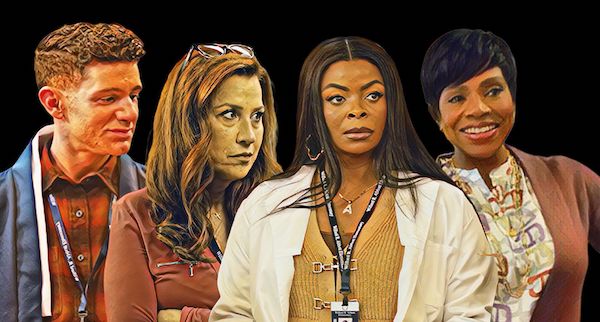
The latest episodes have been praised by critics and fans as both a return to form and a leap in quality. There’s a renewed lightness in the air, along with a growing emotional depth that builds with each episode. The most moving arc, without a doubt, belongs to Ava (Janelle James), who, once just a hilariously eccentric figure, has begun to reveal more human layers—showing how her lack of preparation is also a consequence of the very system that placed her there. Ava remains the show’s most intense comedic relief, but now with more complex and touching dimensions.
Even with fewer trophies on the shelf in recent years, Abbott Elementary remains one of the most important series of its generation—not just for its ability to make audiences laugh, but for doing so with awareness, subtlety, and affection. Quinta Brunson has already proven she doesn’t need to be the awards darling of the moment to stay relevant. In fact, her greatest achievement might be this: turning a forgotten public school into a stage for stories that matter—and doing it week after week, with humor and heart.
We find everyone back again in Philadelphia—and yes, the couple is still together.
Descubra mais sobre
Assine para receber nossas notícias mais recentes por e-mail.
 miscelana.com