
The signature of showrunner Michael Hirst is his ability to identify complex historical figures and dramatize them in films or series. He achieved success with The Tudors, which told the story of Henry VIII; later, he made history with Vikings, an excellent series that was somewhat overshadowed by the success of Game of Thrones. More recently, before announcing a return to Norse tales, he ventured into the American West with the series Billy the Kid. The third and final season is still being filmed, but in Brazil, MGM+ has just made the second season available, which aired in 2024 in the United States.
It seems the international shelving of the series signals that it didn’t perform as expected. That’s not entirely surprising. Although the western genre, one of the most emblematic forms of American storytelling—across cinema, literature, and television—reached its peak in the 1930s and ’40s, it was nearly eradicated from the mainstream by the 1970s. Still, it endured as a powerful narrative structure, especially for stories of moral ambiguity, frontiers (physical or symbolic), and the reinvention of the hero.

The genre no longer holds the cultural dominance it once had in the 20th century—for obvious reasons—but its legacy still resonates today because it speaks directly to foundational dilemmas of collective identity. Moreover, it appeals to a male audience that continues to feel nostalgic for the idealized violent figures of the era. In general, westerns draw upon American myths surrounding westward expansion and Indigenous conflict, as well as the Civil War, the arrival of the railroad, and a period in which law and disorder in the frontier were oppressive but culturally mythologized into epic symbols of heroism, freedom, and moral conflict.
The series Billy the Kid retells the journey of Henry McCarty, the legendary outlaw of the American Old West, whose short life—and premature death at 21—turned him into one of the greatest myths of U.S. popular culture. He is famous not only for the crimes he committed but also for the romantic aura of rebellion and tragic youth that surrounded him after his death. In Hirst’s vision, he’s markedly different from how he’s usually portrayed.
With nearly a three-year gap since the first season, it’s not easy to fully re-immerse oneself in the drama or recall all the details. The show’s early chapters depicted how Billy, played by Tom Blyth, became a young outlaw pulled into a vortex of shifting alliances, betrayals, and violent acts that, according to Hirst, are not only part of American history but also shaped a certain “moral myth” of the West.
The second season delves into the historical event that cemented the real Billy the Kid as a legend: the Lincoln County War, one of the most iconic conflicts of the American Old West. Here we see how the battle for control of land, goods, and services in the Old West was, despite regulations, effectively lawless. In Lincoln’s specific case, the greedy men who monopolized all products in the county decided to eliminate their competition through violence, using gangs to fuel the conflict. It was a mini civil war in an already divided country.

The series Billy the Kid avoids focusing solely on duels and horseback chases, opting instead for the complex political, economic, and moral motivations behind the events that shaped the legend. While compelling, for foreign audiences unfamiliar with American history, its appeal is more limited and its impact diminished.
In the early episodes, we follow Billy joining John Tunstall, a young and idealistic English businessman who challenges the monopolistic interests of the organization known as “The House,” led by Lawrence Murphy. This economic and political clash between rival merchant groups spirals into open war, involving gunslingers, corrupt sheriffs, and rigged legal disputes. Billy finds himself increasingly entangled in the chaos, especially after Tunstall’s death, which deeply affects him and turns him into a symbol of resistance among the Regulators, the armed group fighting against the oppression of large landowners.
The series dramatizes, with some creative liberty, historical episodes such as the assassination of Alexander McSween, the burning of the house where he and others took refuge, and Billy’s desperate escape through crossfire. At its core, the season tells the story of a young man who, although he carries a gun, seems driven by a personal moral code. For Michael Hirst, this is central: in interviews, the creator emphasized that Billy is not just a romantic outlaw, but a young man with a surprisingly modern ethical vision. “He defended immigrants, especially Mexicans. He had a sense of justice that was uncommon for his time,” said Hirst, also highlighting Billy’s mother’s influence in shaping his values—a figure who, though absent in season two, still echoes in her son’s actions.
Hirst also noted that he sought to rely on trustworthy historical sources, such as the accounts of George Coe, who fought alongside Billy in real life. But he never hid that his intention was more dramatic than documentary. “The history is unbelievable on its own, but we also wanted it to be emotional. We wanted the audience to be on the journey with Billy, not just watching the facts from a distance.”
The season’s reception was mixed. Professional critics expressed frustration with its uneven episodic structure and historical liberties. On the other hand, general audiences responded enthusiastically, praising the intensity of the action scenes, the emotional fidelity of the protagonist, and the immersive world-building.
Precisely because it delves into the more widely known drama—unlike season one’s undocumented youth—this season surpasses the first in both pacing and dramatic tension. Tom Blyth delivers a darker, more strategic Billy, torn between his thirst for justice and the inevitability of violence. The cinematography and Western setting also deserve praise, especially for the use of natural light and wide-open landscapes as metaphors for the protagonist’s solitude and moral ambiguity.
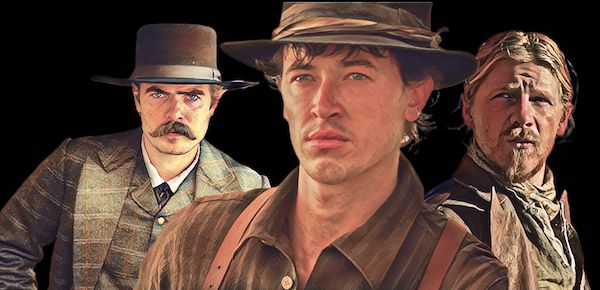
I’m glad we can finally continue watching Billy the Kid, because the series offers a dense and melancholic portrait of a turbulent period in American history. Through Hirst’s sensitive lens, Billy emerges not as a hero or villain, but as a symbol of a time when justice and vengeance walked hand in hand. And if the show makes anything clear, it’s that in the Old West, legends are born from fire, loss, and the desperate attempt to do what’s right in a world that rarely rewards those who try.
In the final season, with the Lincoln County War over, both Billy the Kid and Sheriff Pat Garrett, played by Alex Roe, still have major issues to settle — a reckoning is coming. Billy remains on the run, and Garrett is determined to capture him, dead or alive. And with a bounty on his head, Billy has the chance to leave New Mexico for good and build a future with the love of his life. But he has unfinished business with Garrett, who betrayed him, and he decides to stay. Meanwhile, Jesse Evans, Billy’s longtime friend, rival, and enemy, played by Daniel Webber, also stays in Lincoln, searching for a new purpose—and perhaps redemption for his sins. As the final chapter in the saga nears its end, Billy will fight like hell to finally find the justice that has long eluded him, even if it means dying trying.
Descubra mais sobre
Assine para receber nossas notícias mais recentes por e-mail.
 miscelana.com