
In what may be Hollywood’s most explosive courtroom drama since the Johnny Depp and Amber Heard trial, the legal clash between Blake Lively and Justin Baldoni has taken a decisive turn: on Monday (June 9), a U.S. court dismissed Baldoni’s billion-dollar lawsuit against Lively, her husband Ryan Reynolds, and The New York Times. The decision by Judge Lewis J. Liman not only marks a dramatic legal defeat for Baldoni—who was seeking over $400 million in damages—but also a major turning point in a public conflict fraught with allegations of harassment, defamation, retaliation, and media manipulation.
For those who haven’t followed from the beginning: everything started on the controversial set of It Ends With Us, the film adaptation of Colleen Hoover’s novel, starring and co-produced by Lively and Baldoni. In December 2024, after the film’s release, Blake Lively filed an official complaint with the California Civil Rights Department, accusing her co-star of sexual harassment and retaliatory behavior. The complaint quickly leaked to the press and sparked a war of narratives. Lively alleged not only unwanted touching and inappropriate remarks on set but also a pattern of intimidation and professional sabotage.

Baldoni denied all accusations and struck back in January 2025: he filed a lawsuit against Lively, Ryan Reynolds (a fellow producer), and her longtime publicist Leslie Sloane, claiming defamation, breach of contract, and reputational damage to himself and his company, Wayfarer Studios. He also launched a separate defamation suit against The New York Times, accusing the newspaper of helping orchestrate a smear campaign. The total value of the lawsuits: more than $400 million.
That all crumbled today. Judge Liman dismissed both the lawsuit against Lively and Reynolds and the case against the Times, ruling that Lively’s original complaint was legally protected (as part of an administrative civil rights process) and that Baldoni failed to show that any of the accused parties acted with actual malice. The judge went further, suggesting that Baldoni’s case leaned heavily on a text message from journalist James Vituscka, who later retracted a key element—saying he had mistakenly written “sexually assaulted” instead of “sexually harassed.” This walk-back critically weakened Baldoni’s credibility.
With the ruling, Blake Lively’s attorneys called the case a “complete victory” and a “total vindication,” announcing that they now intend to seek punitive damages, treble attorneys’ fees, and sanctions for what they labeled an “abusive litigation tactic.”
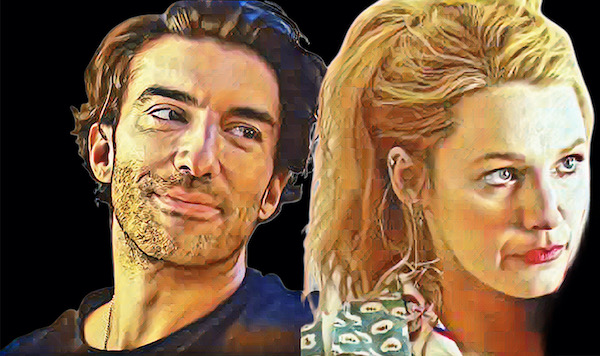
What’s really at stake here—beyond the millions of dollars or public image—is a battle of credibility. And for now, Blake Lively has won this round. Although Baldoni’s legal team has until June 23 to amend their remaining claims, the judge’s decision signals a significant erosion of their case. In the court of public opinion, Baldoni is already seen as having launched a desperate countersuit to salvage his career—and lost.
It’s worth remembering that It Ends With Us, released in August 2024, was already surrounded by controversy even before the accusations—ranging from criticism of the film’s tone to reports of creative tensions on set. Now, the project’s legacy is indelibly marked by this legal spectacle, which overshadowed any artistic discussion. Ironically, the movie’s plot centers on psychological abuse and overcoming trauma, making the real-life parallels even more fraught.
Another central figure in this saga was Ryan Reynolds. While not directly involved in the harassment claims, he was named by Baldoni as part of a “deliberate campaign” to ruin him—an accusation also rejected by the court. Many industry observers saw Baldoni’s decision to drag Reynolds—one of Hollywood’s most beloved and media-savvy stars—into the legal battle as a major miscalculation.
So what does this outcome say about today’s entertainment industry? On one hand, it reinforces that harassment allegations can no longer be easily silenced through NDAs or legal intimidation, especially when leveled by high-profile figures like Blake Lively, who chose to go public and pursue full accountability. On the other hand, it exposes how celebrities (on both sides) can weaponize the media and the legal system in public reputation wars—something we’ve seen increasingly in Hollywood, from Depp v. Heard to Shia LaBeouf v. FKA twigs and Jonathan Majors’ legal troubles.
The public, meanwhile, remains split: some accused Lively of opportunism, while others praised her for breaking the silence. Baldoni’s image, however, has taken a severe hit, with major projects at Sony and Netflix reportedly paused or reassessed.
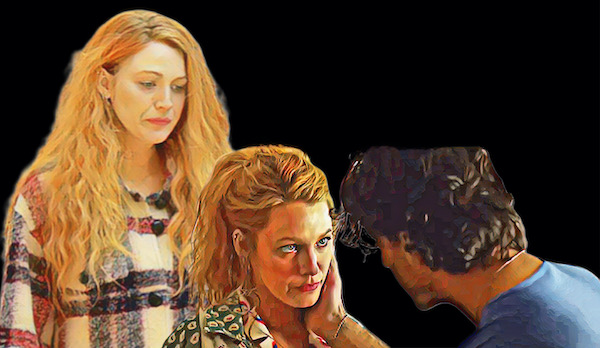
For Blake Lively, this legal win is more than just a judicial result—it’s symbolic. She didn’t just survive a $400 million lawsuit; she emerged as a forceful voice against behind-the-scenes abuse in Hollywood—something critics had long said was lacking in her career narrative. The image of the “elegant blonde from Gossip Girl” is giving way to that of a combative figure who stood up to a co-star, the press, and a massive lawsuit—and won.
And for Justin Baldoni? The future is uncertain. With his case now dismantled, he may attempt a public redemption arc through new projects, but the dust has yet to settle. Hollywood is watching—carefully. As one legal analyst told Deadline, “He bet everything… and the court made him pay the price.”
Descubra mais sobre
Assine para receber nossas notícias mais recentes por e-mail.
 miscelana.com
1 comentário Adicione o seu