
In a few weeks, the acclaimed documentary My Mother, Jayne will premiere on the MAX platform. Written and directed by actress Mariska Hargitay, star of the brilliant series Law & Order: SVU, the release date coincides with the anniversary of Jayne Mansfield’s death — a Hollywood icon who began her career as “the new Marilyn Monroe” and is most often remembered for her tragic and violent death in a car crash at the age of 34.
Before diving into the documentary review, which will come in two weeks, it’s worth asking: Who was Jayne Mansfield?
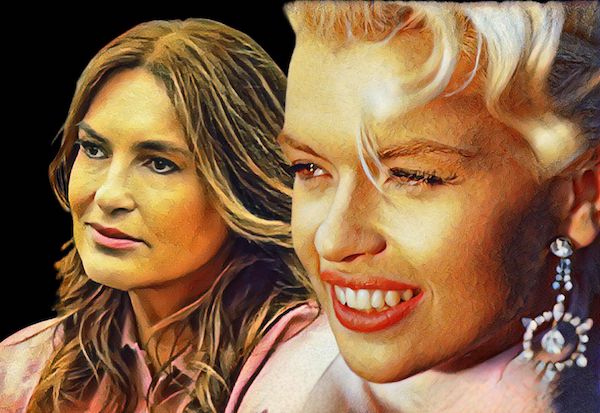
As mentioned, Jayne Mansfield was an actress, singer, and sex symbol of the 1950s. She died tragically on June 29, 1967, at the age of 34, in a violent car crash in Louisiana, USA. Her untimely death ended a career marked by boldness, charisma, and a magnetism that transcended the screen, while also highlighting the fragility of public figures in a culture obsessed with spectacle. To this day, Mansfield is remembered not only for her talent but also for the myth she built — one that ultimately consumed her.
Born Vera Jayne Palmer on April 19, 1933, in Bryn Mawr, Pennsylvania, Jayne lost her father at an early age and moved with her mother to Dallas, Texas. From childhood, she displayed a passion for the arts and remarkable intelligence: she spoke five languages, played the violin and piano, and was a member of Mensa, the high-IQ society. She studied drama at the University of Texas and later at UCLA in Los Angeles.
Inspired by Marilyn Monroe and the culture of the “blonde bombshell,” Jayne Mansfield quickly drew attention for her voluptuous figure and her gift for self-promotion. She signed with 20th Century Fox and starred in hits such as The Girl Can’t Help It (1956), Will Success Spoil Rock Hunter? (1957), and Kiss Them for Me (1957), alongside Cary Grant.
Unlike other actresses of her time, Mansfield actively positioned herself as a sex symbol and understood the value of her public image. She was one of the first celebrities to pose nude in a mainstream publication — appearing in Playboy in 1955 — and used scandal and publicity as deliberate marketing tools.
Jayne was married three times and had five children, including Mariska Hargitay, now known for her role in Law & Order: SVU. Her personal life attracted as much media attention as her career: lavish parties, legal disputes, financial troubles, and a peculiar interest in the occult — including her controversial friendship with Anton LaVey, founder of the Church of Satan — all fed her reputation as a woman who defied convention.
Despite her hypersexualized public persona, Mansfield was a cultured woman, a voracious reader of Shakespeare and philosophy — a stark contrast to the comic and superficial roles she was typically offered.

With the decline of Hollywood’s Golden Age and the rise of new cultural icons in the 1960s, Mansfield’s career faded. She was replaced by other muses of the era, such as Brigitte Bardot and Sophia Loren (with whom she famously had a “cleavage showdown” at a Beverly Hills dinner party).
No longer receiving leading roles, Mansfield turned to low-budget European films and nightclub and casino performances, trying to hold on to fame while facing financial and emotional difficulties.
In the early hours of June 29, 1967, Jayne was traveling with three of her children, her driver, and her boyfriend, Sam Brody, to New Orleans when their car collided with a truck spraying insecticide on the highway. Jayne, Brody, and the driver were killed instantly; her three children survived with minor injuries. The violent accident led to the implementation of the “Mansfield bar,” a safety feature now required on the rear of tractor-trailers to prevent similar under-ride collisions.
Rumors and urban legends multiplied in the wake of her death — including the false claim that she was decapitated — fueled by sensationalist reports and the gruesome nature of the crash.
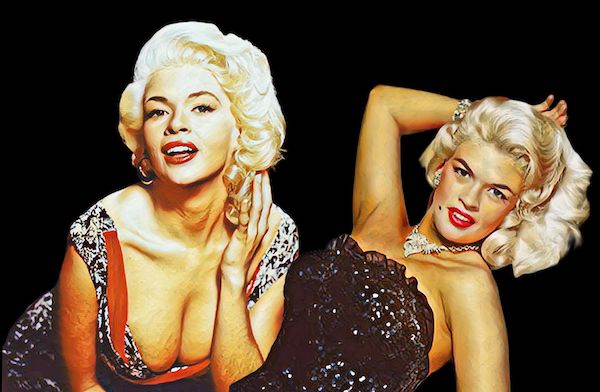
Jayne Mansfield left behind a complex legacy. In her lifetime, she was often underestimated as an actress — typecast in “dumb blonde” roles — but today she is being reassessed as a key figure in understanding Hollywood’s construction of female image, the commodification of the female body, and the use of scandal as a form of power.
Her charisma, intelligence, and sense of spectacle paved the way for future generations of women who would use pop culture as a platform for agency. Mansfield was, perhaps, one of the first postmodern celebrities — fully aware of the image she projected and determined to control her own narrative.
Today, more than just a pin-up, she is seen as a symbol of transgression, self-expression, and the fine line between fame and tragedy.
Descubra mais sobre
Assine para receber nossas notícias mais recentes por e-mail.
 miscelana.com