
Sometimes a film marks history not only for its immediate impact, but for the silent permanence it leaves in our notions of freedom, authority, madness, and resistance. Released exactly fifty years ago, One Flew Over the Cuckoo’s Nest remains one of those rare films that transcend time—not as a relic, but as a warning. Starring Jack Nicholson and directed by Miloš Forman, the film swept the “Big Five” Academy Awards — Best Picture, Best Director, Best Actor, Best Actress, and Best Adapted Screenplay — and became a universal classic. However, the road to it was long, tortuous, and fraught with ideological, artistic, and personal conflicts.

The story began in the early 1960s, when a young Ken Kesey was working the night shift at Menlo Park Veterans’ Hospital in California. There, often under the influence of hallucinogenic drugs he volunteered to test, Kesey would talk to the patients and came to a striking realization: these men were not “crazy” in the clinical sense, but rejected by a society that refused to tolerate behavior outside the norm. From this experience came the novel One Flew Over the Cuckoo’s Nest, published in 1962 under the guidance of editor Malcolm Cowley. The book was an immediate success and, the following year, was adapted into an acclaimed stage play by Dale Wasserman.
The title carries deep symbolic weight. “One flew over the cuckoo’s nest” comes from a nursery rhyme quoted in the novel: “One flew east, one flew west, and one flew over the cuckoo’s nest.” In English, “cuckoo” is slang for “crazy,” and the “nest” metaphorically represents the psychiatric institution. To fly over that nest is, therefore, a metaphor for transcendence and escape—both physical and spiritual—from oppression. In the book, the line is spoken amid the hallucinations of Chief Bromden, the Native American narrator who sees the hospital as part of a dehumanizing machine. For Kesey, madness resided not in the patients but in the structures demanding blind obedience.

Despite the play’s success, actor Kirk Douglas—who had bought the film rights back in the ’60s and starred as McMurphy on Broadway—spent over a decade trying to adapt it for the screen. His dream was to play McMurphy in the film, but studios considered the project “difficult” or “uncomfortable” and consistently turned it down. Only in 1971, after many legal battles, did his son Michael Douglas convince him to hand over the rights. Michael, then young and politically engaged, saw in McMurphy’s story—a regular man taking on the system—a mirror of the era’s social struggles. He brought the project to producer Saul Zaentz of Fantasy Records, and together they set out to make the film.
The director chosen was Miloš Forman, the same one Kirk Douglas had tried to hire years earlier in Prague, before the Soviet invasion crushed the Prague Spring. Now living in exile in the U.S., Forman read the book and saw himself in it: “The story wasn’t just literature to me, it was my life. The Communist Party was my Nurse Ratched.” Struggling with his own mental health and isolated in New York, Forman threw himself into the project with a rare intensity.


Forman dismissed Kirk Douglas for the lead role, claiming he was too old. This strained the relationship between father and son for years. Gene Hackman, Marlon Brando, and Burt Reynolds were considered until Jack Nicholson accepted the part and immersed himself in the character with legendary intensity. He visited hospitals, observed electroshock therapy sessions, and fully integrated himself into the institution’s environment.
Filming began in January 1975, inside the very Oregon State Hospital where the story is set. The hospital’s director, Dean Brooks, not only allowed access but also appeared in the film and encouraged real patients—some of them criminally insane—to participate. The sense of realism is palpable. Group therapy sessions were filmed with three cameras simultaneously to capture genuine reactions. Behind the scenes, however, tensions ran high. Cinematographer Haskell Wexler was fired over creative (or political) differences, and Nicholson didn’t speak to Forman for weeks.

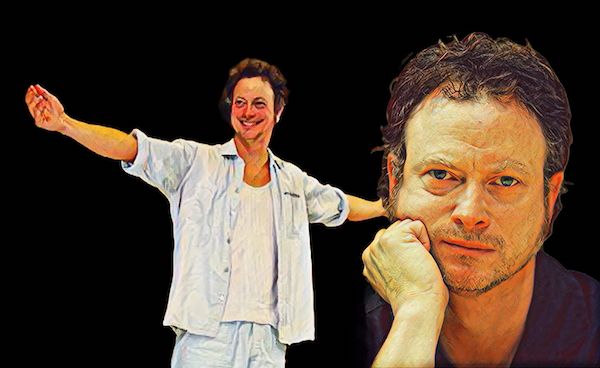
Years later, I saw Gary Sinise play McMurphy on Broadway—and I never forgot it. The script remains powerful, and the theatrical setting highlights the battle between the individual and the system with even more force. Sinise brought a darker, more sardonic tone, different from Nicholson’s anarchic warmth, but equally devastating. It’s proof that this story still lives on through different interpretations.
The film premiered in November 1975 and quickly became a phenomenon. It was the second highest-grossing film of the year in the U.S. and broke international records. It won all five major Oscars and cemented Nicholson and Louise Fletcher—brilliant as the cold Nurse Ratched—into cinematic history. To this day, it remains one of only three films to win the “Big Five,” along with It Happened One Night and The Silence of the Lambs.

Kesey, however, claimed he never watched the film—allegedly because of a dispute over the $20,000 he was paid for the rights. He hated that the film, unlike the book, wasn’t told from Chief Bromden’s perspective and disliked Nicholson’s casting (he had preferred Gene Hackman). Even so, his wife later said he was ultimately pleased the film was made and proud of its impact.
Fifty years later, One Flew Over the Cuckoo’s Nest still challenges viewers to reflect on what is normal, who makes the rules, and what it costs to break them. McMurphy, as the “one” who flew over the nest, shows us that sometimes, true sanity lies in refusing to conform.
Descubra mais sobre
Assine para receber nossas notícias mais recentes por e-mail.
 miscelana.com