
Stopping the world before the age of social media and the Internet required a powerful combination—much greater and rarer than what we see today. You’ve probably heard that before, but it’s a truth that generations under 40 may never fully grasp. In the case of television and cinema, months or even years could pass between premieres, creating anticipation while also diminishing the impact that simultaneous releases now deliver. Within that context, the impact of a made-for-TV film that changed the course of international politics remains astonishing—at a time when the start of World War III, as a result of the Cold War, was a real and present fear.
Premiered on November 20, 1983, by ABC, The Day After was not just a television film—it was a cultural and political earthquake. Broadcast at the height of the Cold War, the film, directed by Nicholas Meyer, portrayed with unprecedented realism the devastating effects of nuclear war on ordinary civilians in a small town in the interior of the United States. It depicted what would happen in the hours and days following a nuclear attack, with scenes that scarred a generation, sparked panic, moved world leaders, and shifted the direction of American nuclear policy.
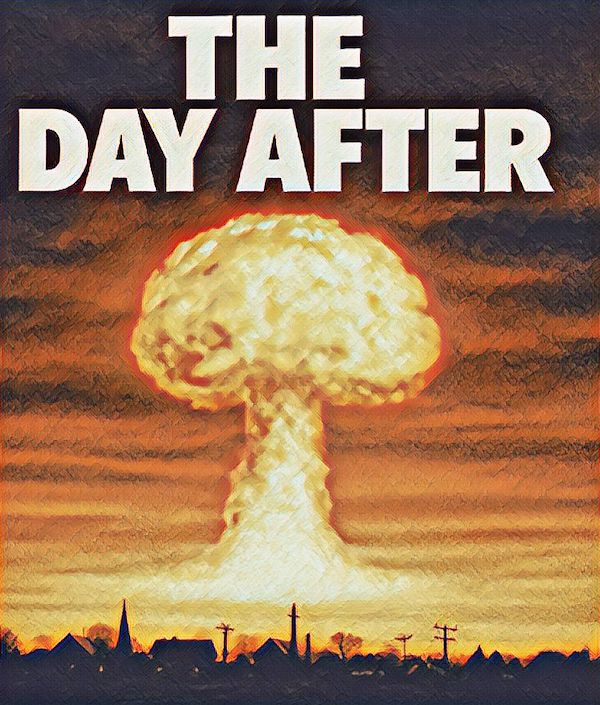
The project originated with Brandon Stoddard, then-president of ABC Motion Picture Division, who, after watching the film The China Syndrome, realized the potential of entertainment to provoke social change. He wanted a film that wouldn’t focus on generals or presidents, but on regular citizens under nuclear attack. Screenwriter Edward Hume was tasked with the story, and Nicholas Meyer, acclaimed for Star Trek II, took the director’s chair. Initially, the film was to run for 180 minutes over two nights. Meyer considered the script bloated and proposed condensing it into a single two-hour-and-twenty-minute event. ABC hesitated but eventually agreed—though it later imposed significant cuts.
For six months, Meyer and the network clashed. ABC feared both the graphic content and the political implications of the film. Numerous cuts were demanded: scenes showing traumatized children, nightmares, military executions, and severe radiation effects were either removed or softened. Meyer and his editor, Bill Dornisch, resisted. Dornisch was fired, and Meyer himself walked away from the project for a time. When other editors failed to satisfy the network, he was called back. The final result was a 120-minute version—significantly milder than the original cut, but still harrowing. Even with censorship, scenes of nuclear blasts, societal collapse, burns, and radioactive suffering stunned audiences.
At the same time, a parallel campaign gained traction: anti-nuclear activists Josh Baran and Mark Graham obtained a pirated copy of the film before its official airing. Dubbed The Day Before, the initiative aimed to “hijack” ABC’s marketing by organizing early screenings in churches, bars, and universities, gathering peace leaders, journalists, and even the Pope. According to Variety magazine, it became “the largest public relations campaign in history” and forced ABC to keep the film on the air despite mounting political pressure. Rumors even suggested that President Ronald Reagan tried to block the broadcast.
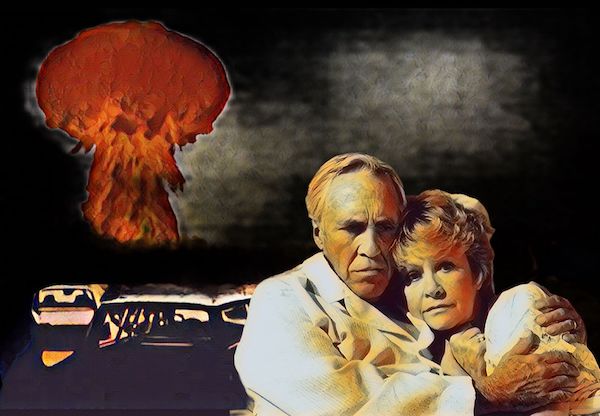
The premiere was preceded by intense promotion and the distribution of over half a million “viewer guides” warning of graphic content and preparing audiences for the experience. Actor John Cullum appeared on screen before the film, urging parents to watch with their children and discuss the issues raised. Nevertheless, many planned scenes were cut—such as aerial shots of Kansas City during detonations, NATO battles against the Warsaw Pact in Germany, and survivors looting supermarkets or fighting over food.
Extremely graphic effects—including melting faces, burns down to the bone, deaths by shrapnel, and suffocation in fallout shelters—were removed. A firing squad of American soldiers, depictions of acute radiation sickness, and a confrontation between students fighting to survive were also excluded from the initial broadcast, although some of these scenes were later restored in home video releases.
On the night of the broadcast, 38.5 million households tuned in—over 100 million viewers total—an absolute record for a TV movie. After the broadcast, a live debate moderated by Ted Koppel featured figures like Henry Kissinger, Carl Sagan, Elie Wiesel, and Robert McNamara. The response was massive. The Day After graced the covers of Time, Newsweek, TV Guide, and U.S. News & World Report. Some critics found the film “too soft”; others accused it of “sensationalism.” But all acknowledged its impact.
In Brazil, still under a military dictatorship, The Day After was not first shown on television but in movie theaters. It premiered on January 19, 1984, and only reached TV Globo in the 1990s. VHS versions were available at rental stores.
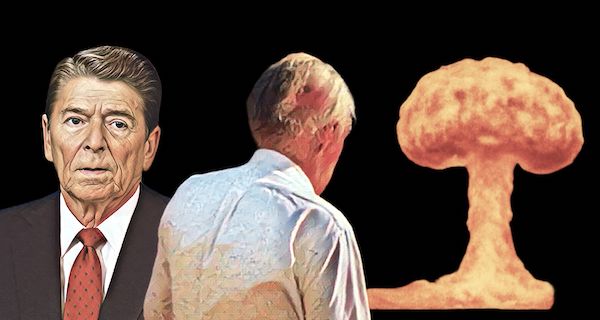
In the United States, President Reagan watched the film in a private screening in October 1983. In his diary, he wrote that it was “very effective and deeply depressing,” admitting it changed his perspective on the potential of nuclear war. Meyer was told that during a screening for the Joint Chiefs of Staff, the military audience was “petrified.” While no official thank-you telegram was sent—as one myth later claimed—there are signs the film was discussed inside the White House and influenced Reagan’s decisions.
Four years later, in 1987, Reagan signed the Intermediate-Range Nuclear Forces Treaty with Mikhail Gorbachev, eliminating an entire class of nuclear missiles. In his memoirs, the former president drew a direct line between The Day After and his decision to pursue arms reduction. The film also made waves abroad: during the glasnost era, it aired on Soviet television, and a group of American congressmen even proposed broadcasting it in the USSR as a diplomatic tool.
Technically, the film was praised for its visual effects—despite the edits—and received 12 Emmy nominations, winning two: Best Art Direction and Sound Editing. It also won a Writers Guild Award and has been recognized by critics and scholars over the decades. Director Nicholas Meyer later wrote that The Day After “downplayed the actual effects of nuclear war to tell a story” and asked ABC to include that warning at the end of the film, along with a list of suggested reading on the topic.
Decades later, its impact endures. The documentary Television Event (2020) revisited its history and showed how art can provoke real change. The Day After was not merely a work of fiction—it was a cultural intervention, a grim warning, and, perhaps, a small contribution to averting the worst.
Descubra mais sobre
Assine para receber nossas notícias mais recentes por e-mail.
 miscelana.com
1 comentário Adicione o seu