
We’re back with The Gilded Age, picking up several months after where we left off in 2023. A lot feels out of place—starting with a snowstorm just weeks before spring—which is a sign that, beneath the unseasonal frost, things are heating up fast!
Yes, the show’s pacing has quickened, the drama has intensified, and the cast’s chemistry is undeniable. So let’s recap the episode, which had already “leaked” after being screened at the Tribeca Festival a few weeks ago.

I have to confess something that might get me stoned—but it’s true. Every time the show focuses on George Russell’s business dealings, that eternal quest to be ruthless and victorious, I get bored. There’s never any real risk for him. You just have to wait, and everything will swing his way, whether it’s Marian bumping into the scheming secretary in Season 1, or the risky labor negotiations in Season 2. Now in Season 3, we see him already facing two issues: the ambitious plan to extend the railroad to California—making him even richer—and the threat of his fortune disappearing with a potentially failing bank. Maybe this is The Gilded Age‘s chance to incorporate real historical events, but… who really cares?
In New York, the snow may be falling, but emotions are boiling. Peggy is thriving personally and professionally, with her stories being published and a renewed bond with her parents. Her issue is the universal “mother’s curse”—Dorothy warns her that walking to the train station is a health risk, and bingo, Peggy catches what looks suspiciously like pneumonia.
And now, with more weight than ever, The Gilded Age confronts the issue of racism in the era. Agnes Van Rhijn may be old-fashioned in many ways, but she stands out as remarkably modern-minded when it comes to rejecting the open racism of the time. She defends Peggy—even against the doctor who refuses to treat her because she’s “colored.”
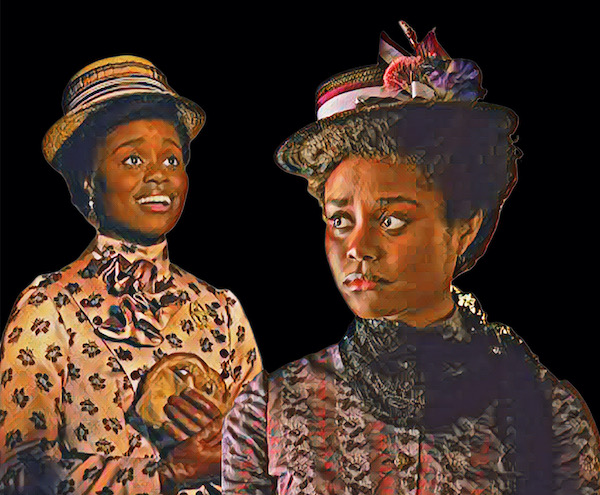
This episode plants the seed to unite Brooklyn and Manhattan, as the Scotts come to rescue their daughter and finally meet the Van Rhijns. It probably also marks the introduction of Peggy’s future love interest: the handsome doctor from Newport.
And since we’re on 61st Street near Central Park, let’s talk about the other storylines.
Marian and Larry are still in love, though trying to hide it (or pretend to) from others since their romance began in the final moments of Season 2. Marian is nervous—she may argue with Aunt Agnes, but she still listens to her. She knows she’s “exposed” after being so “blind” (her own words) with Tom Raikes and then being talked into an engagement without love, breaking it off with Dashiell Montgomery. It’s unclear how long she thinks they need to wait. Larry asks her not to drag it out too long, but overall, they’re very much in sync—just trying to play the game as expected.
Marian has landed another job (with Larry’s support), and we learn Larry works for his father without a proper salary, so they’re all betting on Jack’s invention. I’m a bit uncomfortable with how snobbish and ambiguous Larry has become with Jack, while everyone around is warning Jack that something’s off with this “partnership.” Let’s not forget Larry is a Russell—up until now, he’s been pure as driven snow, but is that about to change?

With the Van Rhijns’ financial downturn, Oscar had to move back home and is clearly depressed about the new reality. He’s not homeless, but he has to obey his mother, his aunt, and—at least somewhat—Marian. I’d be drinking in my room all day, too.
The bickering between Agnes and Ada is at its peak, and everyone is confused by—and suffering from—the new dynamic. Ada is more assertive than ever and once again seems energized by causes that annoy Agnes. This time it’s the Temperance movement. “Temperance” refers to moderation or abstinence from alcohol. Initially, it promoted moderation, but over time, it evolved into a call for total prohibition.
In the 1880s, the movement wasn’t just moral preaching—it was political, mass-mobilizing, organizing, and influencing laws. Here, it will be a major problem for the Van Rhijn household, not only because of the hypocrisy involved but also the imposition Ada might try to make, forcing everyone to follow her lead.
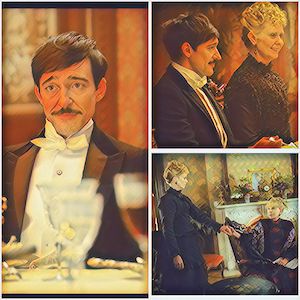
The biggest bombshell of the episode, however, was the sudden twist in the Fanes’ marriage—one of the most stable and aligned couples of the past two seasons. I never trusted Charles Fane. He was one of the men who tried to swindle George Russell in Season 1, and with no remorse, forced Aurora to pay the “debt,” going against everyone—including Agnes—by embracing Bertha Russell and opening society’s doors to her. So, “out of nowhere,” Charles shows up at home to announce not only that he has a mistress, but that he wants to marry her and therefore wants a divorce.
Divorce drama in Gilded Age society is iconic—central to classic novels by Henry James and Edith Wharton—and I’m thrilled to see the issue tackled in the show. Bad luck for Aurora, but essential for the plot. When Charles said he had fallen in love with a widow, I panicked, thinking it might be Susan Blaine (who had a fling with Larry), but thank God it’s someone else. Still, Aurora is trying to stall and reverse the situation to maintain a marriage of appearances, but that seems unlikely. Marian, who understands the desire to be happy in marriage instead of settling, believes her aunts will support Aurora, but both Ada and Agnes make it clear: not even their love for their niece will be enough. If there’s a divorce, Aurora will be socially exiled. It’s heartbreaking.

And of course, marriage is everyone’s drama. Larry wants to marry Marian. Aurora wants to stay married to the unfaithful Charles. Gladys wants to marry Billy (who wants to marry her), but Bertha is determined that her daughter become the Duchess of Buckingham. At this point, no one doubts that what Bertha wants, Bertha gets. The children’s only hope is George’s return so he can step in—or rather, keep the promise he made to Gladys that he’d support her when she wanted to marry for love.
Season 3 is poised to rip the mask off the “hero couple” image of Bertha and George—two ambitious and ruthless players who manipulate everyone and everything to get what they want. Bertha’s arguments about Larry and Gladys’s youth and inexperience might be valid. Bertha and George were in the same boat when they married for love—but their children aren’t. They’re millionaires who’ve never really faced life without luxury. Talking about love and ideals—for them—is naive, even hypocritical.
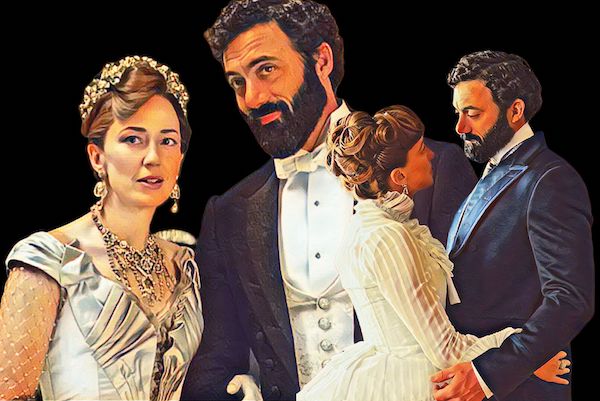
Right now, the spotlight is on Gladys, but I maintain that even Marian’s traditional background won’t be enough for Bertha to accept her as a daughter-in-law. And if George is on the verge of losing everything, as it seems, he won’t be concerned about his daughter wanting to marry “for love” either—especially since she already fell hard for Archie Baldwin and even accepted Oscar’s proposal once. It’ll be easy for the parents to bring up those past passions as evidence that she’s still immature, and they know better.
The fact is, it’s Larry who suggests she run away—and that’s exactly what she does at the end of Episode 1. If we hadn’t seen it in the trailers or official stills, we’d be anxious—but she’ll be found or come home. This is just the beginning!
What did you love most about the episode?
Descubra mais sobre
Assine para receber nossas notícias mais recentes por e-mail.
 miscelana.com