
When, in The Great Gatsby, F. Scott Fitzgerald describes his protagonist wearing a pink suit, the detail is anything but incidental. Nick Carraway, the narrator, notes it with a tinge of judgment: Gatsby had tried so hard to seem like a gentleman, but now he appeared in “a pink suit” — a color that, in 1920s society, compromised his seriousness, masculinity, and even his social standing. The pink suit wasn’t just an outfit; it was a symbol of excess, artificiality, and inadequacy. And, at the same time, of desperate romanticism. After all, Gatsby wore it to impress Daisy.
That scene reveals a lot about how pink has been culturally coded. For a long time associated with femininity, frivolity, or even queerness, pink had to fight for its place in men’s wardrobes. But that hasn’t always been the case.

Pink used to be masculine
In the 17th and 18th centuries, particularly in European aristocratic circles, pink was a color of power. In royal portraits from the French and English courts, nobles and kings — including Louis XV — wore pink coats, stockings, and waistcoats, often adorned with lace, gold, and embroidery. Pink was seen as a strong, warm hue, connected to red, and thus linked to virility, eroticism, and prestige. It wasn’t considered weak — it was elegant.
That perception began to shift in the 19th century. With the rise of Victorian morality, stricter gender roles, and the modern bourgeois class, men’s fashion became more sober and utilitarian. Pink gradually fell out of favor and into the domain of women and children.
Curiously, even in the early 20th century, pink wasn’t yet assigned to girls. In American children’s clothing catalogs from the 1910s and 1920s, pink was often recommended for boys — for being more vibrant — while blue was considered delicate and therefore better for girls. It was only in the 1940s and ’50s, with the growth of the fashion industry and advertising, that the division became fixed: pink for girls, blue for boys.

Modern-day prejudice
In the 20th century, pink became a symbol of femininity, emotionality, and — particularly in conservative contexts — homosexuality. In male-dominated spaces like schools, armies, and boardrooms, wearing pink was often unthinkable.
The stigma ran deep. Under Nazi rule, homosexual men were forced to wear pink triangles in concentration camps. That historical trauma left a lasting cultural imprint and deepened the association between pink and “deviance.”
Even in pop culture, few dared to wear it. Pink was reserved for flamboyant or comedic characters, or those with highly stylized personas — like Elton John or Prince — and even then, within carefully constructed fantasy or queer contexts.
The comeback: from the 2000s to Barbiecore
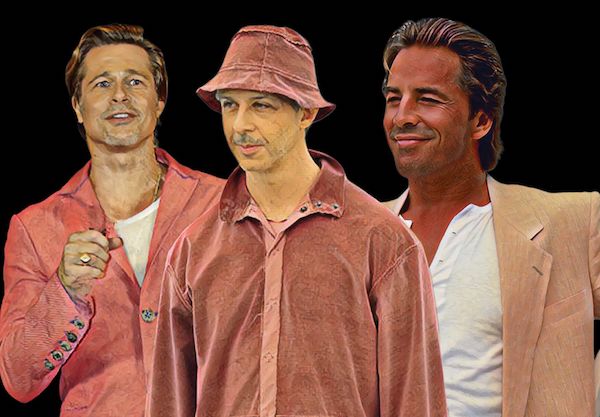
It wasn’t until the 2000s that pink began to reenter men’s fashion noticeably. The rise of the “metrosexual” — an image of the urban, fashion-conscious man — brought back light pink polos, sneakers, and accessories. But the trend was cautious, more of a novelty than a revolution.
The real shift began in the mid-2010s. Pink stopped being a pop of color and started making bolder statements. High fashion gave early signals: Gucci, under Alessandro Michele, debuted entire pink suits in pastels and hot pinks, paired with a romantic, gender-fluid aesthetic.

At the same time, society was changing. Discussions around toxic masculinity were gaining ground, and younger generations no longer saw emotional expression — or fashion experimentation — as a threat to masculinity. Pink became desirable again — not as a gimmick, but as a language of confidence and identity.
Then came the Barbiecore explosion. Between 2022 and 2023, the release and global success of Barbie (directed by Greta Gerwig) made pink omnipresent — in runways, red carpets, campaigns, and social media feeds. And men were fully invited to the party.
Celebrities who wear pink fearlessly
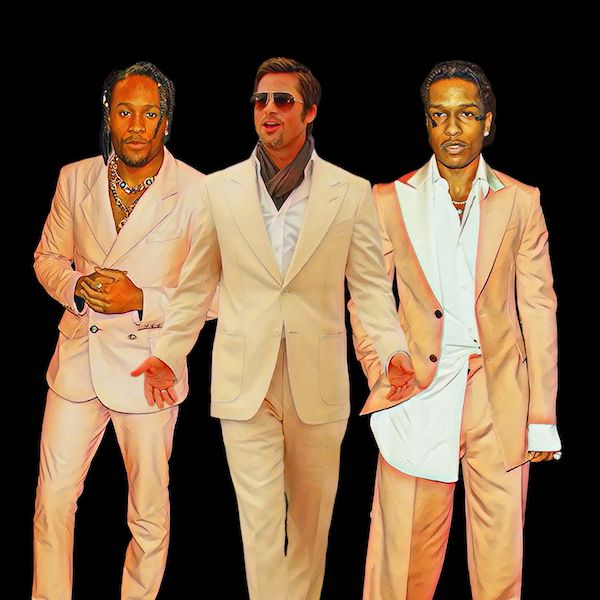
Today, pink suits — and pink in general — are no longer taboo. They’ve become symbols of taste, rebellion, and self-expression. Some of the world’s most stylish men now wear pink as naturally as black.
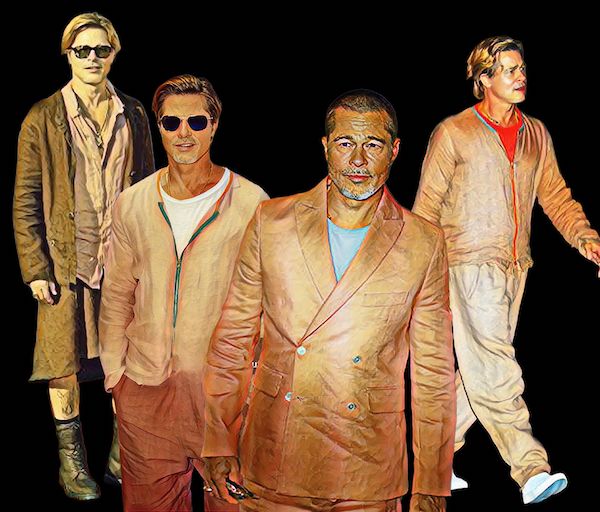
In cinema and on red carpets, actors have embraced pink with unexpected confidence. Brad Pitt made headlines in 2022 when he wore a pink linen suit with a matching skirt to the Berlin premiere of Bullet Train, a bold and deliberate choice that suggested masculinity and softness need not be opposites. Timothée Chalamet, with his ethereal style, has also embraced pink in various forms — from sheer pink fabrics to pastel tailoring, always challenging norms with elegance. Jared Leto, known for his flamboyant persona and his long-standing relationship with Gucci, frequently steps out in vibrant pinks, from silk suits to metallics, blurring the lines between fashion and performance.
Ryan Gosling, in the wake of Barbie, turned pink into a personal statement, incorporating it into his entire press tour wardrobe — whether in velvet, satin, or glittering suiting, his Ken persona merged seamlessly with his fashion sense. Andrew Garfield, often more understated, has also embraced pink with subtle sophistication, choosing shades like salmon or dusty rose to soften and modernize traditional menswear. Billy Porter, always theatrical and unapologetically political in his fashion, uses pink in capes, gowns, and hybrids of tuxedos and dresses — making it a symbol of queer power and presence.
In the music world, Harry Styles is perhaps the most prominent face of pink in the 2020s. From his Fine Line album cover to his Vogue photo shoots and stage outfits, pink is central to his vision of gentle masculinity, adorned with pearls and ruffles. Lil Nas X wore an unforgettable hot pink cowboy outfit to the 2020 Grammys, later continuing to experiment with pink as a tool of disruption, queerness, and fun. Bad Bunny, one of Latin America’s most influential artists, has used pink to great effect in music videos and fashion editorials — often blending it with streetwear, sensuality, and cultural pride.

In sports, pink has made surprising appearances. Formula 1 champion Lewis Hamilton wears pink regularly, whether as part of sleek, tailored suits or as high-end streetwear, showing that athleticism and fashion-forward aesthetics are not mutually exclusive. Brazilian football star Neymar Jr., with his global reach and love for designer fashion, has also been seen in pink outfits in campaigns and public appearances, helping to popularize the color among younger men across cultures.
Pink: from taboo to power tone
Today, pink is no longer “just for girls.” It’s a statement of style, freedom, and sophistication. While prejudice lingers in some corners, it’s been largely outshone by a wave of men in the public eye wearing pink with pride — and often with flair.

Pink now stands for aesthetic confidence and narrative control. It can be romantic, sexy, ironic, dramatic, or quietly elegant — depending entirely on how it’s worn and who’s wearing it. Where men once avoided pink for fear of seeming weak, now they wear it to show they have nothing to prove.
If Gatsby wore his pink suit in a desperate attempt to fit into a world that would never truly accept him, men today wear pink to say, with boldness and elegance, that they no longer need the world’s permission.
Descubra mais sobre
Assine para receber nossas notícias mais recentes por e-mail.
 miscelana.com