
The latest delight for viewers of The Buccaneers and The Gilded Age is uncovering the real-life stories behind the series. Yes, both shows borrow elements that might seem fictional, but are actually deeply rooted in historical truth.
When Edith Wharton conceived The Buccaneers, her unfinished novel about young American women seeking social ascension through marriage with English aristocrats, she didn’t just create vibrant and dramatic characters—she outlined a fictional portrait of the so-called “American invasion” of the British aristocracy in the late 19th century. Among these characters, Lizzy Elmsworth stands out as a quietly striking figure—and also one of the most directly inspired by a real woman: Jennie Jerome, who would become Lady Randolph Churchill, mother of Winston Churchill.

This connection is no coincidence. Both Lizzy and Jennie were born in the United States to families of “new money”. They faced the scorn of the British elite when they crossed the Atlantic in pursuit—declared or not—of titles, status, and acceptance in a rigidly stratified society. But while Jennie Jerome entered history books for her political charm, intelligence, and scandals, Lizzy Elmsworth was only a supporting character in the book. Ironically, she gains prominence in the Apple TV+ series through a controversial and intense storyline.
The Real Jennie
Jennie Jerome was born in 1854, the daughter of a New York financier. Her mother, ambitious and determined, took the family on seasons in Paris and London to forge connections with European high society. At the age of 20, Jennie met Lord Randolph Churchill and married him after just three days. The marriage was anything but peaceful—marked by mutual infidelities, social scandals, and political intrigues. Nevertheless, Jennie played a crucial role in her husband’s public life and later in her son Winston’s career, with whom she had an intense and strategic relationship.
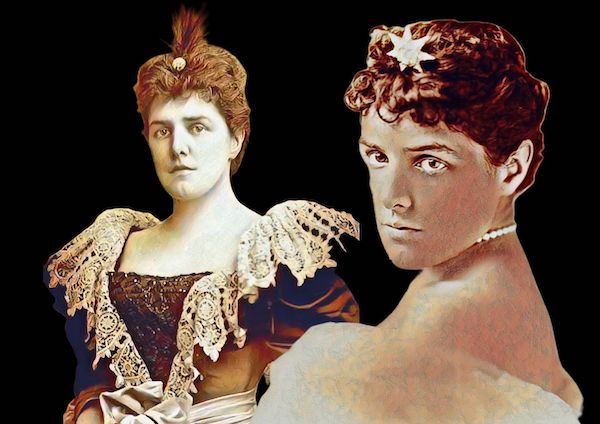
Jennie was known for her striking beauty, but also for her sharp intelligence and mastery of British social codes, despite being constantly reminded of her American origins. Her life was marked by losses—including the early death of Randolph—and constant reinvention. She married two more times, both to younger men. Though often sidelined, she always orbited power.
The Fictional Lizzy
Lizzy Elmsworth, in Wharton’s novel, shares that American origin and the desire—often forced by family circumstances—to enter British aristocratic society. Although she doesn’t occupy as much narrative space as other buccaneers—such as Nan and Jinny St. George or Conchita Closson—she is portrayed as intelligent, astute, and emotionally perceptive. The novel’s famous line—“Lizzy Elmsworth was not a good-tempered girl, but she was too intelligent to let her temper interfere with her opportunities”—captures that balance between ambition and restraint that defines her journey.

In the Apple TV+ series, Lizzy is given far more depth and prominence, especially through a dark and painful arc: the abuse she suffers at the hands of Lord Seadown in season one and its quiet emotional aftermath. While the writers diverge radically from Wharton’s original—going so far as to make Lizzy a lover of Duke Theo, a highly debatable choice—the emotional core of the character remains faithful to her historical inspiration: a young woman trying to survive (and assert herself) in a world that demands much but offers little.
Other Real Inspirations
The construction of the characters in The Buccaneers is deeply rooted in historical figures from the “Dollar Princess Era,” when dozens of American heiresses married into the British nobility. One of the most emblematic was Consuelo Vanderbilt, daughter of Alva Vanderbilt. Wealthy, beautiful, and educated with the sole purpose of becoming a duchess, Consuelo was forced by her mother to marry the Duke of Marlborough. She despised both the man and the life imposed upon her, yet fulfilled the role flawlessly—until divorcing him and reinventing herself as a philanthropist and memoirist. Her story strongly echoes that of Nan St. George, especially in the show’s second season.
Another crucial figure is Mary Leiter, daughter of a Chicago magnate and future Lady Curzon. Highly cultured and sensitive, Mary lived under intense pressure at the British and Indian courts. Her marriage to George Curzon, Viceroy of India, placed her at the center of British colonial power but also subjected her to the isolation and demands that impacted both her health and her freedom. Mary may well have inspired the character of Jinny—beautiful, desired, and trapped in a marriage that serves society more than the heart.
Between Romance and Revisionism
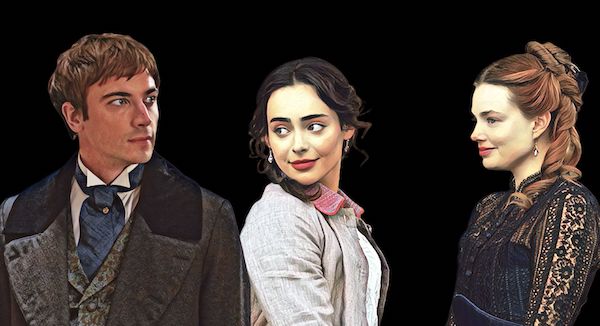
The new adaptation of The Buccaneers clearly takes liberties with both the text and the historical context that inspired it. At times, this results in touching scenes, especially when focusing on Lizzy’s invisible wounds. At others, it sacrifices depth for the sake of drama—as with the Theo-Nan-Lizzy triangle, which risks flattening the emotional complexity of all involved.
Even so, something is fascinating about this attempt to revisit, through contemporary lenses, what Edith Wharton only began to write. Lizzy Elmsworth, even distorted by certain writing choices, remains a bridge between fiction and history—a reminder that behind every “Dollar Princess” was a young woman striving to reinvent herself in a world of rigid rules, silent judgments, and opportunities disguised as traps.
Descubra mais sobre
Assine para receber nossas notícias mais recentes por e-mail.
 miscelana.com