
She was once called “a sort of Sylvia Plath with a guitar in her hand.”
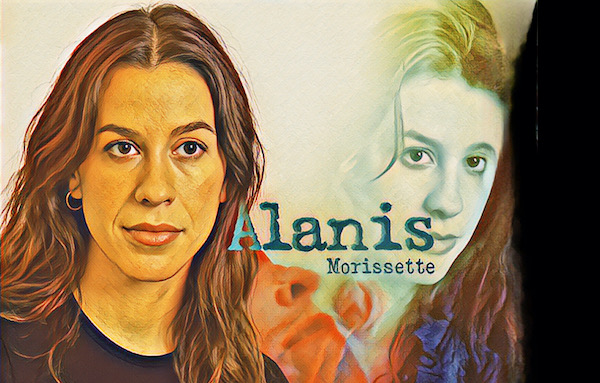
In June 1995, a 21-year-old Canadian woman shattered the ambient soundscape of a decade anesthetized by boy bands, bubblegum pop, and harmless ballads. Alanis Morissette screamed, whispered, and confessed 12 tracks of pain, rage, longing, sarcasm, and emotional rawness on an album no one saw coming: Jagged Little Pill. Thirty years later, the relevance of her lyrics has only grown—and perhaps now, we’re finally able to grasp what she already knew: female anger isn’t a flaw, it’s a tool for survival.

Alanis didn’t come out of nowhere. Before becoming a prophetess of millennial trauma, she was a Canadian teen pop star with two dance albums, a record deal signed in her teens, and TV appearances. A kind of Ottawa-born Debbie Gibson. But she knew something was deeply wrong with that manufactured image—and she changed everything. The turning point came with support from Maverick Records, the label founded by Madonna, who saw not only talent in Alanis, but truth. Yes, it was Madonna who backed her and released Jagged Little Pill, betting on an artist no one else could quite figure out.
Recorded with producer Glen Ballard, the album is raw, intimate, and brutal. It opens with “All I Really Want,” a spoken lament and a plea for “some comfort.” Then comes the earthquake: “You Oughta Know,” a song so violent and liberating it became an anthem for betrayed women—and for all women who’ve been silenced, gaslit, or made invisible. The song sparked a national guessing game over the identity of the ex (many swear it was Full House’s Dave Coulier), but Alanis, always elegant and deadly, never confirmed. The ambiguity became part of the myth. The song, a venomous letter to an ex-boyfriend who left her for someone “nicer,” challenged the boundaries of what a female artist could say publicly. Alanis wasn’t sweet, she wasn’t coy, and she wasn’t willing to sugarcoat anything to avoid scaring off listeners—which made her all the more magnetic.
The tracklist is a deep dive into themes that, in the ‘90s, had little room in mainstream pop: “Perfect” speaks to the tyranny of parental expectations; “Forgiven” tackles sexual guilt and religious repression; “Right Through You” exposes sexism in the music industry. “Mary Jane” is a delicate portrait of depression; “Not the Doctor” is a rejection of caregiving clichés. And finally, the hidden track “Your House” whispers a love poem so private it feels like we’re trespassing in someone’s diary. And of course, “Ironic,” the album’s most discussed song, still sparks debates about what actually is ironic — but it’s also become a symbol of a generation that laughed at chaos.

The impact was immediate. Jagged Little Pill sold over 30 million copies, won four Grammy Awards (including Album of the Year), and placed Alanis squarely in the pantheon of generation-defining voices. More than that, she became—reluctantly but undeniably—the face of a movement the media dubbed the “angry women wave.” A label dripping with misogyny, like most things attached to women who dare raise their voices. But that mocking phrase, repeated in magazine headlines and cynical reviews, inadvertently captured something real: a collective exhaustion with performative niceness.
Alongside Alanis came Tori Amos, Fiona Apple, PJ Harvey, Courtney Love, Sinéad O’Connor—dissonant voices in a market that sold prepackaged “girl power” via the Spice Girls, while real feminism was still seen as a dated nuisance. Alanis sang about flaws, fury, hunger—and that made people uncomfortable. But it also planted a seed. Decades later, movements like #MeToo and the feminist wave in pop culture trace their roots to the soil she and others clawed open with their bare hands.
And remarkably, she didn’t vanish. After the whirlwind of fame—which included magazine covers, a much-publicized engagement to Ryan Reynolds (from 2002 to 2007), and a life often reduced to stereotypes—Alanis kept making music. She released more albums (Supposed Former Infatuation Junkie, Under Rug Swept), became a mother, studied psychology and spirituality, and kept articulating pain with increasing nuance. In 2015, she appeared in the documentary Sensitive, about Highly Sensitive People (HSPs)—those with heightened emotional and sensory awareness—revealing a key to understanding her work: Alanis is made of exposed nerves. And her art hums at that frequency.
Someone who truly understood this was writer and professor Megan Volpert, author of the newly released Why Alanis Morissette Matters. Part of the University of Texas Press’s Music Matters series, the book is more than a biography—it’s an affective and political essay on Alanis’s legacy. Volpert, who also discovered she was an HSP while researching the book, argues that Alanis’s work hasn’t just endured, it’s gained meaning with time. In an interview, she recalled how Alanis refused to perform at the Rock & Roll Hall of Fame ceremony in 2022 after sexist remarks by Jann Wenner. Her reasoning? “I don’t need to be in spaces that diminish women,” she wrote. It wasn’t just a graceful exit—it was a statement.
Volpert makes a crucial observation: despite all progress, the music industry is still run by men. Sure, the aesthetics have changed, and lyrics are more empowered, but contracts, budgets, and decision-making remain male-dominated. Female artists—no matter how successful—are still judged by a scale of “palatability”: how much feminism is too much? How angry can a woman be before she’s dismissed? Alanis was called hysterical, bitter, and ungrateful—and kept going.
Thirty years on, Jagged Little Pill has become a Broadway musical, an academic reference, and a cultural touchstone. But more than that, it’s still what it always was: a record about growing up in chaos, about finding language for things that didn’t yet have names. It reminds us that heartbreak doesn’t only come from romantic partners—it comes from family, religion, work, and culture. And that rage, far from making us ugly, returns the mirror to us.
Alanis Morissette is alive, active, and lucid. She released an album of meditations, engages in social causes, speaks openly about mental health, and continues to sing with the same intensity. For some of us, she was the soundtrack to adolescence. For others, she arrived late—and became even more important because of that. Today, perhaps more than ever, Alanis still matters. Deeply.
Now three decades old, Jagged Little Pill is not just a classic—it’s a reminder. A reminder that angry women still make a difference, that pain doesn’t have to be tamed to be shared, and that music can be both an intimate document and a political act.
The album hasn’t aged: it has matured. With each new listen, it gains new layers, new meanings. Alanis, with her fragile voice and lyrics that border on psychoanalytic essays, offered a mirror to a generation — and, by all indications, this mirror continues to be looked at with attention.
Because, in the end, as she sang: “You live, you learn / You love, you learn / You cry, you learn.”
And Jagged Little Pill continues to be, above all, a learning experience that doesn’t expire.
Descubra mais sobre
Assine para receber nossas notícias mais recentes por e-mail.
 miscelana.com